 Clearwater Siding
 Indian Rocks Beach sits on a narrow barrier island strip in Pinellas County, with the Gulf on one side and the Intracoastal on the other, and almost nothing between a home's exterior walls and open water. That geography means siding here does more work, more constantly, than siding on a comparable house even a few miles inland. Hurricane-force wind events, intense year-round UV, wind-driven rain, and salt air all act on the same wall assembly at the same time, and they don't take a season off. We install James Hardie fiber cement exclusively, and on a barrier island like this one, the reasons for that standard show up faster and more visibly than almost anywhere else we work in Pinellas County.
This page focuses specifically on what James Hardie siding needs to deliver for an Indian Rocks Beach home, what a correct installation actually involves on this stretch of coastline, and why the crew doing the work matters as much as the product going on the wall.
Why Indian Rocks Beach Is a Different Siding Environment
A lot of the housing stock on Indian Rocks Beach is older — beach cottages, mid-century construction, and homes that have been renovated or added onto over decades rather than built new. That mix means siding crews here regularly deal with irregular wall conditions, older trim details, and substrate that's had a long time to be affected by moisture and salt exposure, sometimes without it being obvious from the outside. On top of the age of the housing stock, direct Gulf and Intracoastal exposure means these homes see fuller wind loads and more constant salt air than properties set back further from the water, even within the same zip code.
None of that makes siding work here unusual — it's routine for a crew that works this coastline regularly. But it does mean the project has to start with an honest look at the wall itself, not just a measurement and a material order.
What the Climate Actually Does to Siding on the Island
Four things work on Indian Rocks Beach siding constantly, not occasionally:
- Hurricane-force wind — direct exposure with no barrier island or inland buffer means full wind load on the wall assembly, and on fastener holding power specifically, during named storms and even strong seasonal squalls
- Year-round, intense UV — Florida's sun load breaks down unstable coatings, cheap trim, and unprotected wood fiber steadily, whether or not a storm ever comes through
- Wind-driven rain — pushed sideways into laps, seams, and trim joints during storms, which tests flashing and gapping details far harder than a straight-down rain event would
- Salt air — drifting off the Gulf and the Intracoastal simultaneously, accelerating corrosion on fasteners and hardware and degrading finishes that aren't formulated to resist it
Individually, none of these is unusual for coastal Florida. What's specific to a barrier island like Indian Rocks Beach is that all four are present at close to full strength, on every wall, all year — there's no sheltered side of the property that gets a break from salt exposure the way an inland home might.
What This Means for the Siding Material Itself
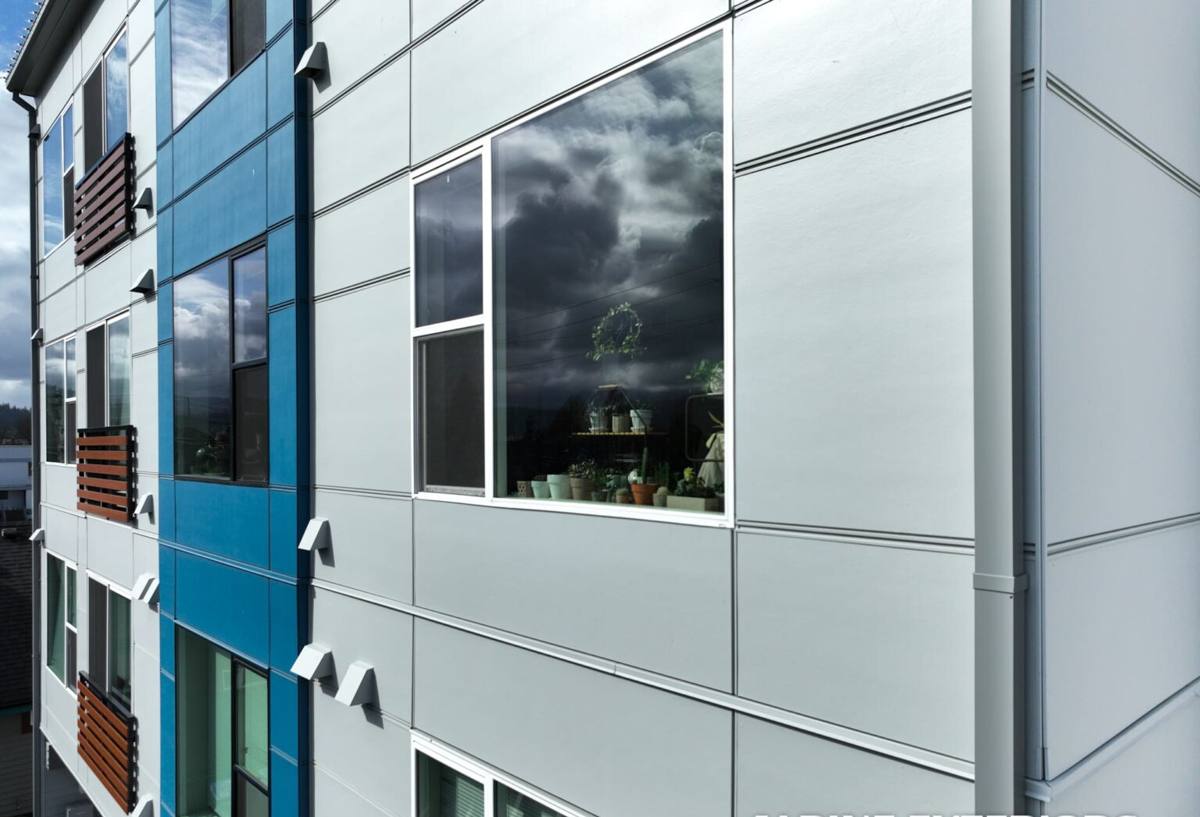
A siding material that depends on a paint film to keep water out, or that swells and shrinks with humidity, is being asked to hold up to conditions it wasn't necessarily engineered for. Over enough hurricane seasons, that shows up as cupped boards, failing caulk joints, corroded fasteners bleeding through the finish, or a paint job that needs redoing far sooner than the homeowner expected. Fiber cement was engineered specifically around those failure points, which is the core reason we standardized on James Hardie for every project we take on, including here.
James Hardie manufactures its siding in climate-specific formulations rather than one generic product for the whole country. Homes in our part of Florida receive the HZ5 product line, engineered for high-humidity, high-moisture-exposure climates — a different formulation than what's sold in dry inland markets, tuned for exactly the kind of sustained moisture load a barrier island home deals with.
ColorPlus Finish and Why It Matters More Here
On a home this exposed, the finish is doing as much work as the substrate underneath it. ColorPlus is a factory-applied finish, baked on in multiple coats under controlled conditions rather than sprayed or brushed on site after the siding is already installed. It holds color and resists chipping meaningfully better than field-applied paint under sustained UV and salt exposure, which matters most on a home that's catching direct sun and salt-laden wind on more than one side, all year round.
What a Correct Installation Involves
Fiber cement siding performs the way it's designed to only when it's installed to specification. A weak substrate is one failure mode; a well-engineered product installed incorrectly is another, and it's a more common cause of problems than most homeowners expect. On an Indian Rocks Beach home, correct installation includes:
- A properly lapped and sealed weather-resistant barrier behind the siding — not house wrap stapled up and left to do the job alone
- Correct panel and plank gapping at every butt joint and termination, per James Hardie's published fastening and clearance specifications
- Fasteners driven at the correct spacing and depth to hold securely under hurricane-force wind loads, without over-driving them through the material
- Proper flashing at every horizontal transition — window and door heads, roof-to-wall intersections, and any point where trim meets the field of the wall
- Correct clearance at the base of the wall, keeping siding above grade, decking, and any roofing so it isn't sitting in standing water after a storm
- Corrosion-resistant fasteners and hardware, specified for coastal salt exposure rather than standard-grade material
- Caulking used only where James Hardie specifies it, not as a substitute for proper flashing and gapping everywhere else
These aren't Hardie-specific steps — they're the difference between an installation that survives repeated storm seasons on a barrier island and one that starts showing problems at the seams within a few years, regardless of what's behind the finish.
Our Process for an Indian Rocks Beach Project
- On-site assessment — we walk the property, evaluate the existing wall condition and exposure on each elevation, and check for any substrate or moisture issues hiding behind the current siding
- Honest scope and recommendation — full replacement, partial re-siding, or repair, explained plainly, including what we found and why it does or doesn't need to be addressed now
- Material and color selection — HardiePlank, panel, or trim profiles and ColorPlus color options suited to the home's style and this exposure
- Removal and substrate check — old siding comes off carefully, and any framing, sheathing, or flashing issues get addressed before new material goes up, not discovered afterward
- Weather barrier and flashing installation — the water management layer behind the siding is built correctly before a single plank goes on
- Siding installation — fastened, gapped, and flashed to James Hardie's specifications for our wind zone and climate
- Final trim, caulking, and walkthrough — finished details reviewed with the homeowner before the job is called complete
James Hardie vs. Other Siding Options for This Location
| Material | Moisture Behavior | Finish Durability | Fit for Barrier Island Exposure |
|---|---|---|---|
| James Hardie fiber cement | Dimensionally stable, doesn't swell or rot with sustained humidity | Factory-baked ColorPlus finish resists fade, chip, and salt-driven wear | Engineered HZ5 formulation built for high-moisture coastal climates |
| Vinyl siding | Doesn't absorb water, but can warp or distort under sustained heat and flex under wind gusts | Color is through-body but fades and chalks under years of intense UV | Wind performance depends heavily on panel gauge and fastening pattern |
| Engineered wood composite (e.g., LP SmartSide) | More sensitive to moisture at cut edges and seams than fiber cement | Relies more on factory or field coatings with shorter service life in wet climates | Varies by product line; not our standard for this exposure |
| Primed wood (spruce or cedar) | Absorbs and releases moisture readily; prone to cupping, swelling, and rot at joints | Fully dependent on an ongoing repainting cycle | Not engineered for sustained salt air and hurricane wind exposure |
This isn't a claim that every alternative is unusable — it's why, for the specific combination of hurricane wind, UV, wind-driven rain, and salt air this island sees every year, James Hardie is the only material we put on a wall here.
Color and Style Considerations for a Coastal Home
Indian Rocks Beach homes run the range from classic beach-cottage styling to more modern coastal builds, and siding color choice interacts with that direct sun and salt exposure more than it would on an inland property. A few practical notes from doing this work on the island:
- Lighter ColorPlus tones tend to show less visible fading over time under sustained direct sun than very dark, saturated colors, though Hardie's factory finish holds up well across its full color range compared to field-applied paint
- HardiePlank lap profiles remain the most common choice for full-elevation coastal homes, with HardieTrim used to detail window and door surrounds, corners, and fascia to match the style of the home
- Board and batten or panel accents are frequently used on gables, dormers, or a front feature wall to add architectural interest without re-siding the entire structure
Maintenance Expectations on a Barrier Island
One of the practical benefits of a correctly installed Hardie system here is what it doesn't require. There's no annual repaint-and-recaulk cycle to keep up with, and the material isn't absorbing humidity or feeding rot between storms the way wood siding can. Realistic upkeep on an Indian Rocks Beach home looks like:
- Periodic rinsing to clear salt residue, especially on walls that face directly into onshore wind
- A visual check after any named storm or major squall for loosened trim, shifted flashing, or fastener issues
- Keeping irrigation and landscaping from spraying directly onto the base of the wall
- Touch-up limited to actual physical damage, not routine scheduled maintenance
Why Hiring a Crew That Already Works This Coastline Matters
Manufacturer installation instructions are written for average conditions, and a barrier island in Pinellas County doesn't qualify as average. A crew that doesn't work direct Gulf and Intracoastal exposure regularly can install the right product and still miss the calls that actually keep water out over time — how a flashing lap needs to be sequenced on an older wall assembly, which fastener spacing actually holds under real hurricane-force gusts versus a code minimum, or when a substrate condition uncovered during removal needs to be corrected rather than covered over. Those are judgment calls made on the job site, not something a spec sheet decides for you.
We work Indian Rocks Beach and the surrounding beach communities regularly, which means we're not guessing at how a particular wall type, elevation, or age of construction tends to hold up here over time. That experience is what decides whether a siding job is still performing after a few hurricane seasons or starting to show problems at the seams within a couple of years.
If you're weighing a siding replacement, planning a renovation, or just want an honest read on the condition of your current exterior, we offer free, no-pressure estimates for Indian Rocks Beach homeowners — use the form below to get a time on the schedule.