 Clearwater Siding
 Board & Batten Siding in Del Oro: A Look That Has to Perform, Not Just Impress
Board and batten siding gives a home a clean, vertical, modern-farmhouse look that stands out from the horizontal lap siding on most surrounding houses. It's a style choice a number of Del Oro homeowners are drawn to when they're ready to replace worn-out siding or update a home's exterior. But in Clearwater, that style choice comes with a performance requirement most homeowners never think about until it's explained to them: vertical siding sheds water differently than horizontal siding, and it has to survive the same hurricane-force wind, intense year-round UV, wind-driven rain, and salt air that wears down every exterior product in Pinellas County. Installed correctly, board and batten is a durable, good-looking system that holds its shape and color for decades. Installed with the wrong substrate, the wrong fastening pattern, or gaps sealed with caulk instead of engineered for movement, it can fail faster than the lap siding it replaced.
This page covers what board and batten siding needs to do its job on a Del Oro home, what a correct installation actually involves, and why we install exclusively in James Hardie fiber cement rather than the wood, vinyl, or engineered-wood alternatives that are also sold under the "board and batten" name.
What Del Oro's Climate Actually Does to Vertical Siding
Del Oro sits in a part of Clearwater that deals with the full range of what Pinellas County weather delivers over a siding product's lifetime. None of these forces are exotic or rare — they're the baseline conditions every exterior surface here has to be engineered for.
Hurricane-Force Wind Loads
Wind doesn't just push against a wall — it gets under loose edges and pulls. Board and batten siding has more vertical seams and more panel edges than lap siding of the same square footage, which means more places for wind to find a weak fastening point if the installation isn't done to spec. A panel that's under-fastened or fastened with the wrong nail pattern is the panel that comes loose first in a wind event.
Year-Round UV Exposure
Florida sun doesn't take a season off. Constant UV breaks down pigments and resins in lower-grade siding finishes, which shows up as fading, chalking, and eventually a surface that looks tired even if the material underneath is structurally fine. On vertical siding, uneven fading is more visible than on horizontal lap because the eye reads straight lines top to bottom.
Wind-Driven Rain
Rain in a coastal storm doesn't fall straight down — it drives sideways into vertical seams and batten joints. A board and batten system depends on correct water-resistive barrier work, flashing, and drainage behind the panels to handle that intrusion. If the wall assembly behind the siding isn't detailed correctly, wind-driven rain will find its way behind the battens over time, regardless of how good the surface caulking looks.
Salt Air
Being inland of the immediate coastline doesn't take Del Oro out of salt air's reach — airborne salt travels well beyond the waterfront and settles on every exterior surface in the area. Salt accelerates corrosion of fasteners and trim metal and can degrade lower-quality composite and wood products faster than their inland counterparts age.
Board & Batten Is a Different Installation Than Lap Siding
Homeowners sometimes assume board and batten is just lap siding turned sideways. It isn't. The panels are larger, the seams run with gravity instead of shedding water like a shingle, and the whole system depends on the batten strips being placed, fastened, and sealed correctly to do the water management that lap siding's overlap does automatically.
That makes installation quality matter more on a board and batten job, not less. A crew that's fast and careless with lap siding can sometimes get away with it because the overlap forgives small mistakes. Board and batten doesn't offer that same margin — every seam is an engineered detail, not a natural overlap.
The James Hardie System We Install for Board & Batten
We install James Hardie vertical panel siding with Hardie batten trim — not LP SmartSide, not vinyl board and batten panels, not primed spruce or cedar boards. That's a deliberate standard, not a default.
Fiber cement doesn't rot, it doesn't feed termites, and it's non-combustible, which matters on a material that's going to spend decades in Florida heat and moisture. James Hardie's HZ product line is climate-engineered specifically for humid, high-UV, high-moisture regions like ours, and the ColorPlus factory-applied finish is baked on and warranted against fading in a way that field-applied paint on wood or engineered-wood alternatives can't match. We've explained on other pages why we won't install LP SmartSide, vinyl, or cedar board and batten — it comes down to moisture behavior, maintenance burden, and how each of those products holds up specifically under this climate's punishment, not because those products don't have their place somewhere.
The tradeoff homeowners should understand going in: Hardie fiber cement costs more up front than vinyl and is heavier and less forgiving to install than engineered wood. We think that tradeoff is worth it for a Del Oro home that's going to sit through hurricane seasons, UV exposure, and salt air for the next 20-plus years, but it's a real tradeoff and we'll say so plainly during your estimate.
What a Correct Board & Batten Installation Involves
A board and batten job done right isn't just panels and battens nailed to the wall. Every layer behind the visible surface is doing a job, and skipping or shortcutting any one of them is how a siding job looks fine for two years and then starts failing.
- Water-resistive barrier installed and lapped correctly behind the panels, not just stapled up as an afterthought
- Panel gaps and expansion clearances set to manufacturer spec so panels aren't fighting themselves as they expand and contract with heat
- Fastener type, spacing, and embedment matched to Hardie's published requirements for our wind zone — not a generic nailing pattern
- Flashing at every horizontal transition — window heads, roof lines, trim boards — so water is directed out, not trapped behind the panel
- Batten strips fastened independently into structural framing, not just into the panel or the sheathing
- Sealant used only where the manufacturer specifies it, not as a substitute for proper flashing and drainage
- Factory-cut and factory-primed panel edges preserved wherever possible, since field-cut edges need to be sealed correctly to avoid moisture wicking
Any one of these steps done wrong is invisible on install day and expensive two or three years later. This is the part of a board and batten job that separates a crew that's installed it dozens of times in this climate from one that's doing it occasionally.
Board & Batten vs. Other Siding Styles for a Del Oro Home
Board and batten isn't the right call for every home, and it isn't automatically better or worse than lap siding — it's a different look with a different set of installation demands. Here's how it compares on the factors that actually matter for a Clearwater home.
| Factor | Board & Batten (Vertical) | Lap Siding (Horizontal) |
|---|---|---|
| Visual style | Modern, farmhouse, clean vertical lines | Traditional, most common in the area |
| Water shedding | Relies on engineered seams and battens | Relies on natural shingle-style overlap |
| Installation sensitivity | Higher — fewer forgiving details | Lower — overlap forgives minor variance |
| Wind seam exposure | More vertical seams per square foot | Fewer seams, continuous horizontal runs |
| Best fit | Full facades or accent sections on newer or updated exteriors | Whole-home siding on most existing layouts |
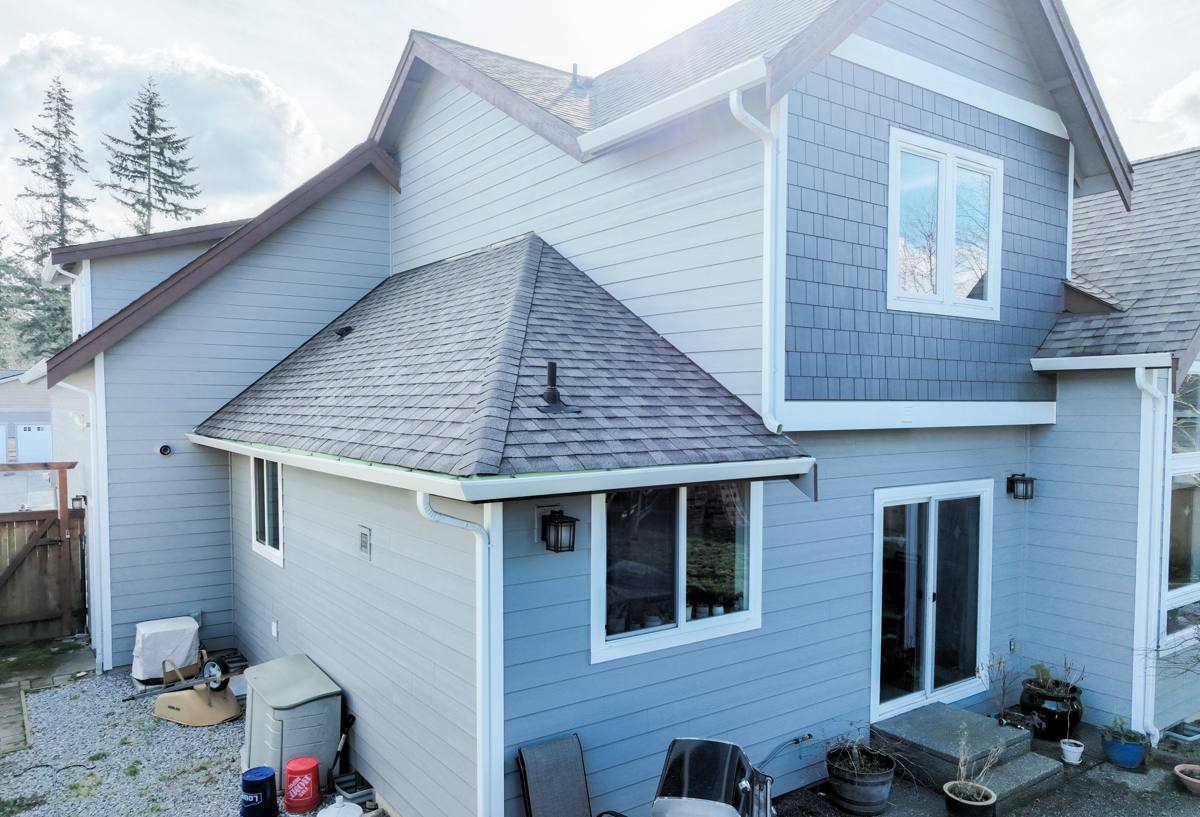
A lot of Del Oro homes end up using board and batten as an accent — gables, a porch surround, a single elevation — paired with lap siding on the rest of the home. That combination gets the visual interest of vertical siding without asking every square foot of the house to carry the tighter installation tolerances board and batten requires. We'll walk through whether full board and batten or an accent application makes more sense for your specific home during the estimate.
Our Process, Start to Finish
The steps don't change from house to house, but what we find during the first two steps determines everything else about the job.
- Inspection. We walk the exterior, check the current substrate and any moisture damage behind existing siding, and confirm what the wall assembly needs before a single panel goes up.
- Estimate and product plan. We spec panel sizes, batten spacing, and trim details for your home specifically, and give you a straight number — no vague ranges that turn into change orders.
- Prep and moisture barrier. Old siding comes off, damaged sheathing gets addressed before it's covered up again, and the water-resistive barrier goes on and gets lapped and taped correctly.
- Panel and batten installation. Panels go up to Hardie's fastening spec for our wind zone, flashing is set at every transition, and battens are fastened into framing.
- Finish and cleanup. Trim, caulking where the manufacturer calls for it, and a full site cleanup — nails, offcuts, and packaging don't get left in your yard.
- Walkthrough. We go over the finished job with you in person before we consider it done.
Why a Crew That Already Works Del Oro Matters
Siding installation isn't the same everywhere in the country, and it isn't even identical everywhere in Florida. A crew that already works in and around Clearwater knows the wind zone requirements that apply to Pinellas County permitting, has already worked through the inspection process with local building officials, and has seen how James Hardie board and batten performs specifically in this salt-air, high-UV, hurricane-exposed environment — not a generalized version of "coastal climate." That local track record shows up in details a homeowner wouldn't necessarily catch on their own: the right fastener spec for our wind zone, flashing details that account for our rain patterns, and a realistic sense of how the finished job will actually hold up here, not just on paper.
It also matters for something more practical: a local crew is reachable after the job is done. If a question comes up during the next hurricane season or you want a warranty question answered, you're not trying to track down a contractor who packed up and moved to the next region over.
Get a Free Estimate for Your Del Oro Home
If you're considering board and batten siding for a Del Oro home, we're happy to walk the property, talk through whether full coverage or an accent application makes sense, and give you a straight, no-pressure estimate. There's no obligation and no pressure — just a clear look at what your home needs and what it would cost to do right. Use the form below to get started.