 Clearwater Siding
 What "New-Construction Windows" Actually Means
In the window trade, "new-construction" doesn't just mean a window going into a brand-new house. It refers to a specific type of window and a specific installation method: the unit has a nailing fin (sometimes called a flange) around its perimeter, and it gets set into a rough opening where the surrounding wall material — stucco, siding, or brick — is either not yet applied or is being cut back and rebuilt around the window. That's different from a "replacement" or "pocket" window, which is sized to slide into an existing frame without disturbing the exterior finish.
For homeowners in Countryside doing a full remodel, an addition, or replacing windows down to the rough opening because the old frames are rotted, cracked, or leaking, new-construction windows are usually the right call. They let us fully inspect and rebuild the opening, correct flashing that may have failed decades ago, and end up with a window that's properly integrated into the wall system rather than just dropped into a tired old frame.
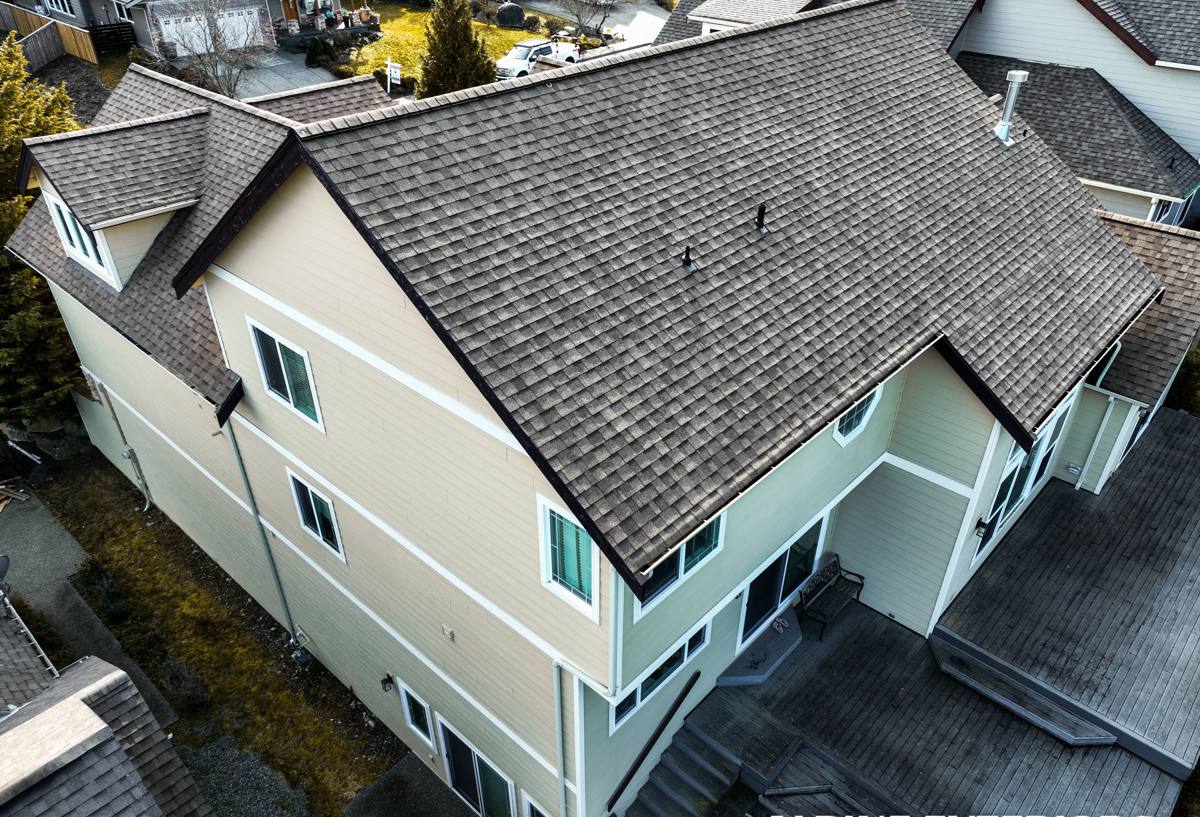
What Countryside Homes Are Up Against
Countryside sits inland from the coast compared to some Clearwater neighborhoods, but it's still well within reach of everything Pinellas County weather throws at a house. Hurricane-force and tropical-storm-force winds test every seam around a window opening. Wind-driven rain gets pushed sideways and upward under normal roof overhangs, which means a window's weep system and flashing details matter just as much as the glass itself. Year-round intense UV breaks down cheap vinyl, degrades sealants, and fades interior finishes near unprotected glass. And even away from the immediate coastline, salt-laden air moves inland on sea breezes and slowly corrodes unprotected fasteners, hinges, and lesser-quality hardware.
Homes in this part of Clearwater are typically a mix of original 1970s-90s block construction and newer additions or remodels, which means rough openings vary in size, plumb, and condition from one house to the next — and sometimes from one window to the next on the same house. There's no such thing as a standard Countryside window job; every opening gets checked on its own merits.
Why This Isn't Just "Swap the Glass"
A window is only as good as the opening it sits in. We've opened up plenty of stucco or siding around a Countryside window and found flashing tape that was never installed, sealant that had failed years earlier, or a nailing fin that was fastened over bare wood sheathing with no weather-resistant barrier behind it. None of that shows up from the curb. It shows up as a stain on the drywall below the sill or a soft spot in the wall a few years down the road.
Florida Building Code and Wind Requirements
Pinellas County is not one of Florida's designated High-Velocity Hurricane Zones (that designation applies to Miami-Dade and Broward), but it still falls under Florida Building Code wind-load requirements tied to the county's design wind speed. That means every new-construction window we install has to carry a documented wind-load rating appropriate to the site — either as an impact-rated unit or as a non-impact window paired with code-compliant opening protection, such as approved shutters.
Practically, that means:
- Every window needs a Florida Product Approval or Miami-Dade Notice of Acceptance (NOA) number matching the actual unit installed, not just the product line in general
- The window's pressure rating has to be appropriate for its wall location — corner and higher-elevation openings often see higher pressures than a sheltered wall
- A permit and inspection are required for new-construction window work in the city of Clearwater and unincorporated Pinellas County — this isn't optional paperwork, it's what protects you if there's ever a wind claim
- Anchoring, embedment depth, and fastener spacing all have to match the tested and approved installation instructions for that specific window, not a generic rule of thumb
We pull permits, schedule inspections, and keep the product approval documentation on file for every job — that paperwork is also what your insurance company and any future buyer's inspector will want to see.
Getting the Install Right: Flashing, Fins, and Weatherproofing
The glass and frame get most of the attention, but the flashing sequence around the opening is what actually keeps water out over the long run. Done correctly, every layer overlaps the one below it — like shingles on a roof — so water is always shed outward and downward, never trapped behind the wall finish.
Our Install Checklist
- Rough opening inspected and squared before the window ever goes in, correcting any old framing or sheathing issues we find
- Sill pan flashing installed first, sloped to drain water back out to the exterior
- Weather-resistant barrier integrated with the flashing so water is directed over, not behind, the barrier
- Window set, shimmed level and plumb, and fastened per the manufacturer's approved schedule
- Nailing fin flashed on the sides and top in the correct shingle-lap order
- Sealant used only where the manufacturer's instructions call for it — over-sealing can trap water instead of releasing it
- Weep holes and drainage paths checked and left clear, never caulked shut
- Interior and exterior trim or stucco returns rebuilt to match the surrounding wall
Skipping or reordering any of these steps is how a window that looks fine on installation day starts leaking two rainy seasons later.
Choosing Frame Material and Glass Package
There's no single "best" window for every Countryside home — it depends on budget, the wall it's going into, and how much wind and sun exposure that side of the house gets. Here's how the common options stack up for this climate:
| Frame Material | Wind/Impact Performance | UV and Heat Behavior | Salt Air Durability |
|---|---|---|---|
| Impact-rated vinyl | Good, code-compliant options widely available | Quality varies by manufacturer; look for UV-stabilized formulations | Good — won't corrode, low maintenance |
| Impact-rated aluminum | Very good, common in Florida new construction | Conducts heat more than vinyl unless thermally broken | Needs a quality anodized or powder-coat finish to resist salt corrosion |
| Non-impact + shutters | Meets code only when shutters are properly installed and used | Depends entirely on the glass package chosen | Adds another component (shutter hardware) that needs upkeep |
| Fiberglass | Strong, dimensionally stable in heat | Excellent UV stability, low expansion/contraction | Very good, but higher upfront cost |
Beyond frame material, the glass package matters just as much. Low-E coatings cut down on solar heat gain, which is a real comfort and energy-bill factor with Clearwater's near-constant sun. Laminated impact glass — the kind used in true impact-rated windows — also blocks a meaningful amount of UV transmission, which helps protect flooring and furniture near south- and west-facing windows.
Working With Stucco, Siding, and Trim
Countryside has a mix of stucco-clad and siding-clad homes, and the tie-in details are different for each. On stucco walls, we cut back the finish cleanly around the opening, flash properly, and rebuild the stucco return so the repair blends into the existing texture rather than looking patched. On siding, we make sure the window's flanges integrate with the housewrap and siding J-channel or trim in the correct water-shedding order. Either way, the goal is the same: the finished opening should look like it was always part of the house, and it should shed water the same way the rest of the wall does.
Our Process, Start to Finish
- On-site estimate — we measure openings, assess wall condition, and talk through frame material and glass options for your budget and sun exposure
- Product selection and ordering — we confirm wind-load ratings match your home's location and elevation before anything is ordered
- Permitting — we handle the Clearwater or Pinellas County permit application and scheduling
- Removal and opening prep — old windows and any damaged framing or sheathing are removed and addressed
- Installation — flashing, setting, fastening, and weatherproofing per the checklist above
- Trim and finish work — stucco, siding, or interior trim restored to match
- Final inspection — the county or city inspector signs off, and we walk the job with you before calling it done
Why Hire a Crew That Already Works Countryside
A lot of window problems in this part of Pinellas County trace back to installers who don't do this work regularly in coastal-influenced climates — flashing skipped to save time, sealant used as a substitute for proper drainage, or a window rated for a calmer inland market installed on a wind-exposed Florida wall. A crew that works Countryside and the surrounding Clearwater neighborhoods routinely knows the typical rough opening conditions in homes of this age, knows what the city and county inspectors check for, and isn't guessing at wind-load requirements for the first time on your house. That familiarity shows up as fewer surprises during the job and fewer callbacks after it.
After Installation: What Upkeep Looks Like
Impact-rated, properly flashed new-construction windows are low-maintenance, but "low" isn't "none." A quick annual check of exterior sealant joints, weep holes, and trim paint or caulking goes a long way toward getting the full service life out of the installation — especially given the UV and salt exposure this area sees year-round. If you ever notice a stain forming below an interior sill or a window that's become hard to operate, it's worth having it looked at before a small flashing issue turns into a wall repair.
If you're planning new-construction window work in Countryside — whether it's a full remodel, an addition, or replacing tired old frames down to the rough opening — we're happy to come take a look and walk the property with you. Estimates are free, there's no pressure, and you'll get a straight answer about what your home's openings actually need.