 Clearwater Siding
 Belleair Bluffs Sits in a Tough Spot for Exterior Siding
Belleair Bluffs is a small, tightly built community wedged between Clearwater and Largo along the Intracoastal Waterway, and its elevated position along the bluff means homes here take wind exposure that flatter inland Pinellas County neighborhoods don't see as often. That combination of waterfront wind, humidity, and constant sun is exactly the environment fiber cement siding was engineered to handle — but only when the product and the installation are both matched to it.
Homes in this part of Clearwater deal with four things year-round: hurricane-force wind gusts during storm season, wind-driven rain that gets pushed sideways into wall assemblies, intense UV exposure nearly every day of the year, and salt-laden air drifting in off the water. Any one of these will eventually find the weak point in a siding system. Together, they're the reason we don't treat a Belleair Bluffs siding job the same way we'd treat one thirty miles inland.
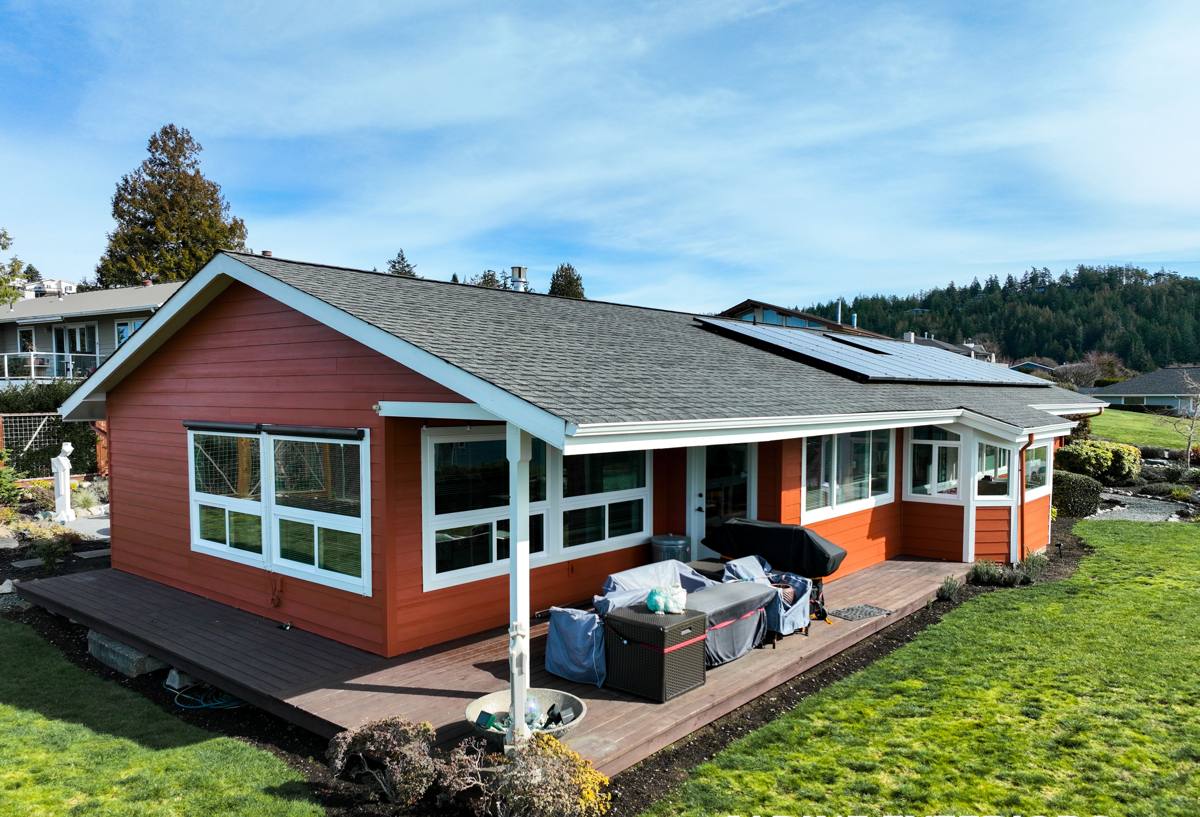
What Each Climate Factor Actually Does to Your Siding
Wind and Wind-Driven Rain
Wind doesn't just rattle loose panels — it pressurizes wall cavities and drives rain sideways under laps, trim, and butt joints that aren't sealed and fastened correctly. On a bluff-adjacent property, gusts funnel unpredictably off the water, which means fastening patterns and clearances matter more here than on a sheltered inland lot.
UV Exposure
Florida sun breaks down pigments and resins in lesser finishes over a matter of years, not decades. A factory-cured finish holds color and integrity far longer than field-applied paint, which is one of the biggest reasons finish quality is a real differentiator between siding products.
Salt Air
Salt is corrosive to metal fasteners, flashing, and trim accessories. It also accelerates the breakdown of organic siding materials that absorb moisture. Within a few miles of Clearwater Harbor and the Intracoastal, salt exposure is a daily, not occasional, condition.
None of this is unique to Belleair Bluffs — but the combination of bluff-level wind exposure and close proximity to the water puts this neighborhood on the harder end of the spectrum for Pinellas County homes.
Why We Only Install James Hardie Fiber Cement
We standardized on James Hardie fiber cement siding and don't install vinyl, LP SmartSide, Cemplank, Allura, or primed wood species like spruce or cedar. That's not a marketing position — it's a decision based on what holds up correctly, decade after decade, in exactly the conditions Belleair Bluffs homes face.
Fiber cement itself is non-combustible and dimensionally stable — it doesn't warp, cup, or expand and contract the way wood-based products do in Florida's heat and humidity swings. James Hardie's HZ product lines are engineered specifically for high-humidity, high-moisture climates like ours, and their ColorPlus factory-applied finish is baked on and cured under controlled conditions rather than sprayed on site — which matters enormously under the UV load this area gets. The warranty backing the product is also transferable, which protects resale value for a property near desirable waterfront real estate.
We're not saying every alternative product is without merit. Vinyl is inexpensive and low-maintenance in mild climates; engineered wood products have their fans; other fiber cement brands exist. But when we weighed installation sensitivity, long-term moisture behavior, and warranty structure against what a coastal Pinellas County home actually needs to survive hurricane season after hurricane season, Hardie is what we chose to put our name behind.
What a Correct Installation Actually Involves
Fiber cement siding fails prematurely almost exclusively because of installation mistakes, not product defects. In a wind- and moisture-exposed area like Belleair Bluffs, the details below aren't optional extras — they're the difference between siding that lasts and siding that fails at the first bad storm.
- Correct fastener spacing and type — matched to local wind exposure, not a generic inland pattern
- Proper clearances from grade, roof lines, and decks to keep splash-back and standing water away from the bottom edge
- A continuous weather-resistive barrier installed and lapped correctly behind the siding, not just present
- Flashing at every penetration — windows, doors, vents, hose bibs, and light fixtures — so wind-driven rain has nowhere to enter
- Factory-mitered or properly caulked joints at corners and butt seams, using sealants rated for exterior, high-UV use
- Blocking and support at seams so panels don't flex and crack under wind load
Skip any one of these and the siding may look fine for a season or two before problems show up — usually as moisture intrusion behind the wall, which is far more expensive to fix than the siding itself.
Our Process for Belleair Bluffs Homes
1. Site Assessment
We look at the home's exposure — how close it sits to open water, prevailing wind direction, existing moisture damage, and the condition of the sheathing underneath the current siding. This tells us what we're actually working with before a single panel comes off.
2. Tear-Off and Sheathing Inspection
Old siding comes off in sections so we can inspect the sheathing and framing underneath. Any rot, soft spots, or prior water intrusion gets addressed before new siding goes up — covering damaged sheathing with new siding just hides a problem that keeps growing.
3. Weather Barrier and Flashing
A new weather-resistive barrier goes on correctly lapped, followed by flashing at every window, door, and penetration point. This step is where most of the long-term protection actually comes from.
4. Hardie Panel or Lap Installation
Panels are installed to James Hardie's published specifications for our wind exposure, with correct fastener type, spacing, and clearances throughout.
5. Trim, Caulking, and Touch-Up
Trim goes on, joints get sealed with UV-rated sealant, and any factory finish touch-up is done with matched ColorPlus touch-up product.
6. Final Walkthrough and Cleanup
We walk the home with the owner, and the site is cleaned of debris and old material before we consider the job finished.
Comparing Siding Options for This Climate
| Material | Wind/Storm Durability | Salt Air Resistance | UV/Finish Longevity | Long-Term Maintenance |
|---|---|---|---|---|
| James Hardie Fiber Cement | High — climate-engineered HZ lines | High | High — factory-cured ColorPlus finish | Low |
| Vinyl Siding | Moderate — can crack or blow off in high wind | Moderate | Moderate — fades and becomes brittle over time | Low, but limited repair options |
| LP SmartSide / Engineered Wood | Moderate | Lower — wood-based core sensitive to moisture | Moderate — field-applied finishes wear faster | Higher — edge sealing and inspection needed |
| Primed Wood (Spruce/Cedar) | Lower — dimensionally unstable in humidity swings | Lower | Lower — needs repainting on a recurring cycle | Highest |
This isn't a claim that other products can't perform anywhere — it's a reflection of what tends to hold up best specifically in a high-wind, high-salt, high-UV coastal environment like Belleair Bluffs.
Cost Factors for a Belleair Bluffs Project
| Factor | Why It Affects Price |
|---|---|
| Home size and wall complexity | More corners, gables, and dormers mean more cutting, trim, and labor time |
| Existing sheathing condition | Rot or water damage found during tear-off requires repair before new siding goes on |
| Siding profile chosen | Lap width, board-and-batten, and shingle-style Hardie products carry different material and labor costs |
| Trim and accessory scope | Fascia, soffit, and trim replacement alongside siding adds cost but improves the overall weather seal |
| Access and site conditions | Tight lot lines, landscaping, or waterfront access can affect equipment staging and labor time |
We give a firm, itemized quote after the site assessment rather than a rough phone estimate — the variables above matter too much to guess at from a distance.
Signs Your Current Siding Is Losing the Fight
- Visible cracking, buckling, or gaps at panel seams and corners
- Soft spots or a "give" when you press on the siding near the bottom edge
- Peeling or chalking paint that keeps returning within a year or two of repainting
- Staining or streaking that suggests water is tracking behind the siding, not just across the surface
- Rising cooling bills without another clear explanation
- Visible fastener corrosion or rust streaks below nail heads
Why It Matters That We Already Work This Neighborhood
A crew that regularly works Belleair Bluffs and the surrounding Clearwater Harbor area already understands the wind exposure patterns unique to bluff-adjacent lots, knows how local building department requirements apply to exterior work in Pinellas County, and has already worked through the practical realities of tight lots and close-set homes common to this area. That local familiarity shows up in the small decisions — where extra flashing gets added, how panels get oriented relative to prevailing wind, how trim gets detailed at water-facing walls — that a crew unfamiliar with this specific stretch of coastline might not think to make.
If your Belleair Bluffs home is due for new siding, or you want a second opinion on whether your current siding is actually protecting the house the way it should, we're glad to walk the exterior with you. Reach out for a free, no-pressure estimate using the form below.