 Clearwater Siding
 Why Siding Wears Differently on Belleair Bluffs' Elevated Lots
Belleair Bluffs sits on higher ground than most of the surrounding Pinellas County coastline, perched above Clearwater Harbor and the Intracoastal Waterway. That elevation is part of what makes the area desirable, but it also means many homes here catch wind and weather with less buffering than a low-lying inland lot would get. Siding on an exposed bluff-top property takes a steadier beating from wind-driven rain and gusts than the same product would face a few miles inland, where surrounding tree cover and terrain absorb some of that exposure before it reaches a wall.
Add in Florida's near-constant UV exposure, salt-laden air moving in off the harbor, and the very real possibility of hurricane-force wind during storm season, and you've got a combination that punishes lower-grade siding materials faster than homeowners expect. A product that performs fine in a mild climate can chalk, crack, delaminate, or let moisture in behind the wall within a decade when it's installed on an exposed Pinellas County lot. This page covers what siding replacement actually involves for a Belleair Bluffs home, what correct installation looks like given the local climate, and why the details matter as much as the material itself.
None of this means every home on the bluffs needs the same fix. A house facing directly toward the harbor deals with different exposure than one set back and shielded by neighboring structures. Part of doing this job right is actually assessing that exposure on your specific property rather than applying one blanket recommendation to every address in the neighborhood.
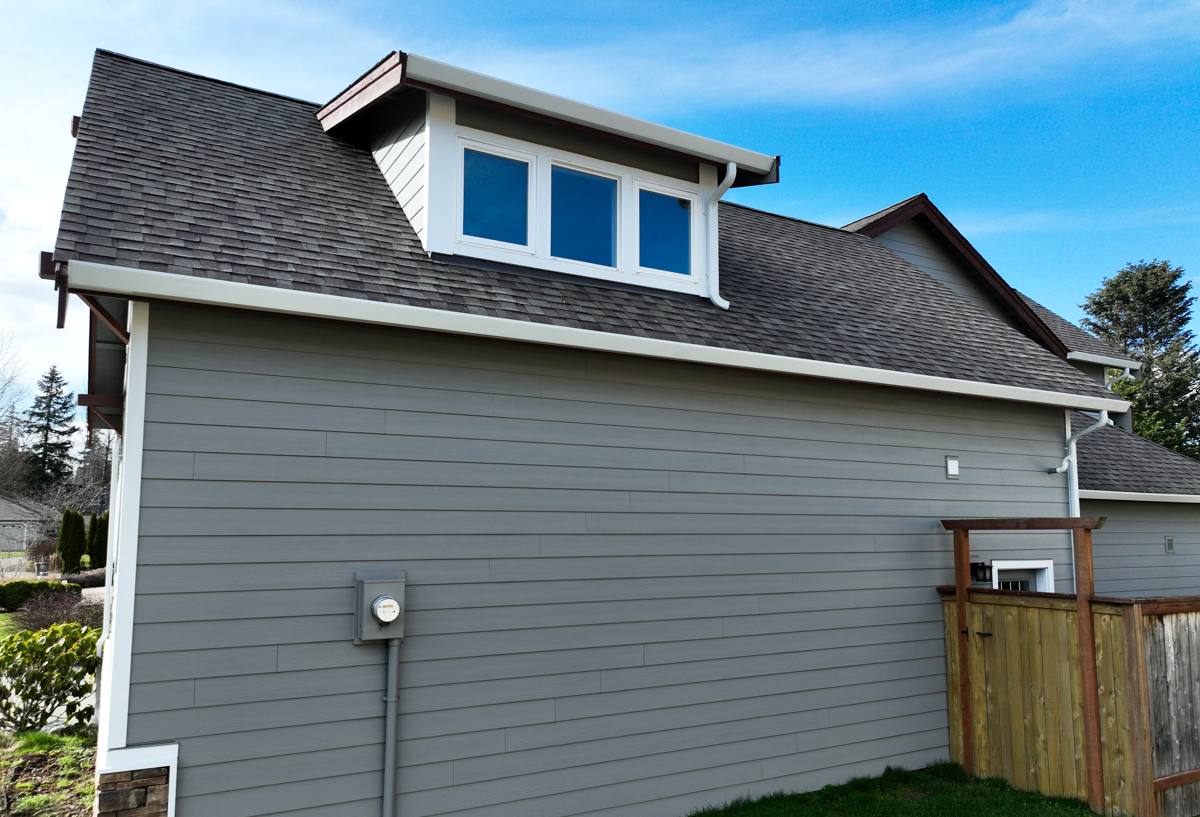
Signs Your Home Needs Full Siding Replacement, Not Just Repair
Not every siding problem calls for a full tear-off. But there's a point where patching individual boards or panels stops making sense — either because the damage is too widespread, or because the underlying moisture barrier has already been compromised. Signs it's time to talk replacement rather than repair include:
- Soft or spongy spots when you press on the siding, which usually means moisture has reached the wall sheathing underneath
- Visible warping, buckling, or panels that have pulled away from the wall
- Cracking or splitting that's spread across multiple sections rather than one isolated area
- Paint that won't hold, peeling or blistering repeatedly even after repainting
- Rot, mold, or a musty smell along interior walls that back up to exterior siding
- Visible fastener corrosion or streaking, a common issue in salt-air environments
- Siding that's simply reached the end of its expected service life and is original to a much older home
If you're seeing more than one or two of these, a professional inspection is worth doing before deciding between repair and replacement — patching a symptom while the moisture barrier underneath is failing tends to cost more in the long run, since the damage keeps spreading behind the wall while the surface looks temporarily fixed.
Why We Install Only James Hardie Fiber Cement Here
We install James Hardie fiber cement siding exclusively. We don't install vinyl, LP SmartSide, Cemplank, Allura, or primed wood products like spruce or cedar, and that's a deliberate standard, not a matter of what happens to be in stock. In a climate like Pinellas County's — heavy UV, salt air, wind-driven rain, and hurricane risk — the trade-offs of those other materials show up faster and more visibly than they would somewhere milder.
Fiber cement is non-combustible, holds paint and factory finish far longer than wood-based products, and doesn't swell, rot, or attract pests the way engineered wood siding can if moisture gets past a seam. James Hardie's ColorPlus factory-applied finish is baked on and backed by its own finish warranty, which matters on a coastal property where UV fade and repainting cycles are a real, recurring cost. Hardie also engineers specific product lines for humid, storm-prone climates — its HZ5 line is built for exactly the conditions Gulf Coast Florida homes face, with formulation choices aimed at high moisture exposure rather than a generic national spec.
That's the product we put on Belleair Bluffs homes, and it's the same standard we hold on every job, not just the ones a homeowner happens to ask about. We'd rather explain why a lower-cost material isn't what we recommend than install something we don't believe will hold up out here.
What a Correct Siding Replacement Job Involves
It's Not Just the Boards
The visible siding gets all the attention, but what's underneath it determines whether the job actually holds up. A correct replacement on an exposed, salt-air property includes tearing off the old material down to the sheathing, inspecting that sheathing for hidden rot or moisture damage, and repairing or replacing anything compromised before a single new board goes up. Skipping that step and installing new siding over damaged sheathing just hides a problem that will resurface, usually at a worse point than before.
The Weather Barrier Underneath
A properly installed weather-resistant barrier goes over the sheathing before the siding does, and it's the layer actually responsible for keeping wind-driven rain from reaching the wall structure. Seams need to be lapped and sealed correctly, and every penetration — windows, doors, vents, utility penetrations — needs proper flashing integrated with that barrier, not just caulked over afterward. This is one of the most common places corners get cut on a fast, cheap job, and it's also the failure point that causes the most expensive damage down the line, because problems here stay hidden until the wall is opened up.
Fastening and Clearance
Fiber cement siding has specific fastener requirements — type, length, and spacing — that vary by product line and exposure category, and following the manufacturer's specification is what keeps the warranty valid and the siding secure in high wind. Correct installation also maintains proper clearance from grade, roofing, and other surfaces so water has somewhere to go instead of wicking up into the bottom edge of the siding over time. On an elevated, wind-exposed lot, these aren't cosmetic details — they're what determines whether the siding is still doing its job during the next serious storm.
Siding Options Homeowners Compare
Homeowners in Belleair Bluffs often come to us already comparing a few materials, sometimes because a previous quote from another company offered something other than fiber cement. Here's how the common options generally stack up for a property in this kind of coastal, high-UV, storm-exposed setting:
| Material | Moisture Behavior | UV/Fade Resistance | Fire Resistance | Typical Maintenance |
|---|---|---|---|---|
| James Hardie Fiber Cement (HZ5) | Won't rot or swell; engineered for humid climates | Factory ColorPlus finish resists fading | Non-combustible | Low; periodic cleaning, no repainting for many years |
| Vinyl | Doesn't absorb moisture itself, but seams and panels can allow water behind the wall | Can fade and become brittle under sustained UV | Combustible; can warp near heat sources | Low, but panels can crack or blow off in high wind |
| LP SmartSide (engineered wood) | Vulnerable to swelling and rot if moisture reaches cut edges or seams | Holds finish reasonably well if maintained | Combustible | Moderate; edge sealing and finish upkeep matter |
| Primed Cedar or Spruce | Natural wood; prone to moisture absorption, warping, and rot without diligent upkeep | Needs repainting or resealing on a regular cycle | Combustible | High; most maintenance-intensive option |
Every material on that list has a place somewhere. In a Belleair Bluffs setting specifically — elevated, wind-exposed, salt-air adjacent — fiber cement's moisture behavior and low maintenance burden are what make it the material we're willing to put our name behind. Upfront cost matters too, and we'll talk through that honestly, but the material that needs to be redone or heavily repaired in ten years rarely ends up cheaper than the one that doesn't.
Our Siding Replacement Process, Start to Finish
- Inspection and estimate. We walk the property, assess the existing siding and any visible moisture or damage concerns, and give you a straightforward estimate — no pressure, no inflated scope.
- Tear-off and sheathing check. Old siding comes off completely, and we inspect the sheathing underneath for rot, soft spots, or prior water intrusion before moving forward.
- Repairs where needed. Any compromised sheathing or framing gets addressed before the new weather barrier goes on — this is not an optional step, even if it adds time to the schedule.
- Weather barrier and flashing. A properly lapped weather-resistant barrier goes down, with flashing correctly integrated at every window, door, and penetration.
- Hardie installation to spec. Fiber cement siding is installed with manufacturer-specified fasteners, spacing, and clearances, sized for the wind exposure of your specific property.
- Final walkthrough. We go over the finished job with you, check details up close, and make sure everything meets the standard we'd want on our own home.
Permitting, Wind Ratings, and Working With Pinellas County
Siding replacement in Pinellas County typically requires a permit, and the work needs to meet the wind load requirements set by the county's building code, which are stricter than what's required in a lot of other parts of the country given the region's hurricane exposure. On an elevated, exposed lot like many in Belleair Bluffs, wind load isn't a paperwork formality — it's a real factor in how the siding is fastened and detailed, and getting it wrong can mean failed inspections or, worse, siding that doesn't hold up when a storm actually arrives. We handle the permitting process and build to the code requirements as a baseline, not as an upgrade option someone has to ask for.
Why Hiring a Crew That Already Works Belleair Bluffs Matters
A contractor who mostly works inland, low-exposure properties can still install siding competently, but they may not be used to sizing fastening and flashing details for the wind and salt exposure a bluff-top, harbor-facing home actually sees. Working this area regularly means we're not guessing at what holds up here — we know how salt air affects fastener choice over time, how wind-driven rain behaves against an elevated wall, and what Pinellas County's permitting and inspection process actually requires before we start a job, not after we hit a snag partway through.
That familiarity also means straight answers. If a section of your home doesn't need full replacement, we'll tell you. If your existing material and substrate are in worse shape than they look from the ground, we'll show you why before we start, not after the invoice is bigger than expected.
Get a Straight Answer About Your Siding
If you're dealing with aging, damaged, or failing siding on a Belleair Bluffs home and want an honest assessment of what it actually needs, we're happy to take a look and walk you through the options plainly. Reach out below for a free, no-pressure estimate.