 Clearwater Siding
 Decks in Safety Harbor Take a Different Kind of Beating
Safety Harbor sits right on Tampa Bay, and that waterfront position means decks here deal with a combination most inland Florida towns don't see in the same intensity: salt-laden air rolling off the bay, high humidity that never really lets up, intense UV exposure nearly every day of the year, and the occasional direct hit from tropical storm winds and wind-driven rain. Add in Pinellas County's sandy, well-draining but shifting soil, and you've got a recipe for decks that look fine from a distance but are quietly failing where it counts — at the fasteners, the ledger board, and the framing underneath.
We work decks throughout Clearwater and the surrounding Pinellas County communities, including Safety Harbor, and we see the same failure patterns repeat themselves. This page is about what actually goes wrong with decks in this specific environment, what a correct repair looks like, and why it matters to hire a crew that already understands the local conditions instead of one learning on your project.
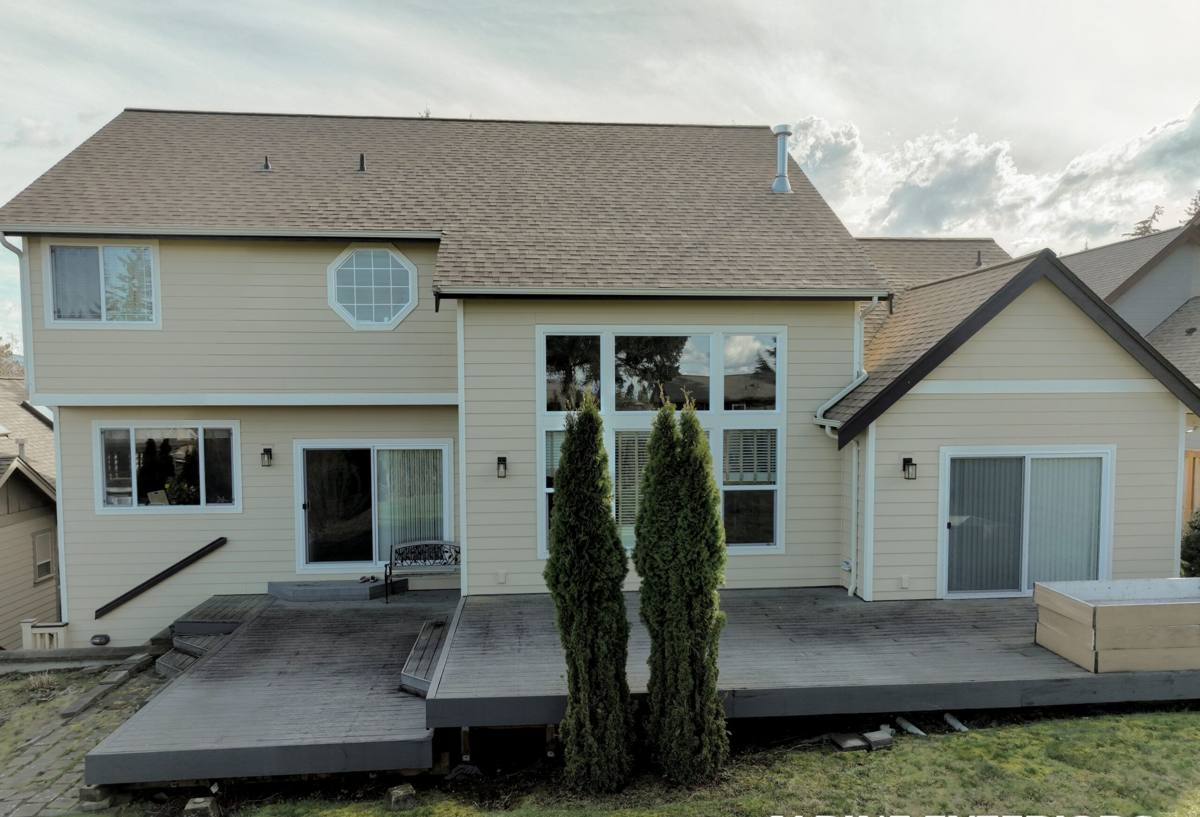
What the Climate Actually Does to a Deck
Salt Air and Metal Fasteners
Bay-adjacent air carries fine salt particles that settle on every exposed surface, including the screws, nails, joist hangers, and structural connectors holding your deck together. Standard fasteners corrode faster in this environment than they would ten or twenty miles inland. Corroded fasteners lose holding strength quietly — the deck surface can look completely normal while the connection underneath is compromised. This is one of the main reasons deck failures in coastal Pinellas County tend to happen at connection points rather than in the decking boards themselves.
UV Exposure and Surface Breakdown
Florida sun is intense nearly year-round, and a deck has no roof overhead to shield it. UV breaks down wood fibers, dries out natural oils, and degrades sealants and stains far faster than manufacturer estimates (which are usually based on less extreme climates) suggest. A finish that's rated for a few years elsewhere might need refreshing on a Safety Harbor deck well ahead of that schedule. Composite and PVC decking resist UV fading better than wood, but even those products have surface coatings and core materials that can degrade or discolor over time under constant sun.
Humidity, Rain, and Wood Movement
Wood is hygroscopic — it absorbs and releases moisture with the air around it. In a climate that stays humid most of the year and then gets hit with heavy, wind-driven rain during storm season, deck boards expand and contract repeatedly. This cycling loosens fasteners, opens gaps at butt joints, and accelerates rot at any spot where water can collect and sit — under railings, around post bases, and at the ledger board where the deck attaches to the house.
Wind Load During Storm Season
Hurricane-force and tropical-storm-force winds put real lateral and uplift loads on a deck structure, especially on railings and any attached pergola or roof structure. A deck that was built to minimum code decades ago may not have the connection hardware modern code requires for these loads. Repair work is a natural point to bring older structural connections up to a safer standard, even when a full rebuild isn't needed.
Signs Your Deck Needs Repair, Not Just Cosmetic Attention
- Boards that feel spongy, bouncy, or noticeably flex underfoot
- Visible rust staining around screw heads or hardware
- Gaps widening between deck boards or at the ledger board connection
- Railings that wiggle or feel less solid than they used to
- Soft or discolored wood, especially near post bases or where the deck meets the house
- Peeling, cracking, or graying finish that hasn't been refreshed in a few years
- Standing water or slow drainage after rain instead of water sheeting off
- Any visible gap or separation at the ledger board where the deck attaches to the house wall
The Ledger Board: The Single Most Important Repair Point
If a deck is attached to the house, the ledger board is the connection that carries much of the structural load — and it's also the point most exposed to trapped moisture, since it sits directly against the home's exterior wall. Flashing that's missing, improperly installed, or failed over time lets water get behind the ledger board and rot both the board and the house framing behind it. This is one of the most common issues we find on older decks in this area, and it's also one of the most serious, because a compromised ledger connection is a structural safety issue, not a cosmetic one. Any proper deck repair starts with an honest inspection of this connection before anything else.
Repair vs. Replace: How We Make That Call
Not every deck problem means starting over, and not every deck can be safely patched. The decision usually comes down to how much of the structural framing — as opposed to just the surface decking — has been compromised.
| Condition Found | Typical Approach | Why |
|---|---|---|
| Surface graying, minor board cupping, worn finish | Clean, sand, refinish or reseal | Cosmetic issue only; structure is sound |
| A few rotted or split boards, rest of deck solid | Board-by-board replacement | Isolated damage doesn't require full replacement |
| Rusted fasteners, loose railings | Hardware replacement with corrosion-resistant fasteners | Restores structural connection without disturbing sound wood |
| Ledger board rot or missing flashing | Ledger repair or replacement with proper flashing | Structural and moisture-control priority |
| Widespread rot in joists or beams | Partial or full framing reconstruction | Surface repair won't fix a compromised structure underneath |
| Undersized or failing footings | Footing repair or deck reconstruction | Footings are the foundation; movement here affects everything above |
What Our Deck Repair Process Involves
1. Structural Inspection First
We check the framing, the ledger board and flashing, the footings, and the fastener condition before we talk about surface repairs. A deck can look presentable and still have a structural problem hiding underneath the boards.
2. Honest Scope of Work
We tell you plainly what's cosmetic, what's structural, and what can wait versus what shouldn't. If a full rebuild is genuinely the safer and more cost-effective path compared to chasing repairs on a deck near the end of its life, we'll say so — and if a targeted repair is enough, we won't push a rebuild you don't need.
3. Matching Materials to the Environment
Repairs use fasteners and hardware rated for coastal/high-corrosion environments, not standard interior-grade hardware. Where wood is being replaced, we use materials suited to ground contact or weather exposure as the application requires, and we make sure new components tie into the existing structure correctly rather than just being surface-patched over a problem.
4. Proper Flashing and Water Management
Any ledger board work includes correcting flashing so water sheds away from the house instead of collecting behind the board. This is often the difference between a repair that lasts and one that fails again in a year or two.
5. Finish and Protection
Once structural and hardware issues are addressed, we handle sanding, sealing, or staining as needed so the surface is protected against the UV and moisture cycle going forward — with realistic expectations set about how often that finish will need attention in this climate.
Wood, Composite, and PVC: Repair Considerations for Each
Traditional wood decking is the most common material we find on older Safety Harbor and Clearwater homes, and it's very repairable — rot can be cut out and replaced board by board, and refinishing extends its life significantly if it's kept up with. Composite decking, made from wood fiber and plastic, resists rot but isn't immune to moisture problems at fastener points or where boards weren't installed with proper gapping for expansion; repairs on composite usually focus on hardware and support framing rather than the boards themselves, since composite boards are harder to spot-refinish. PVC decking is the most moisture-resistant of the three but is more sensitive to installation technique — proper spacing and fastening at the time of install matters more, since correcting a PVC installation error later is more involved than with wood. Whatever material your deck uses, we match our repair approach to how that material actually behaves rather than treating every deck the same way.
Why a Crew That Already Works Safety Harbor Matters
A deck repair is only as good as the judgment behind it. A crew that regularly works waterfront and near-coastal Pinellas County properties already knows to check the ledger flashing first, already stocks corrosion-resistant hardware instead of standard fasteners, and already understands how quickly UV and salt air can hide a real problem behind a deck that still looks fine. That familiarity means fewer surprises, a more accurate first inspection, and a repair that's built for the environment it actually has to survive — not a generic fix that might hold up somewhere drier and further from the bay.
Local response time matters too. After a storm passes through, a deck with a newly loosened railing or a soaked ledger connection is not something to leave sitting for weeks. Working with a crew based in the Clearwater area means a faster look at the damage and a faster path to getting it addressed correctly.
A Quick Pre-Estimate Checklist
- Note any boards that feel soft, spongy, or discolored
- Check railings and stair posts for looseness
- Look at the point where the deck meets the house for gaps or staining
- Check fastener heads for rust streaking
- Note how long it's been since the deck was last sealed or refinished
- Mention any storm events that preceded new movement or noise in the deck
Let's Take a Look
If your Safety Harbor deck has some of these warning signs — or you just want an honest read on where it stands after another Florida storm season — we're glad to come take a look. The estimate is free, there's no pressure, and you'll get a straight answer about what actually needs attention versus what can wait. Use the form below to get started.