 Clearwater Siding
 Why Decks in Oldsmar Wear Out Faster Than You'd Expect
Oldsmar sits along Tampa Bay in Pinellas County, and that location cuts both ways. The water views and breeze are part of why people love living here, but that same environment is hard on outdoor structures. A deck in this area deals with intense, near year-round UV exposure, thick humidity that never really lets wood dry out completely, salt-laden air drifting in off the bay, and the wind-driven rain that comes with our regular summer storms and the occasional hurricane threat. None of these show up as one dramatic failure. They work slowly, and a deck that looked fine two summers ago can have real structural problems today.
This page is specifically about repairing decks in Oldsmar and the surrounding Clearwater area, not a general overview of deck work everywhere. The failure patterns, code questions, and repair priorities here are shaped by this specific climate and this specific jurisdiction, and that's what we're covering.
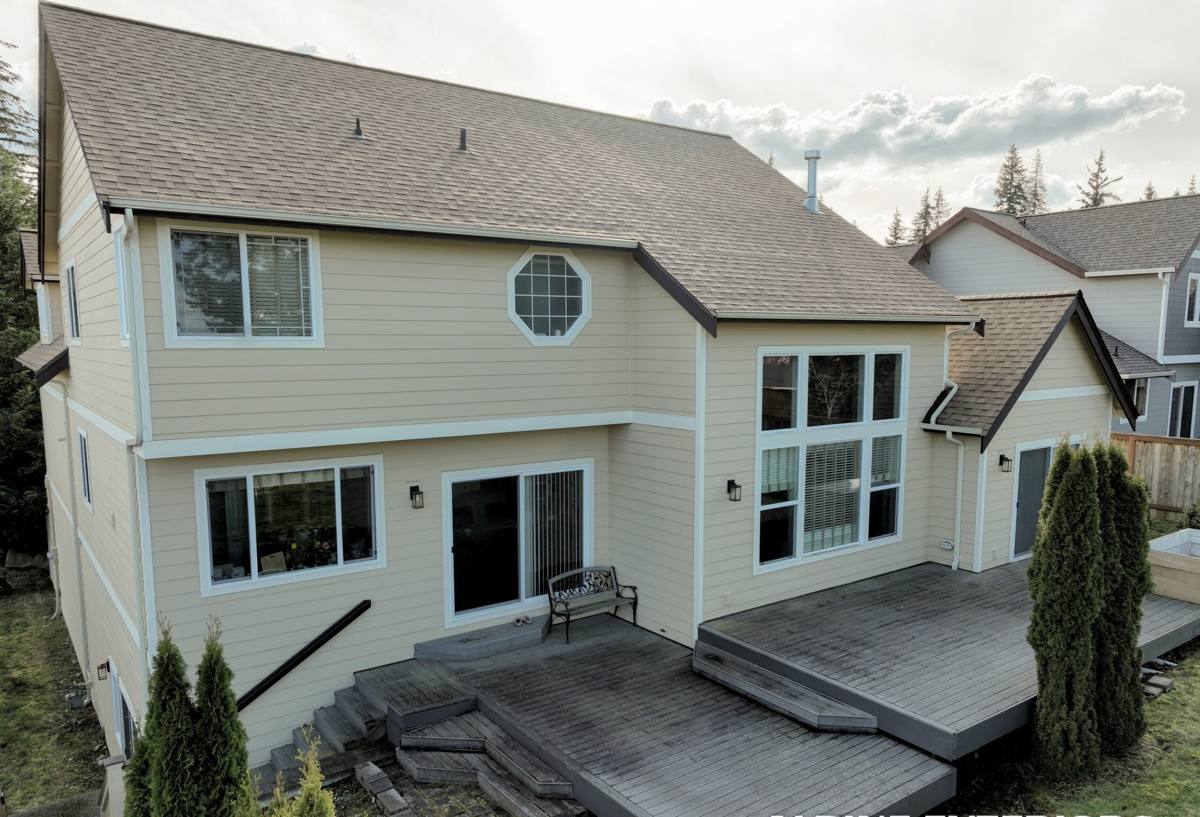
Warning Signs Your Deck Needs Attention
Most deck problems are fixable if they're caught before they spread into the framing. A quick walk around your deck once or twice a year, especially after storm season, can catch issues early. Look for:
- Boards that feel spongy, springy, or slightly bouncy when you walk across them
- Gray, weathered wood that has gone rough and splintery, especially on horizontal surfaces
- Rust streaks running down from screw heads or nail heads
- Gaps opening up between the deck and the house where the ledger board attaches
- Railings or posts that wiggle more than they used to when you lean on them
- Standing water that takes a long time to drain after rain
- Visible cracking, splitting, or checking along the length of structural boards
- A musty smell coming from underneath the deck
Any one of these on its own might be minor. Two or three together, especially involving the framing rather than just the surface boards, usually means it's time for a closer look.
What's Usually Failing: The Parts Homeowners Don't See
The Ledger Board Connection
The ledger board is the piece that bolts the deck to your house, and it's arguably the single most important connection in the whole structure. In a humid coastal climate, moisture gets trapped between the ledger and the house siding or rim joist, and that's where rot often starts first, hidden from view. A deck that looks solid from the top can have a compromised ledger connection underneath, which is a structural safety issue, not a cosmetic one.
Joists, Beams, and Posts
Pressure-treated lumber resists rot, but it isn't rot-proof, especially once cuts, drill holes, or old fastener holes expose untreated wood underneath. Joists near ground contact, or wherever water tends to pool and sit against the wood, deteriorate faster than the rest of the structure.
Footings in Sandy, Wet Soil
A lot of soil in this part of Pinellas County is sandy and holds water close to the surface, particularly on lower lots near the bay. Footings that were undersized or set too shallow to begin with can shift over time, which shows up as a deck that feels slightly uneven or out of level even though the boards themselves look fine.
Fasteners and Hardware
Salt air accelerates corrosion on metal fasteners and joist hangers. Standard galvanized hardware that would hold up fine inland can start rusting noticeably sooner this close to the bay, and corroded fasteners lose holding strength well before the rust is obvious from a distance.
Railings and Guards
Railings take a lot of side-to-side stress from people leaning on them, and post connections that have loosened from wood movement or fastener corrosion are one of the more common safety issues we find on older decks.
Repair, Resurface, or Rebuild? Comparing Your Options
Not every deck problem calls for the same fix. The right approach depends on how much of the structure underneath is still sound versus how much of the damage is limited to the surface boards.
| Approach | When It Makes Sense | What It Involves | Typical Lifespan After |
|---|---|---|---|
| Spot Repair | Framing is sound; only a few boards, a rail section, or isolated hardware has failed | Replace specific boards, posts, or fasteners; re-secure loose connections | Extends current deck's life by several years |
| Full Resurface | Framing is structurally sound but the decking surface is uniformly worn, splintering, or faded | Remove all surface boards, inspect and repair framing as needed, install new decking | New surface life cycle on existing structure |
| Rebuild | Ledger, joists, beams, or footings show widespread rot, corrosion, or movement | Remove deck to the framing (or fully), address structural issues, rebuild to current code | Full new deck life expectancy |
A big part of an honest estimate is figuring out which category your deck actually falls into. We've walked into jobs that homeowners assumed needed a full rebuild that turned out to be a straightforward repair, and the reverse happens too — a deck that looks fine on the surface but has a ledger board or footing problem that needs to be addressed before any new boards go down.
Permits and Florida Building Code Considerations
Deck work in Oldsmar generally falls under permitting requirements, and the scope of the repair usually determines whether a permit is needed — cosmetic board replacement is treated differently than structural work touching the ledger, framing, or footings. Because Oldsmar is its own incorporated city, permitting for deck work here typically runs through the city's own building department rather than the county, so it's worth confirming jurisdiction before assuming county rules apply.
Florida Building Code has also tightened requirements around deck ledger attachment and guardrail construction in recent years, largely in response to structural failures and hurricane-related lessons learned around the state. If your deck was built before those updates, a repair project is often a reasonable opportunity to bring the ledger connection and railings up to current standards rather than simply replacing what's there in kind. We handle the permitting conversation as part of the process so you're not left guessing what's required.
How We Approach a Deck Repair in Oldsmar
- On-site inspection. We check the ledger connection, get underneath the deck to look at joists, beams, and posts, test railings for movement, and check footings — not just the walking surface.
- Honest scope assessment. We tell you plainly whether you're looking at a spot repair, a resurface, or a rebuild, and why, including what we found that you couldn't see from the top.
- Written estimate. Clear pricing based on what actually needs to happen, broken down so you understand what you're paying for.
- Permit handling. If the scope requires a permit, we take care of that step so the work is documented and inspected properly.
- The repair itself. Structural issues get addressed before cosmetic ones — there's no point installing new decking over a joist that needs replacing.
- Final walkthrough. We go over the finished work with you, including any maintenance recommendations specific to how your deck is oriented and how much sun or moisture exposure it gets.
Materials We Choose and Why
Pressure-treated pine is still the standard framing material for good reason — it's strong, affordable, and handles Florida moisture reasonably well when properly detailed and maintained. For decking surfaces, the choice between refinished wood and composite boards comes down to trade-offs rather than one being universally better. Wood costs less upfront and can be refinished, but it demands regular sealing or staining in this climate to keep UV and moisture from breaking it down. Composite decking costs more initially and doesn't need staining, but it depends entirely on correct installation — proper spacing for expansion, correct fastening, and adequate airflow underneath — to perform well over time. We'll walk you through both honestly for your specific deck rather than pushing one option.
For hardware, we favor stainless steel or high-grade coated fasteners and connectors in this environment. The cost difference over standard galvanized hardware is modest, and given how much faster salt air corrodes metal here, it's not a place worth cutting corners.
Why Hire a Crew That Already Works in Oldsmar
Deck repair isn't identical everywhere in Florida, let alone everywhere in the country. A crew that regularly works decks in Oldsmar and the greater Clearwater area already knows how ledger boards tend to fail against local siding types, which jurisdiction handles permitting for a given property, and how differently a deck on a low, bay-adjacent lot behaves compared to one further inland. That familiarity shows up in fewer surprises mid-project and a scope that's accurate from the first inspection, rather than one that grows once work is underway.
It also means we're not guessing at how our own repairs hold up — we see the decks we've worked on again, whether for a follow-up project or a neighbor's referral, and that accountability shapes how carefully we do the work the first time.
If you've noticed any of the warning signs above, or you just want an honest opinion on what your deck actually needs, we're glad to take a look. The estimate is free, there's no pressure to move forward, and you'll get a straight answer about whether you're looking at a simple repair or something bigger — use the form below to get started.