 Clearwater Siding
 Metal Roofing in Downtown Clearwater: What's Driving the Interest
Downtown Clearwater has a mix of housing stock — older bungalows, mid-century block homes, and newer infill construction, many just a short walk from the water. A lot of those roofs are still asphalt shingle, and in this part of Pinellas County, shingles tend to age faster than the warranty paperwork suggests. That's the main reason we hear interest in metal roofing here: homeowners want something that will actually hold up to what Clearwater's weather throws at it, year after year, without another full re-roof in twelve or fifteen years.
Metal roofing isn't the right fit for every house or every budget, and we'll say so plainly during an estimate if it isn't. But for homes in and around Downtown Clearwater — especially anything within a mile or two of the water — a properly installed metal roof solves several problems at once: wind resistance, heat reflection, and long-term durability against salt air that wears down cheaper materials faster than most people expect.
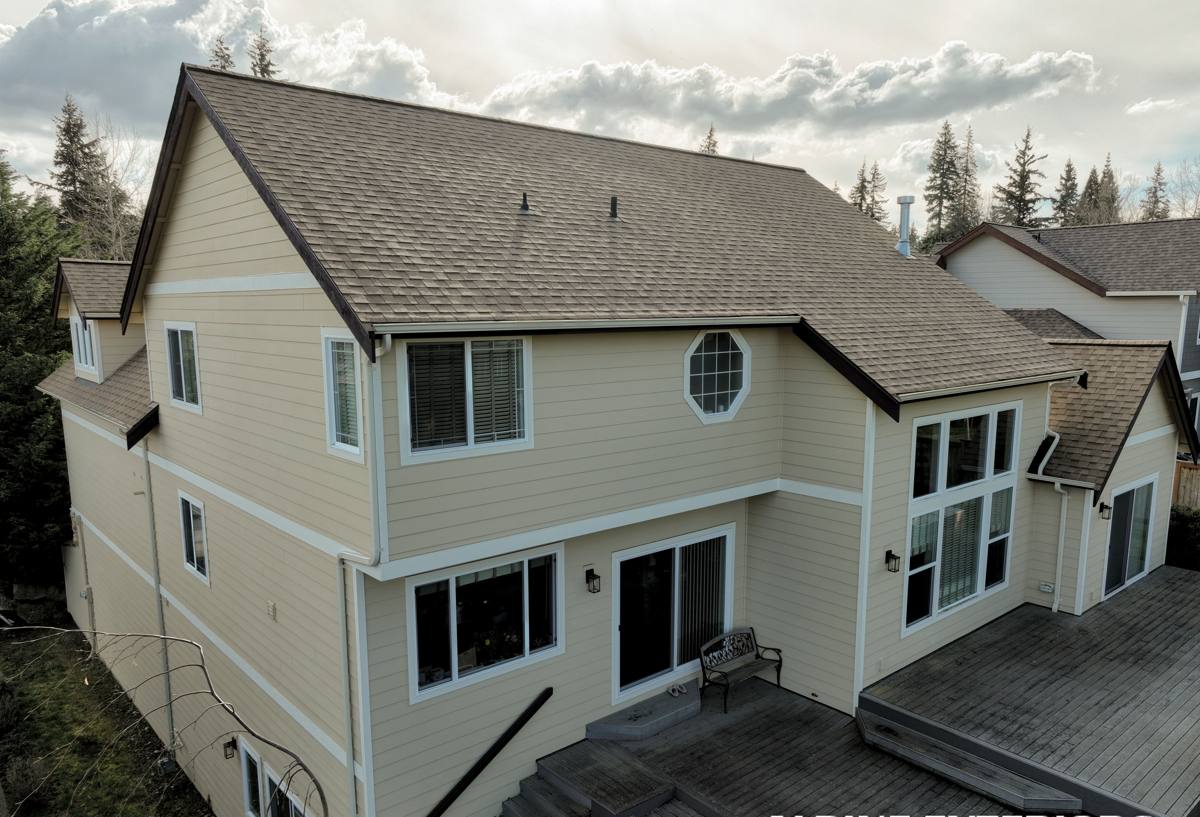
What Clearwater's Climate Actually Does to a Roof
Every roofing material sold in Florida carries some kind of rating, but a lab rating and years of real exposure in Clearwater are two different things. Four factors do most of the damage to roofs in this area:
- Hurricane-force wind — even storms that don't make direct landfall can push sustained gusts through Pinellas County strong enough to lift fasteners, peel back shingle edges, and drive debris into a roof surface.
- Intense, near-constant UV — Florida sun breaks down asphalt oils and degrades weaker coatings faster than in most of the country, which is a big reason shingle roofs here rarely make it to their rated lifespan.
- Wind-driven rain — storms in this area rarely fall straight down; wind pushes rain sideways and up under laps, flashing, and fastener heads, which is where most water intrusion actually starts.
- Salt air — being close to the Gulf and Tampa Bay means airborne salt settles on every exterior surface, accelerating corrosion on fasteners, flashing, and any metal coating that isn't rated for a marine environment.
None of this makes metal roofing a silver bullet. It means the system — panel type, fastener choice, coating, and installation detail — has to be chosen with these four factors in mind, not just picked off a price sheet.
Metal Panel Options That Make Sense for Downtown Clearwater Homes
"Metal roofing" covers a range of products, and they don't all perform the same way this close to the water. Here's how the common options compare for a coastal Pinellas County home:
| Panel Type | Fastening | Wind/Water Performance | Maintenance |
|---|---|---|---|
| Standing seam | Concealed clips, no exposed screws | Best — panels interlock, fewer penetration points for wind-driven rain | Low — no exposed fasteners to re-seal over time |
| Exposed-fastener panel | Screws through the panel face | Good when installed and maintained correctly, but every screw is a potential leak point | Higher — washers and sealant need periodic inspection |
| Stone-coated steel | Concealed or semi-concealed, shingle-profile panels | Strong wind rating, mimics tile or shingle appearance | Low to moderate |
For homes near Downtown Clearwater, we generally lean toward standing seam or stone-coated systems because they minimize the number of fasteners exposed directly to salt air. Exposed-fastener panels aren't a bad product — they're used successfully all over Florida — but the washers and sealant at every screw location need to be checked periodically, and that's a maintenance commitment some homeowners would rather not take on. That's a trade-off we walk through honestly during an estimate, not a knock on any manufacturer's product.
On cost: metal roofing typically runs higher upfront than asphalt shingles, but the gap tends to close over the life of the roof through fewer replacements and lower cooling costs from a reflective surface. We'll give you real numbers for your specific roof rather than a rule of thumb, since panel type, roof complexity, and deck condition all move the price.
What a Correct Metal Roof Installation Involves
Deck Condition and Underlayment
Metal panels are only as good as what's underneath them. Before anything goes on the roof, the deck needs to be sound — no soft spots, no hidden rot from old leaks around vents or valleys. Over that goes a high-temperature synthetic or self-adhered underlayment rated for the panel system; this underlayment is the actual water barrier, since metal panels function as a rain screen rather than a fully sealed membrane on their own.
Fastening and Panel Attachment
Fastener spacing and clip attachment have to match the wind uplift rating required for the home's specific location and roof height, not just follow a generic pattern pulled from a manual. This is where a lot of subpar installs fail — not because the panel itself was wrong, but because the crew used fewer fasteners or the wrong spacing to save time and material.
Flashing and Penetrations
Valleys, wall transitions, vent pipes, and chimney penetrations are where most roof leaks start, regardless of the roofing material. Every one of these needs purpose-made flashing detail, not a bead of caulk standing in for proper metalwork. Wind-driven rain finds any shortcut here within a season or two, sometimes sooner.
Ventilation
A metal roof over a poorly ventilated attic can trap heat and moisture just like any other roofing material. Ridge venting and proper intake at the eaves keep the attic doing its job, protect the underlayment from the underside, and help the home's air conditioning run less during Clearwater's long cooling season.
Wind Ratings, Permits, and Florida Building Code
Any re-roof in Clearwater requires a permit through the city or Pinellas County, depending on the address, and the roofing system installed has to carry current Florida product approval documentation for the specific panel, underlayment, and fastening pattern used. Inspectors check the fastening schedule against what's on the approved plans — that's not paperwork we treat as optional, and it isn't optional for the inspector either.
Wind uplift requirements vary by exposure category and roof geometry, so the same panel system might need a tighter fastener pattern on one house than on another a few blocks away, depending on roof height and how exposed the site is. That's normal engineering, not an upsell, and it's one more reason to work with a crew that pulls permits in this area regularly rather than one seeing Pinellas County requirements for the first time.
Our Process, Start to Finish
- On-site assessment — we look at the existing roof, deck condition, attic ventilation, and any problem areas before recommending a system.
- Written estimate — panel type, underlayment, flashing details, and timeline, in plain language with no vague allowances.
- Permit pulled — we handle the permit application and product approval documentation before work starts.
- Tear-off and deck repair — old roofing removed, deck inspected and repaired where needed before anything new goes down.
- Underlayment and panel installation — installed to the fastening schedule the permit requires, not a shortcut version.
- Flashing, trim, and cleanup — all penetrations and transitions detailed, site cleaned of debris and loose fasteners.
- Final walkthrough and inspection — we review the finished roof with the homeowner and coordinate the final inspection sign-off.
Keeping a Metal Roof Sound in Salt Air
A correctly installed metal roof needs less maintenance than shingles, but "less" doesn't mean "none," especially this close to the Gulf. A short annual routine goes a long way toward protecting the investment:
- Rinse accumulated salt residue and debris off the roof surface, especially after long dry stretches without rain.
- Check exposed fasteners, if the system has any, for loose screws or worn washers.
- Inspect sealant at flashing, vent boots, and wall transitions for cracking or gaps.
- Keep gutters and valleys clear so water doesn't pool against panel edges.
- Watch for early corrosion signs — chalking, dulling, or rust streaks — around cut edges and fastener heads.
- After any major storm, do a visual check from the ground for lifted panels, dented flashing, or debris damage before assuming everything is fine.
Why Hiring a Crew That Already Works Downtown Clearwater Matters
Roofing code and permitting requirements aren't handled identically everywhere in Pinellas County, and a crew that regularly pulls permits for Clearwater knows what the local building department actually wants to see on an application, not just what the state code says in the abstract. That familiarity saves time and avoids the back-and-forth that can stall a project for weeks.
There's also the practical matter of knowing the housing stock. A lot of homes near Downtown Clearwater have older decking and roof framing, and knowing that going in — rather than discovering it mid-tear-off — makes for a smoother project and a more accurate estimate up front. A crew that works this area regularly has already seen what these roofs typically need, from deck repairs to how a given roof pitch handles wind-driven rain.
If you're weighing a metal roof for a home in or around Downtown Clearwater, we're glad to take a look and give you a straight answer about what it would take — no pressure, no obligation. Use the form below to request a free estimate.