 Clearwater Siding
 Siding Repair Built Around Harbor Oaks, Not a Generic Service Call
Harbor Oaks is one of Clearwater's older, more established neighborhoods, sitting close to Clearwater Harbor with a mix of long-standing homes and newer construction packed in near the water. That location is part of what makes the neighborhood desirable — and part of what makes siding here wear differently than siding ten miles inland. Homes closer to the harbor take a steadier dose of wind, humidity, and salt air, and that shows up in the siding failures we get called out for: soft spots near the bottom courses, cracked or lifted panels after a windy afternoon, and paint that's chalking or peeling years ahead of schedule.
This page is specifically about siding repair in Harbor Oaks — not full replacement, not siding in general. If your siding is mostly sound but has damage in a few spots, storm-related issues, or trouble around trim and penetrations, this is what a correct repair looks like and how we approach it in this part of Clearwater.
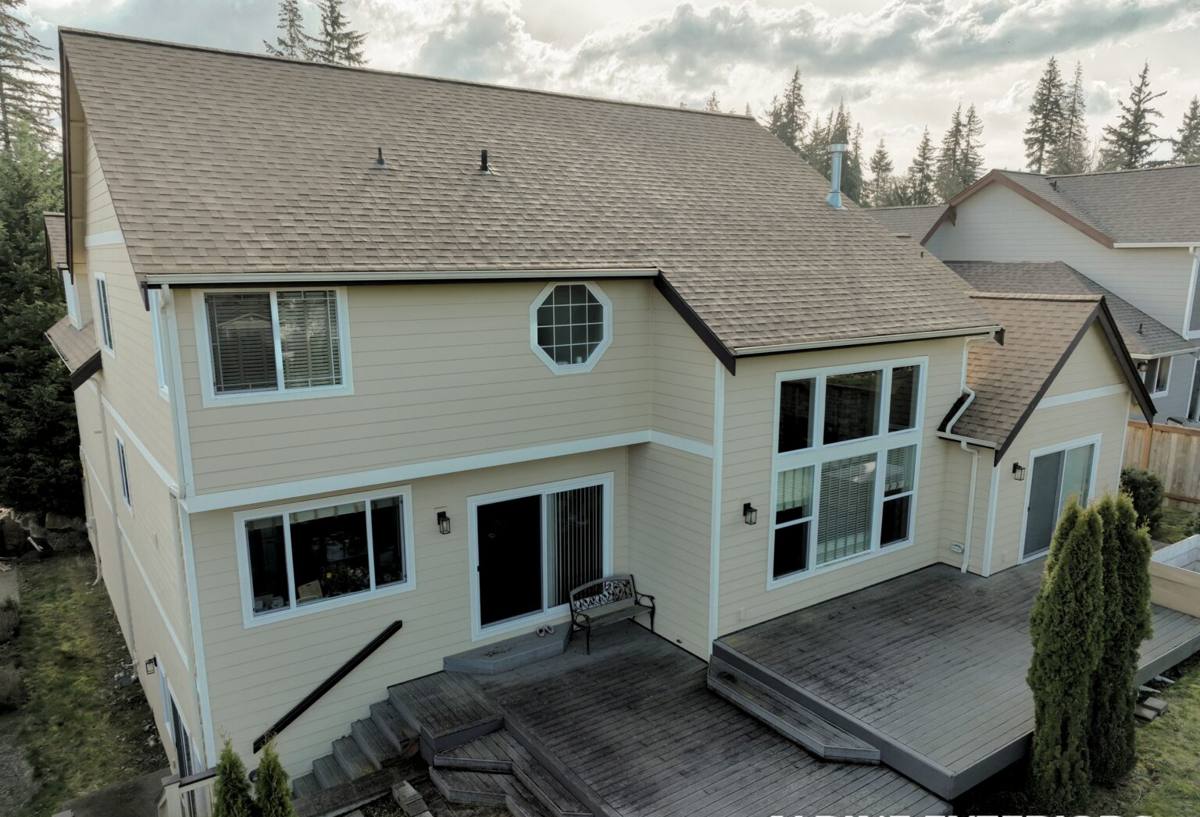
Why the Local Climate Hits Harbor Oaks Siding Hard
Pinellas County sits right on the Gulf Coast, and every home in Clearwater deals with the same basic exposure: intense sun nearly year-round, tropical downpours, and the annual risk of hurricane-force wind. Harbor Oaks doesn't escape any of that, and its proximity to the harbor adds a layer most inland Clearwater neighborhoods don't deal with as consistently.
Wind-Driven Rain
Florida rain rarely falls straight down. During thunderstorms and tropical systems, it comes in sideways, and siding that's slightly loose, has an open seam, or has lost caulking at a joint will let water behind the panel instead of shedding it. Once water gets behind siding, the damage happens where you can't see it — at the sheathing and framing — long before it shows up on the surface.
Hurricane-Force Wind
Wind doesn't just push on siding, it pulls. Uplift and flex during storm-force gusts work fasteners loose over time, and a panel that's marginally fastened today can crack, bow, or blow off outright during the next serious system. Harbor Oaks' closeness to open water means wind speeds during storms tend to run a notch above what you'd see further inland.
UV and Heat
Florida sun is relentless. UV breaks down paint film, caulking, and some siding substrates faster here than almost anywhere else in the country. South- and west-facing walls typically show fading, chalking, and caulk failure well before the rest of the house.
Salt Air
Salt in the air accelerates corrosion on fasteners, trim, and metal flashing, and it speeds up the breakdown of paint and caulk. Homes within a mile or two of Clearwater Harbor see this more than homes further from the water — it's a slow, steady effect rather than a single dramatic failure, which is exactly why it gets missed until repair scope grows.
What We're Usually Called Out to Fix
| Damage Type | What's Usually Driving It | What the Repair Involves |
|---|---|---|
| Cracked or split panels | Wind flex, impact, or a fastening issue from the original install | Remove and replace the affected panel(s), correct the fastening pattern, reseal properly |
| Soft or swollen siding near the bottom | Water intrudes at grade, behind gutters, or through a failed joint and sits against the material | Cut out and replace the damaged section, fix the water source, confirm proper clearance from grade |
| Peeling or chalking paint | UV exposure and age outrunning the factory or field finish | Depends on siding type — sometimes a repaint, sometimes a sign the panel itself needs replacing |
| Gaps, warping, or lifted edges | Wind uplift, moisture cycling, or original installation shortcuts | Re-fasten or replace, correct spacing and clearances, reseal joints and trim |
| Corroded or popped fasteners | Salt air and humidity attacking exposed metal | Remove and replace with corrosion-resistant fasteners set to proper depth |
| Damage around windows, corners, or utility penetrations | Flashing or sealant failure letting water track behind the siding | Repair the siding and correct the flashing/sealant detail causing the leak, not just the visible symptom |
What a Correct Siding Repair Actually Involves
A repair that only addresses what's visible from the driveway isn't a real repair — it's a cosmetic patch that lets the underlying problem keep working. On every siding repair call in Harbor Oaks, our process covers three things, not just one:
- Find the actual cause. Cracked siding, soft spots, and stained boards are almost always a symptom. We trace the damage back to its source — a caulk failure, a flashing gap, a fastening issue — before we cut anything out.
- Check what's behind the siding. If there's any sign water got behind the panel, we open it up and look at the sheathing and house wrap before closing it back up. Repairing over hidden rot just buys a shorter, more expensive repeat visit.
- Match the repair to the original material and profile. Board width, reveal, and finish all need to line up with what's already on the wall, or the patch reads as a patch from the street.
We also pay close attention to the details that fail first in this climate: fastener spacing and type, caulk joints at seams and trim, and clearance at the bottom of the wall. Those small details are usually the difference between a repair that holds through the next hurricane season and one that's back on our schedule in eighteen months.
Repair or Replace? How We Make That Call
Not every damaged section needs a full re-side, and we're not going to tell you it does. But there's a point where patching individual areas stops making sense — either because the damage is too widespread, the underlying material has reached the end of its life, or repairing piecemeal starts costing more over time than doing the job right once.
| Factor | Usually Points to Repair | Usually Points to Replacement |
|---|---|---|
| Extent of damage | Isolated to one or a few sections | Spread across multiple walls or elevations |
| Underlying structure | Sheathing and framing are sound where checked | Rot or moisture damage found behind more than a spot area |
| Siding age and material | Siding is still within its useful life and holding up elsewhere | Siding is old, discontinued, or a material known for shortened lifespan in coastal climates |
| Color/profile match | Original material or a close match is still available | Product is discontinued or too weathered to blend with new sections |
| Recurring problems | First repair in this area of the home | Same wall has needed repair more than once |
We'll always give you a straight answer on which side of that line your home falls on, and why — not the answer that's easiest to sell.
Why Material Matters When You're Repairing, Not Just Installing
We install one siding system: James Hardie fiber cement. That standard shapes how we handle repairs, too. When we're patching or replacing a section on a home that already has Hardie siding, we can match panel profile, reveal, and ColorPlus finish closely because it's a consistent, factory-engineered product line — not a mixed batch of whatever was available at the time.
On homes with other siding materials — vinyl, LP SmartSide, cedar, or older fiber cement brands — we'll still repair what's there when the damage is limited and the material is still viable. But if a home's siding is reaching the point where repair after repair is turning into the pattern, we'll be honest that a full re-side with James Hardie is usually the better long-term move for this climate: it's non-combustible, engineered for high-moisture, high-UV regions, and backed by a strong transferable warranty. We won't push a full replacement on a repair call that doesn't need one, but we also won't pretend a chronically failing material is going to start behaving differently on the next patch.
Our Harbor Oaks Repair Process
- On-site assessment. We inspect the damaged area and the surrounding siding, not just the spot you called about, since Harbor Oaks' wind and salt exposure often means related wear nearby.
- Diagnose the cause. We identify what let water or wind damage in — a flashing gap, failed caulk, a fastening issue — so the repair fixes the source, not just the symptom.
- Straight scope and cost. You get a clear explanation of what needs to happen, what it involves, and whether repair or replacement is the right call for that section.
- Repair the siding and the cause. Damaged panels are removed and replaced, fastening and clearances are corrected, and flashing or sealant details are fixed so the same problem doesn't resurface.
- Final check. We walk the repair area with you before we consider the job done.
Why a Crew That Already Works Harbor Oaks Matters
Siding repair isn't just a swap-the-panel job — it depends on understanding how a specific home in a specific location has been taking damage over time. A crew that's already worked in Harbor Oaks has a feel for how homes near the harbor behave: where wind-driven rain tends to find its way in, how salt air affects fasteners and trim faster than it would a few miles inland, and which repair shortcuts don't hold up through a Tampa Bay hurricane season.
There's also a practical side to working locally. We're not driving across the county for a small repair call, which means faster response after a storm and less delay getting a damaged section closed back up before the next round of rain. And because we know the products and profiles common in this area, we're not guessing at what will match your existing siding.
After Your Repair: A Quick Maintenance Checklist
Once a repair is done, a little attention keeps it from becoming a repeat call. In Clearwater's climate, we recommend homeowners check these a couple of times a year, and again after any major storm:
- Look along caulked joints and seams for cracking or gaps, especially on south- and west-facing walls
- Check that gutters are directing water away from the siding, not dripping down the wall
- Confirm mulch or landscaping hasn't crept up to hold moisture against the bottom of the siding
- Scan for soft spots, discoloration, or bubbling paint, which often show up before a crack does
- After any named storm, do a quick walk-around for lifted panels, loose fasteners, or debris damage
If you're seeing any of this on a Harbor Oaks home, we're happy to take a look and give you a straight read on what it needs. We offer free, no-pressure estimates — no obligation, just an honest assessment of what's going on with your siding and what it would take to fix it right, using the form below.