 Clearwater Siding
 Fiber Cement Siding Built for Largo's Climate
Largo sits inland enough from the Gulf to feel a little removed from beachfront exposure, but don't let that fool you — this is still Pinellas County, and the same forces that batter waterfront homes in Clearwater Beach and Belleair reach Largo too. Salt-laden air moves inland on sea breezes almost every afternoon, summer humidity stays high enough to keep moisture in play year-round, and any storm that tracks through the Tampa Bay area brings wind-driven rain that finds every gap in a home's exterior. Add in Florida's intense, near-constant UV load, and you've got a climate that is genuinely hard on siding — harder than most manufacturers' marketing materials let on.
We work in Largo regularly, and what we see on older homes here is consistent: siding that looked fine for a decade and then failed fast once moisture got behind it, or paint and caulking that gave out years before the manufacturer's warranty ran its course. Fiber cement siding, installed correctly, is one of the few exterior products that actually holds up to this combination of heat, humidity, wind, and salt without becoming a maintenance project every other year.
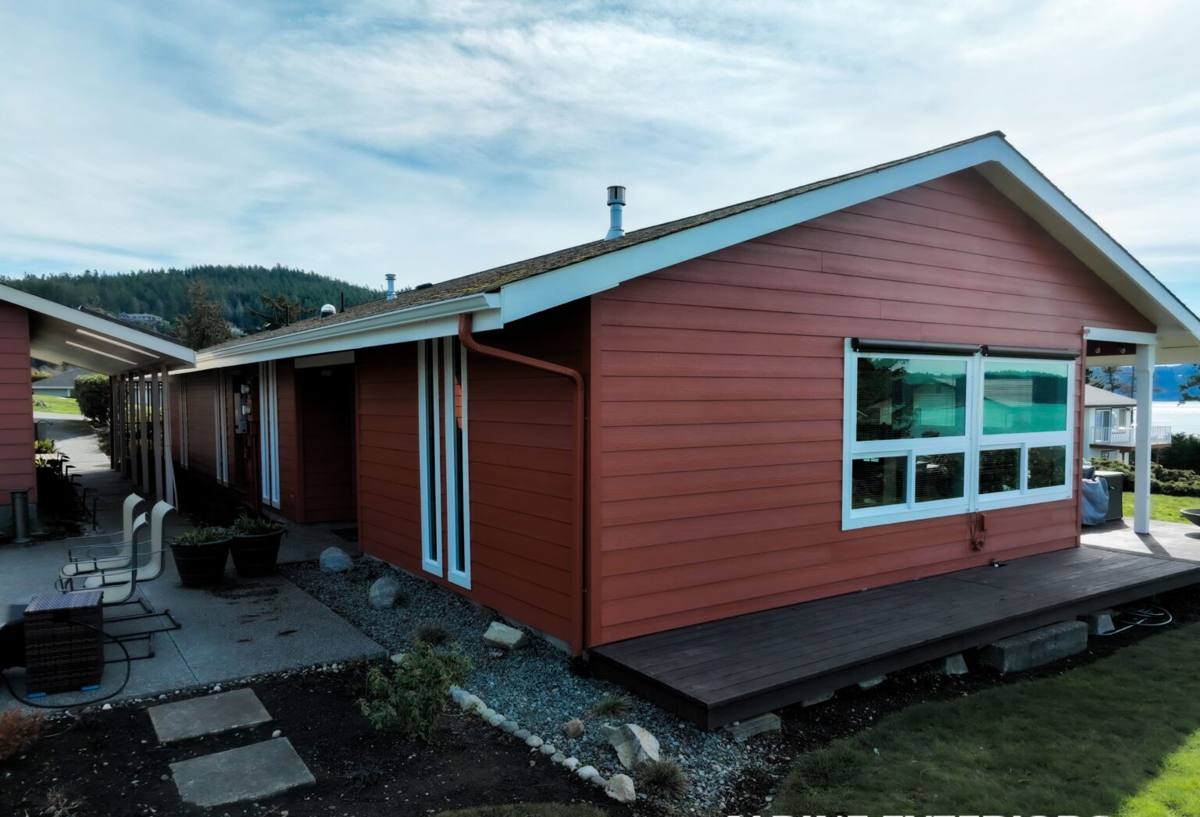
Why Largo Homes Need More Than "Standard" Siding
Wind and Storm Exposure
Pinellas County building code reflects the real risk of hurricane-force wind, and siding is one of the first things to fail when wind gets underneath it. Poorly fastened panels, undersized trim, or gaps at corners and openings give wind a place to grab, and once one panel lifts, the ones around it are next. Correct fastening pattern, panel engagement, and clearances matter more here than in most parts of the country.
UV and Heat Cycling
Largo gets sun exposure most of the year, and siding facing south and west takes the brunt of it. Cheaper finishes chalk, fade, and become brittle under sustained UV. Materials that expand and contract significantly with heat also stress their own fasteners and joints over time, which is part of why we don't recommend certain wood-based and engineered wood products for this climate.
Salt Air and Moisture
Even without direct beachfront exposure, Largo homes get enough salt-laden moisture in the air to accelerate corrosion on unprotected fasteners and speed up the breakdown of finishes not designed for it. Combined with wind-driven rain during storms, any siding product with weak moisture resistance is going to show problems at seams, butt joints, and penetrations first.
Why We Install Only James Hardie Fiber Cement
We standardized on James Hardie products for every siding job we do, including here in Largo, because it's the fiber cement system that's engineered specifically for climates like this one. James Hardie's HZ5 product line is formulated for high-humidity, high-moisture regions — which includes all of Florida — with a composition designed to resist moisture intrusion and hold up under repeated wet-dry cycling.
A few specific reasons this matters for Largo homeowners:
- Non-combustible core — fiber cement doesn't feed a fire the way wood-based sidings can, a real consideration in dry spells between Florida's wet season storms.
- ColorPlus factory-applied finish — baked-on color with UV-resistant technology that holds up dramatically better than field-applied paint under Florida sun, and it's backed by its own finish warranty separate from the substrate warranty.
- Engineered for wind performance — when installed to Hardie's published fastening specifications and matched to correct panel selection for the exposure, the system is built to perform in high-wind regions.
- Dimensional stability — fiber cement moves far less with heat and humidity swings than wood or engineered wood alternatives, which means fewer stress points at joints and fasteners over the life of the siding.
- Strong transferable warranty — a real, honored warranty program that adds resale value, which matters in an active real estate market like Largo's.
We don't install vinyl, LP SmartSide, Cemplank, Allura, or primed wood species like spruce or cedar. Each of those has a place in the market, but none of them combine non-combustibility, factory-cured UV-stable finish, and long-term dimensional stability the way Hardie's fiber cement system does — and in a climate this demanding, we'd rather stand behind one product we trust completely than offer a menu of compromises.
What a Correct Installation Actually Involves
Fiber cement siding is only as good as its installation. We've seen Hardie product fail prematurely on other homes purely because of installation shortcuts — and in Largo's climate, those shortcuts show up faster than they would somewhere drier and calmer.
Moisture Management Comes First
Before a single piece of siding goes up, the water-resistive barrier and flashing details around windows, doors, and penetrations have to be right. Fiber cement is durable, but it's not a substitute for a properly built water management system behind it — that's where most real failures start.
Fastening to Spec
James Hardie publishes specific fastener types, spacing, and embedment requirements, and those specs change based on wind exposure. We follow them to the letter rather than defaulting to whatever's fastest, because in a hurricane-prone county, the fastening schedule is what keeps panels on the wall during a storm.
Joints, Caulking, and Clearances
Butt joints, corners, and trim need correct gapping and the right sealant — not just any exterior caulk. Ground clearance and clearance from roof lines and decks also need to be correct so water sheds away from the siding instead of wicking into cut edges.
Cutting and Edge Sealing
Cut edges on fiber cement need to be sealed per manufacturer instructions. Skipping this is one of the most common shortcuts we see, and it's exactly the kind of detail that doesn't show up as a problem for a year or two — then does.
Our Process for Largo Projects
| Step | What Happens |
|---|---|
| Assessment | On-site inspection of existing siding, sheathing, and moisture damage; wind exposure and elevation-specific factors are noted |
| Product Selection | Correct Hardie panel style, exposure, and ColorPlus finish selected for the home and its sun/wind exposure |
| Prep and Moisture Barrier | Old siding removed, sheathing inspected and repaired as needed, water-resistive barrier and flashing installed correctly |
| Installation | Panels installed to manufacturer fastening spec, with correct joint treatment and clearances |
| Final Detail and Walkthrough | Trim, caulking, and touch-up finished; homeowner walkthrough before job close-out |
Cost Factors for Largo Homeowners
Every home is different, but the main variables that drive cost on a Largo fiber cement project are consistent:
| Factor | Why It Matters |
|---|---|
| Home size and complexity | More corners, gables, and trim detail mean more labor and material |
| Existing siding removal and sheathing condition | Moisture damage found underneath old siding adds repair scope before new siding goes on |
| Panel style and profile | Lap, shingle, and panel styles vary in material and labor cost |
| Trim and accessory work | Window/door trim, fascia, and soffit work done alongside siding affects total scope |
| Access and site conditions | Landscaping, fencing, and multi-story sections affect labor time |
We give straightforward, itemized estimates rather than vague ranges once we've actually seen the home — broad national averages don't mean much when the real cost depends on what's underneath your existing siding.
Signs Largo Homeowners Should Watch For
- Soft or spongy spots when pressing on siding, especially near the bottom courses
- Paint that's peeling, bubbling, or chalking heavily on south- and west-facing walls
- Visible gaps or separation at corners and butt joints
- Warping, buckling, or panels that look wavy from an angle
- Mold or mildew staining that keeps returning after cleaning
- Rising energy bills that may point to compromised insulation behind failing siding
Catching these early matters — in a climate this active, a small moisture problem behind siding doesn't stay small.
Why Hire a Crew That Already Works Largo
Siding installation isn't one-size-fits-all across Florida, let alone across the country. A crew that regularly works Pinellas County understands the wind exposure categories that apply locally, has already dealt with the moisture and sheathing conditions typical of homes in this area, and knows how to sequence a job around Florida's wet season rather than getting caught mid-project by a storm system. That local experience shows up in the details — flashing choices, fastening decisions, and scheduling — that a crew unfamiliar with the area might get wrong the first time.
If your Largo home needs new siding or you're just trying to figure out whether what you have is holding up, we're happy to take a look. Reach out for a free, no-pressure estimate using the form below.