 Clearwater Siding
 Siding in Coachman Ridge Has to Work Harder Than It Does Almost Anywhere Else
Coachman Ridge is a settled residential neighborhood in Clearwater, and like the rest of Pinellas County, it sits in a part of Florida where exterior materials get tested year-round, not just during hurricane season. Homes here deal with sustained UV exposure that fades and breaks down weaker materials, wind-driven rain that finds every gap in a poorly flashed wall, tropical-storm and hurricane-force wind loads that stress every fastener, and salt-laden air that migrates well inland from Tampa Bay and the Gulf. None of that is unique to any one street or subdivision — it's the baseline for anyone who owns a home in this part of the state.
What that means practically: siding that's marginal in a milder climate fails faster here. Seams open up, panels cup and warp, paint chalks and peels years ahead of schedule, and moisture that gets behind the cladding has a much easier time causing rot because humidity rarely gives wood or wood-composite products a chance to fully dry out. A siding job in Coachman Ridge isn't just a cosmetic upgrade — it's a decision about how well the house is going to hold up over the next 20-plus years of Florida weather.
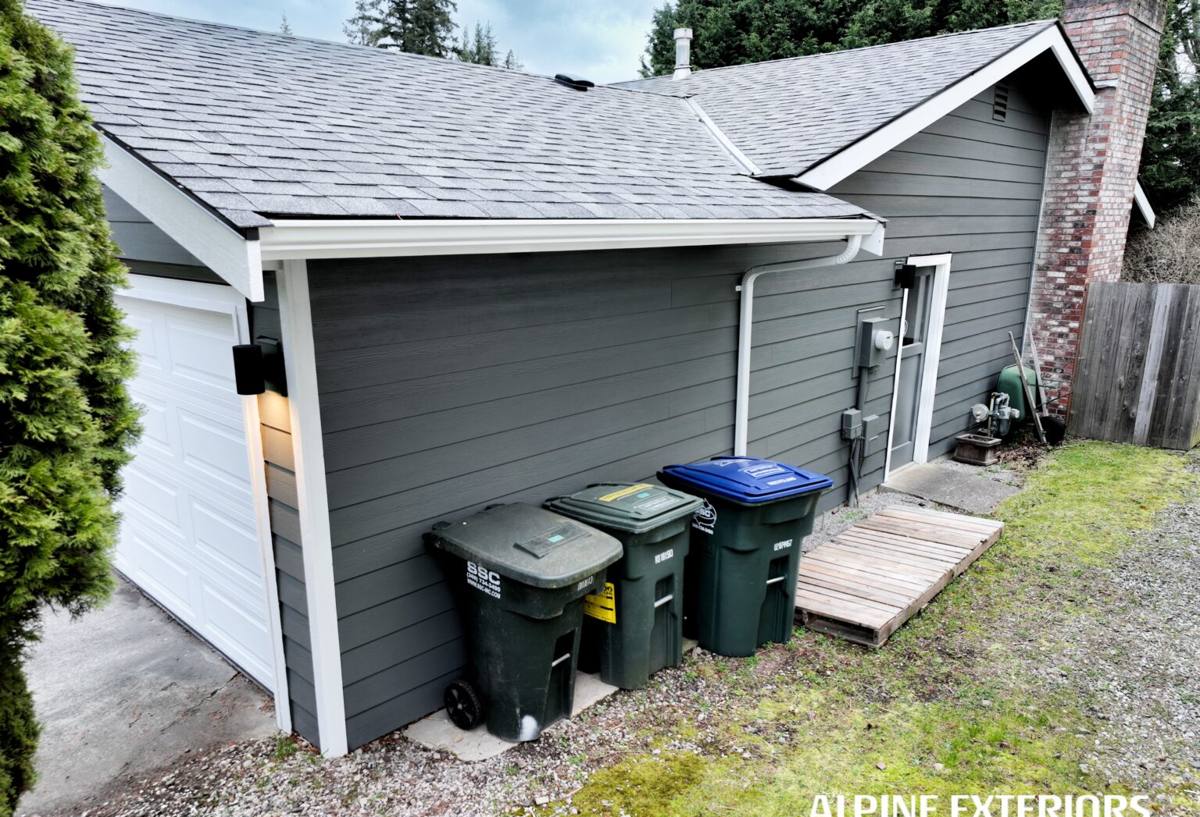
Why We Install James Hardie Fiber Cement and Nothing Else
We're a Hardie-only siding contractor. We don't install vinyl, LP SmartSide, primed spruce or cedar lap, Cemplank, or Allura. That's a deliberate standard, not a sales preference. Fiber cement, and specifically James Hardie's engineered product line, is non-combustible, dimensionally stable in heat and humidity, and backed by a factory-applied ColorPlus finish that resists the fading and chalking that plagues field-painted materials under intense Florida sun. Hardie also engineers specific product lines for high-humidity, high-moisture climates like ours, which matters more in Pinellas County than it does in a drier region.
We're not going to tell homeowners that every other product is worthless — vinyl is inexpensive and easy to install, and engineered wood has real fans. But we've made a professional judgment call: on Gulf Coast homes exposed to this much sun, salt, and wind, fiber cement holds its shape, color, and structural integrity longer than the alternatives, and that's what we're willing to put our name behind and warranty.
What a Correct Fiber Cement Installation Actually Involves
Fiber cement siding is only as good as the installation underneath it. A huge share of the siding failures we get called out to inspect in this area trace back to shortcuts taken during the install, not a defect in the material itself. On a Coachman Ridge home, a correct job includes:
- A continuous, properly lapped water-resistive barrier installed before any siding goes up, with all penetrations sealed
- Correct flashing at every window, door, roofline, and horizontal trim transition, so wind-driven rain has nowhere to collect
- Fastener placement and spacing that matches Hardie's published specifications for our wind zone — not a generic pattern
- Proper clearance between the bottom edge of the siding and the roofline, deck, or grade, so water can't wick into the board
- Correctly sized gaps at butt joints and trim, caulked with a high-quality, paintable sealant rated for exterior use
- Field-cut edges sealed or back-primed where the factory finish has been exposed
Skip any one of these steps and you can end up with a wall that looks fine on move-out day and starts showing moisture damage within a few years. This is the part of the job that separates a crew that occasionally handles siding from one that installs it as a specialty.
Why This Matters More on Wind-Exposed Elevations
Coachman Ridge homes, like most of Clearwater, take direct wind loading during tropical storms and hurricanes. Fastener spacing and edge clearances that would pass inspection in a low-wind region aren't sufficient here — Hardie's installation instructions include tighter fastening schedules specifically for higher wind zones, and Florida Building Code requires siding installations to meet the wind-load ratings for the county they're installed in. A correctly fastened Hardie installation is rated to hold up to serious wind events; an installation that ignores the spec sheet is a liability waiting for the next named storm.
Choosing the Right Hardie Product for This Neighborhood
James Hardie makes several distinct siding profiles, and the right choice depends on the home's architecture and what look the owner wants — not just budget.
| Product | Best Use | Look |
|---|---|---|
| HardiePlank Lap Siding | Most single-family homes; the standard replacement choice | Traditional horizontal lap, smooth or cedar-textured |
| HardieShingle | Accent gables, dormers, or full-facade coastal/cottage styling | Staggered or straight-edge shingle panels |
| HardiePanel Vertical Siding | Modern facades, porch areas, accent walls | Clean vertical lines, often paired with board-and-batten trim |
| HardieTrim | Fascia, corner boards, window and door trim | Smooth finish that pairs with any of the above |
Hardie also builds its boards to different climate specifications, with HZ5 formulations engineered for regions with more moisture and freeze-thaw cycling than we get here, and standard HZ10 lines suited to our Gulf Coast humidity and heat. We spec the right product line for the specific exposure of a Coachman Ridge home — a south- or west-facing wall that takes direct afternoon sun and storm wind needs the same underlying product but benefits from extra attention to fastening and joint sealing compared to a sheltered north wall.
ColorPlus Finish vs. Field Painting in This Climate
One of the biggest practical advantages of Hardie siding in a place like Clearwater is the ColorPlus factory finish. It's baked on in a controlled environment, cures fully before the boards ever leave the factory, and comes with a longer color-fade warranty than what a field-applied paint job can offer. Given how much direct UV Pinellas County homes absorb over a year, that difference shows up fast — a field-painted board can visibly chalk or fade within a few years, while ColorPlus finishes are engineered specifically to resist that. Homeowners who want a custom color can still go with primed Hardie board and have it painted, but for most Coachman Ridge projects, ColorPlus is the lower-maintenance, better-value choice long term.
Our Process, Start to Finish
Every project follows the same sequence, whether it's a full re-side or a partial repair on one elevation:
- Free on-site estimate — we walk the exterior, check for existing moisture damage or rot in the substrate, and measure for materials.
- Product and color selection — we help match the right Hardie profile and ColorPlus color to the home's style and any HOA guidelines that apply.
- Tear-off and substrate inspection — old siding comes off and we inspect the sheathing underneath for damage before anything new goes up.
- Water-resistive barrier and flashing — installed to spec before a single piece of siding is hung.
- Siding installation — fastened, spaced, and sealed per Hardie's wind-zone specifications.
- Final trim, caulking, and walkthrough — we review the finished job with the homeowner before calling it complete.
What Fiber Cement Siding Costs in This Area
Every Coachman Ridge home is different, so we don't quote a number without seeing the house, but the factors that move the price are consistent:
| Cost Factor | Why It Matters |
|---|---|
| Home size and story count | More square footage and second-story access both add labor time |
| Extent of substrate repair needed | Rotted sheathing or framing found during tear-off has to be replaced before new siding goes up |
| Product line and profile | Lap siding, shingle siding, and vertical panel all price differently |
| Trim and detail complexity | Gables, dormers, and multiple roof transitions add flashing and cutting time |
| Full re-side vs. partial replacement | Partial jobs cost less overall but sometimes cost more per square foot to match existing material |
We give straightforward, itemized estimates so homeowners know exactly what they're paying for — materials, labor, and any substrate repair are broken out separately.
Maintenance and Long-Term Performance
Fiber cement's biggest advantage over the life of the siding is how little it demands from the homeowner. It won't rot, it's non-combustible, and it holds paint and factory finish far longer than wood-based alternatives in humid, salt-exposed air. That said, "low-maintenance" doesn't mean "no-maintenance" anywhere in Pinellas County. We recommend homeowners rinse the exterior periodically to clear salt residue and airborne grime, inspect caulked joints annually for cracking or separation, and address any impact damage promptly so moisture can't get behind the board. Done right, a correctly installed Hardie system on a Coachman Ridge home should hold its finish and structural integrity for decades with only that basic upkeep.
Why It Matters to Hire a Crew That Already Works This Neighborhood
Siding installation quality depends heavily on local knowledge that doesn't show up in a generic spec sheet. A crew that already works in and around Coachman Ridge knows the wind-load and permitting requirements Clearwater and Pinellas County actually enforce, understands how HOA architectural guidelines in established neighborhoods typically handle siding color and material changes, and has already seen how homes of this area's common construction types perform over time. That translates into fewer surprises during tear-off, faster permitting, and a finished installation that's built for the specific exposure conditions of this part of Clearwater rather than a one-size-fits-all approach.
Signs a Coachman Ridge Home May Need New Siding Soon
- Visible warping, buckling, or separation at panel seams
- Soft spots or discoloration near the base of exterior walls, often a sign of moisture intrusion
- Paint that's chalking, peeling, or fading noticeably faster than the rest of the home's exterior
- Cracked or missing caulk around windows, doors, and trim joints
- Visible gaps where siding meets roofline, corner trim, or foundation
- Rising energy bills that may point to compromised insulation behind damaged siding
If any of these sound familiar, it's worth having the siding inspected before small issues turn into structural repairs.
If you're weighing a siding replacement or repair for a home in Coachman Ridge, we're happy to take a look and give you a straightforward, no-pressure estimate — just fill out the form below and we'll get in touch.