 Clearwater Siding
 Building a Deck That Actually Holds Up in Dunedin
Dunedin sits right on the Pinellas County coastline, and that location is exactly why so many decks in this area fail early. A deck here isn't just outdoor furniture on posts — it's a structure that has to survive hurricane-force wind gusts, months of intense direct sun, wind-driven rain that finds its way into every seam, and salt-laden air that corrodes anything not built for it. A deck design that works fine in a landlocked climate can start falling apart in Dunedin within a few years if it wasn't built with these conditions in mind from day one.
We build custom decks specifically for this environment, not a generic deck that happens to be installed near the water. That distinction shows up in the fasteners we choose, how we frame the substructure, how we handle ledger board attachment, and which materials we're willing to put our name behind.
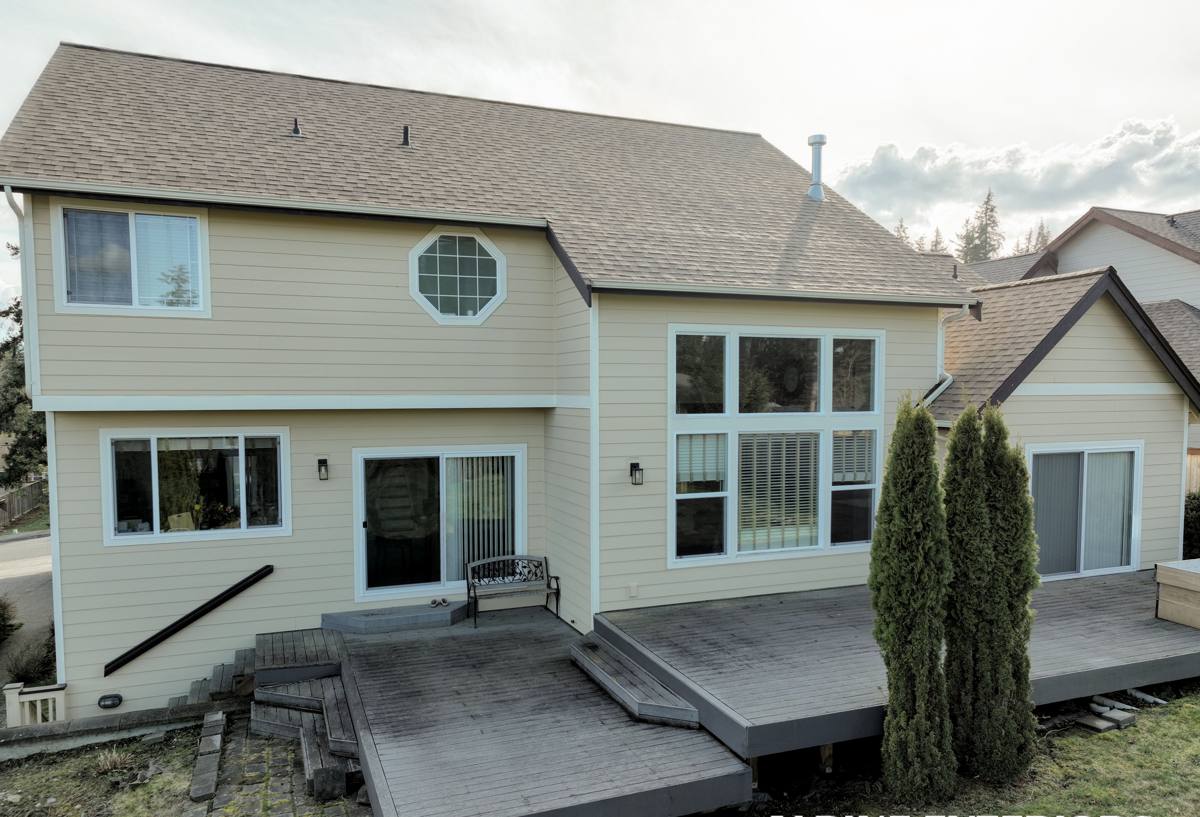
What Dunedin's Climate Actually Does to a Deck
Wind Load
Pinellas County sits in a high-velocity hurricane zone, and Florida Building Code reflects that with specific wind load and fastening requirements for exterior structures. A deck that isn't engineered and fastened to code doesn't just risk cosmetic damage in a storm — ledger boards can pull away from the house, railings can fail, and in the worst cases the whole structure can lift or rack. This is not a place to save money on hardware.
UV Exposure
Florida sun is relentless year-round, not just in summer. UV breaks down the lignin in wood fibers, causing graying and surface checking, and it degrades lower-quality composite and vinyl products faster than their northern-market warranties assume. Deck boards facing full southern or western exposure in Dunedin take a real beating.
Wind-Driven Rain and Moisture
Afternoon storms here don't fall straight down — they come in sideways. That matters at every joint, every ledger connection, and every fastener penetration. Water that gets trapped between a ledger board and the house siding, or pools around a post base, is what causes rot and hidden structural damage long before anything looks wrong on the surface.
Salt Air
Being close to the Gulf and Intracoastal means airborne salt is a constant, even at properties that aren't waterfront. Salt accelerates corrosion in standard fasteners, connectors, and fixtures. Hardware rated for interior or even standard exterior use can start rusting and staining within a season or two here.
What a Correctly Built Deck Involves
A deck built to actually last in this climate comes down to details that aren't visible once the project is finished, but they're the difference between a deck that's still solid in fifteen years and one that needs major repair in five.
- Stainless steel or coated marine-grade fasteners and structural connectors, not standard galvanized hardware
- Proper ledger board flashing that directs water away from the house structure, not just a bead of caulk
- Footings sized and set to Pinellas County frost-free but high-water-table soil conditions
- Joist hangers and structural connectors rated for the actual wind load requirements of the address, not a generic minimum
- Board spacing and fastening patterns that account for material expansion in Florida's heat and humidity swings
- Post bases that keep wood off standing water and allow airflow underneath the deck
- Railing systems fastened to resist both lateral wind load and everyday use, not just code minimums on paper
Skipping any one of these doesn't usually cause an immediate problem — it causes a problem in year three or four, after the warranty conversation has already ended.
Choosing the Right Decking Material for This Climate
Every decking material has real tradeoffs in a Gulf Coast environment. We're upfront about what each one costs you in maintenance, not just money.
| Material | Upfront Cost | Maintenance | Heat & UV Behavior | Salt Air Resistance |
|---|---|---|---|---|
| Pressure-treated wood | Lowest | Annual sealing/staining needed | Grays and checks without upkeep | Fasteners are the weak point |
| Tropical hardwood (e.g. ipe) | High | Periodic oiling to maintain color | Very durable, dense grain | Naturally resistant, hardware still matters |
| Composite decking | Mid-to-high | Low — occasional cleaning | Can retain heat underfoot in direct sun | Good, quality-dependent |
| PVC/capped decking | Highest | Lowest — no sealing ever | Best UV and fade resistance | Excellent |
We don't push composite or PVC as automatically "better" — a well-maintained wood deck can be beautiful and last a long time, and some homeowners genuinely prefer the look and feel of real wood. What we do insist on is being honest about the maintenance commitment each material requires in this specific climate before you commit to it, and matching the substructure hardware to whatever surface material you choose.
Design Considerations Specific to Dunedin Properties
Drainage and Grade
Low points around a deck's footings are a common issue on flatter Pinellas County lots. We grade and plan footing placement so water moves away from the structure instead of pooling against posts during summer downpours.
Permitting and Code
Deck permits in this area go through the local building department, and inspectors are checking specifically for wind-rated connections, proper railing height and baluster spacing, and stair code compliance. We handle the permit process and build to pass inspection the first time, not just to "look finished."
Elevation and Attachment
Whether a deck attaches to the house with a ledger board or stands as a freestanding structure depends on the home's foundation type and siding material. Freestanding designs are sometimes the better call on homes where ledger attachment would compromise the wall assembly's ability to shed water correctly.
Our Process
- On-site assessment — we look at sun exposure, drainage, existing structure, and how the deck will actually be used before recommending a design or material.
- Design and material selection — honest conversation about tradeoffs, with a plan that fits both the home and the budget.
- Permitting — we pull the necessary permits and design to current Florida Building Code wind and structural requirements.
- Construction — proper footings, wind-rated framing and connectors, correct flashing at every attachment point.
- Final inspection and walkthrough — we don't consider the job done until it passes inspection and you've seen the finished work firsthand.
Keeping a Dunedin Deck in Good Shape
Even a well-built deck needs some seasonal attention in this climate. A little consistency goes a long way toward avoiding expensive repairs later.
- Rinse off salt residue and debris periodically, especially after storms
- Check railing and stair connections for looseness once or twice a year
- Reseal or restain wood decking on the manufacturer-recommended schedule — don't stretch it out in this UV exposure
- Keep gutters and downspouts near the deck clear so runoff isn't dumping directly onto footings
- Look underneath the deck occasionally for standing water or signs of moisture at post bases
- Inspect fastener heads for rust staining, which signals it's time to have hardware checked
Why It Matters That We Already Work in Dunedin
Building codes, wind load requirements, and permitting processes vary by jurisdiction, and a crew that mostly works inland doesn't always have the local building department relationships or the day-to-day familiarity with Pinellas County's coastal construction requirements. We've built and repaired decks throughout the Clearwater and Dunedin area, so we already know what inspectors here are looking for, how local soil and drainage patterns behave, and which hardware actually holds up against the salt air a few miles from the water — not the salt air a manufacturer's spec sheet was tested for somewhere else.
That local experience also means fewer surprises during the project. We're not learning the permitting process or the climate demands on your project — we already know them.
What a Deck Project Typically Costs
Cost depends heavily on size, material choice, elevation, and structural complexity, so broad ranges are more honest than a single number. Pressure-treated wood decks tend to be the most budget-friendly starting point, composite decking runs a noticeable step up for lower long-term maintenance, and premium hardwoods or PVC systems sit at the higher end. Site conditions — like whether footings need to go deeper due to grade, or whether the structure is attached versus freestanding — also move the number meaningfully. We give you a firm, itemized quote after seeing the property, not a rough guess over the phone.
If you're planning a new deck or replacing one that's showing its age, we're happy to come take a look and put together a straightforward, no-pressure estimate. Use the form below to get started.