 Clearwater Siding
 Building a Deck That Belongs in Downtown Clearwater
A deck in Downtown Clearwater does a different job than a deck almost anywhere inland. It's not just an outdoor living space — it's a structure that has to survive tropical humidity, direct Gulf-adjacent sun nearly every day of the year, wind-driven rain that gets pushed sideways under railings and through gaps, and salt-laden air that works its way into metal fasteners and connectors long before anyone notices a problem on the surface. Homes in this part of Pinellas County also sit close enough to open water and busy corridors that decks get used hard — entertaining, grilling, foot traffic in wet swimsuits, furniture that never really dries out between rains.
None of that means a custom deck here needs to look industrial or over-built. It means the choices under the surface — framing, fasteners, footings, and the decking material itself — have to be made with this specific climate in mind, not a generic build sheet. This page is about what that actually looks like for a Downtown Clearwater property, not decks in general.
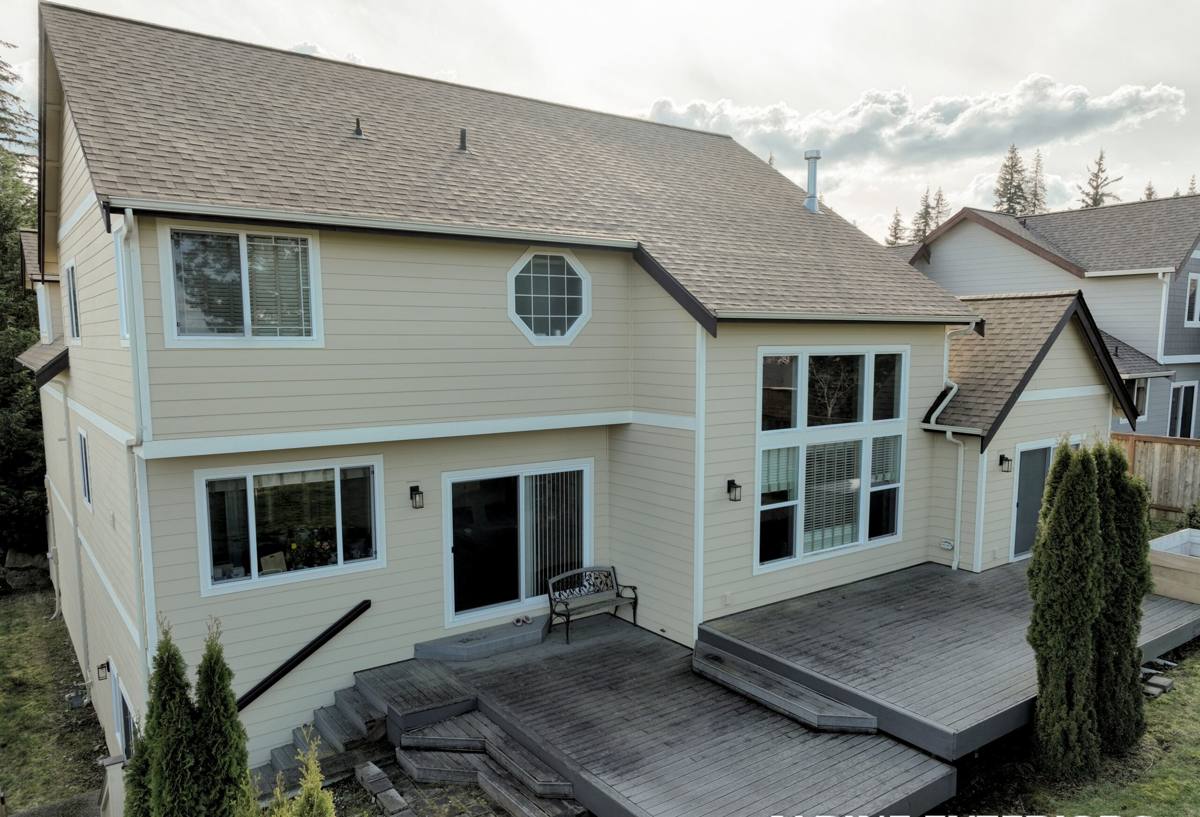
What This Climate Actually Does to a Deck
It helps to be specific about the forces at work, because they push a deck to fail in different ways than they would in a drier, cooler region.
- UV exposure: Central Florida sun breaks down the lignin in wood fibers and the surface resins in lower-grade composites, leading to graying, splintering, or fading well ahead of the timelines advertised in cooler climates.
- Wind-driven rain: Storms here rarely fall straight down. Rain gets pushed under rail caps, into end grain, and behind fascia boards, which is where rot and hidden corrosion usually start.
- Salt air: Even a few miles from the water, airborne salt accelerates corrosion on any fastener, bracket, or hanger that isn't rated for a coastal environment.
- Hurricane-force wind loads: Railings, ledger connections, and post bases need to resist uplift and lateral load during tropical storms and hurricanes, not just support the weight of people standing on the deck.
- Humidity and moisture cycling: Wood and even some composites expand and contract with humidity swings, which stresses fastener holes and joints over years of use.
Any one of these on its own is manageable. Together, over a Florida summer and hurricane season repeated year after year, they're what separate a deck that lasts fifteen-plus years from one that needs major repair in five.
Getting the Framing and Fasteners Right
The part of a deck nobody sees is the part that determines whether it's still safe a decade from now. This is where corners get cut on lower-bid jobs, and it's also where the climate does the most damage.
Fasteners and hardware
Standard zinc-coated screws and joist hangers corrode faster near the Gulf than they would inland. For a Downtown Clearwater deck, that means stainless steel or heavy hot-dip galvanized fasteners rated for coastal or ACQ-treated lumber contact, used consistently — not just on the visible top surface, but on every hanger, post base, and structural screw in the frame.
Ledger and post connections
The ledger board connection to the house and the post-to-footing connections are the two points that matter most in wind uplift. Proper flashing at the ledger keeps wind-driven rain from rotting the rim joist behind it, and hurricane ties or engineered post bases keep the structure anchored during storm-force gusts rather than relying on gravity and friction alone.
Footings
Florida's water table and sandy soils mean footing depth and sizing matter more here than in regions with denser, more stable soil. Footings that are undersized or poured too shallow can shift over time, which is often the real cause of a deck that develops a slope or bounce a few years after it was built.
Choosing the Right Decking Material
There's no single "best" decking material — there's a best material for a given budget, maintenance appetite, and how much direct sun and rain exposure the specific deck will see. Downtown Clearwater properties tend to have decks in full sun for a large part of the day, which should factor into the decision.
| Material | Upfront Cost | Maintenance | How It Handles This Climate |
|---|---|---|---|
| Pressure-treated wood | Lowest | Annual cleaning, re-staining every 1-2 years | Affordable but needs consistent upkeep to resist UV graying and moisture cycling |
| Tropical hardwood | High | Periodic oiling to maintain color | Naturally dense and rot-resistant, but still needs UV protection to prevent graying |
| Capped composite | Mid-High | Occasional washing, no staining | Strong UV and moisture resistance; the cap layer resists salt air better than uncapped composite |
| PVC decking | Highest | Lowest — occasional washing | Fully synthetic, doesn't absorb moisture, holds up well to constant sun and rain exposure |
We'll walk through these trade-offs honestly during your estimate rather than pushing whatever has the best margin. A shaded, covered deck can often justify a lower-maintenance wood option; a deck in full afternoon sun with no cover usually earns back a composite or PVC upgrade in saved maintenance time within a few years.
Why we're selective about lower-grade composites
Not all composite decking is built the same. Older, uncapped composite formulations can absorb moisture at the surface and are more prone to mold growth and fading in a hot, humid climate like ours. Our standard is to spec capped composite or PVC products from manufacturers with track records in coastal Florida installations, and to install them per the manufacturer's specific fastening and spacing guidelines — gapping and fastening composite wrong is one of the most common causes of buckling and squeaking we get called to fix on other people's work.
Railings, Fasteners, and the Details That Fail First
Railings take the most direct wind and rain exposure of any part of a deck, and they're also a life-safety component, not just a design choice. Baluster spacing, post spacing, and rail height all need to meet Florida Building Code requirements, and every connection point needs corrosion-resistant hardware. Aluminum and composite rail systems tend to hold up better here than painted or stained wood rail systems, which need re-coating on a tighter schedule to keep up with UV fading and moisture intrusion at the joints.
Stair stringers and connections deserve the same attention — they see heavy foot traffic and are a common point of hidden rot if end grain isn't sealed and flashed properly.
Permitting and Wind Load Requirements
Deck construction in Pinellas County falls under the Florida Building Code, which sets minimum requirements for structural load, wind resistance, guard and railing height, and stair geometry. Most new decks and significant deck rebuilds require a building permit and inspection, and the specific wind load requirements for Clearwater reflect its coastal exposure category. We handle the permit application and coordinate inspections as part of the project — this isn't an area where it makes sense for a homeowner to navigate the process alone, and skipping permitting on a deck can create real problems later with insurance claims or when the home is sold.
How Our Process Works
The process is the same whether it's a straightforward rebuild or a larger custom design, and it's built around not surprising you at any step.
- On-site assessment: We look at the existing structure (if there is one), the home's ledger attachment point, sun and rain exposure, and how the space will actually be used.
- Design and material selection: We walk through decking, railing, and framing options with honest cost and maintenance trade-offs for your specific situation.
- Written estimate: A clear scope and price before any work starts — no vague allowances that turn into surprise change orders.
- Permitting: We prepare and submit the permit package and schedule the required inspections.
- Construction: Demolition of the old deck if needed, footings, framing, decking, railing, and finish work, in that order, with corrosion-resistant hardware throughout.
- Final walkthrough: We go over the finished deck together, including basic care guidance specific to the material you chose.
Maintaining a Deck in a Salt Air, High-UV Climate
Even the right materials and build only pay off if the deck gets basic seasonal attention. This is what we recommend regardless of who built it:
- Rinse salt and debris off the deck surface and railings every few weeks, more often right after storms with onshore wind.
- Check fastener heads and visible hardware once or twice a year for early corrosion, especially near rail posts and stair connections.
- Clear leaves and debris from between deck boards so moisture doesn't sit trapped against the framing underneath.
- Re-seal or re-stain wood decking on the schedule the product calls for — waiting until it visibly grays means UV damage has already started.
- Inspect ledger flashing and post bases after major storms for any sign of new gaps or water staining.
- Keep an eye on drainage under the deck — standing water after rain is often the first sign of a footing or grading issue.
Why a Crew That Already Works Downtown Clearwater Matters
A contractor who works this area regularly already knows which fastener grades hold up here, which decking products actually perform under this sun exposure, and what the local permitting process expects — instead of learning it on your project. That familiarity shows up in small decisions throughout the job: how deep footings need to go in this soil, how ledger flashing needs to be detailed against wind-driven rain, and which hardware is worth the extra cost because replacing it later means tearing into finished decking. It also means we're a known, reachable crew if a warranty question or storm-related concern comes up after the job is done — not a company that was only ever passing through Pinellas County for one project.
Get a Straightforward Estimate
If you're planning a new custom deck or replacing one that's showing its age, we're happy to take a look and walk you through honest options for your budget and how you'll use the space. There's no pressure and no obligation — just a clear, written estimate based on what your property actually needs. Use the form below to get started.