 Clearwater Siding
 Del Oro Sits at the Sharp End of Florida's Climate
If you own a home in Del Oro, you already know your siding works harder than siding almost anywhere else in the country. This corner of Clearwater and Pinellas County gets the full package: hurricane-force wind loads during storm season, intense UV exposure that runs nearly year-round instead of tapering off in winter, wind-driven rain that hits walls sideways instead of falling straight down, and salt-laden air that never really stops working on exposed metal and fasteners. None of those forces show up occasionally here — they're baseline conditions, and they compound each other. A siding material that handles UV well but swells when it gets wet still fails. A material that sheds water but corrodes at the fastener line still fails. Del Oro's climate doesn't give a mediocre installation much room to hide.
This page is about one thing specifically: what it takes to get fiber cement siding right on a Del Oro home, why that's different from a generic siding job, and why we've built our process around the conditions this neighborhood actually faces rather than a one-size-fits-all approach.
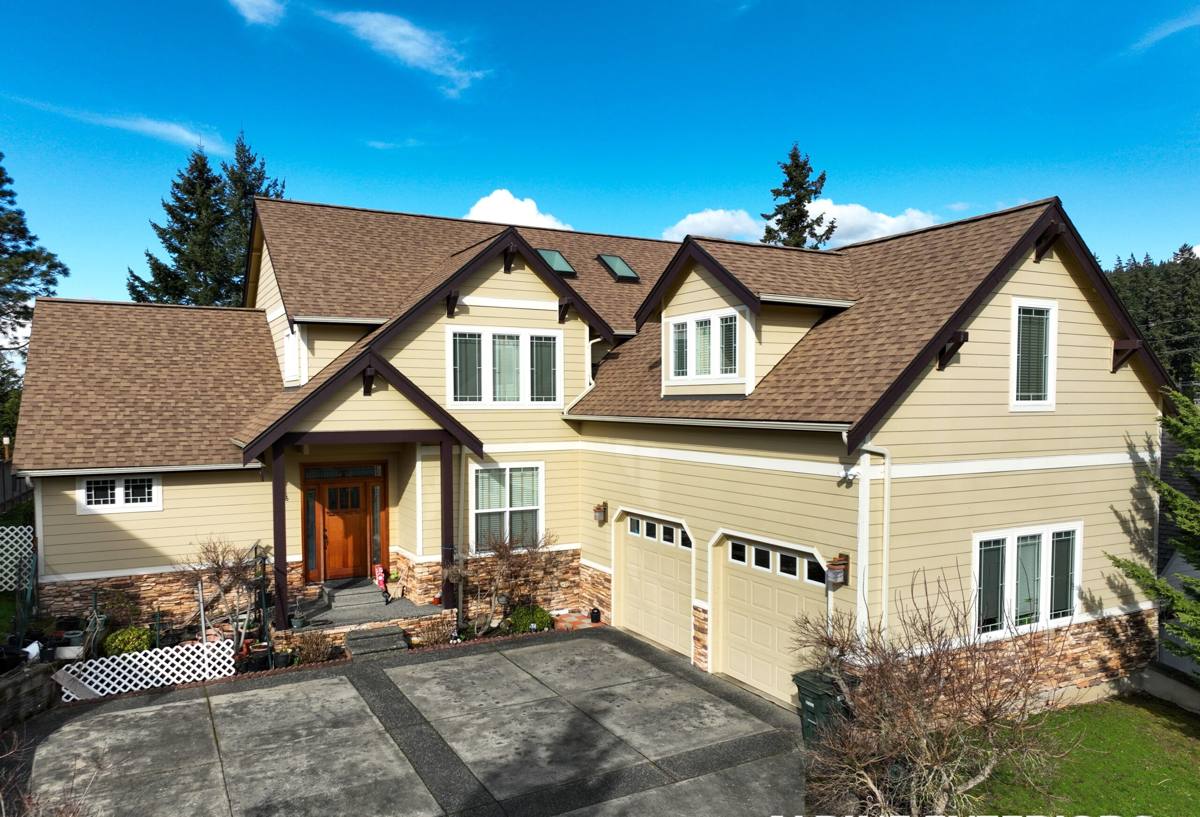
What Del Oro Homes Need From Their Siding
Standing Up to Hurricane-Force Wind
Wind doesn't just push against a wall — it creates pressure differences that pull at panel edges, fasteners, and trim connections, especially at corners and near rooflines where wind speeds accelerate. Siding that isn't fastened to the manufacturer's specified pattern, or that's installed over a weak substrate, is the siding that comes loose first when a real wind event hits. The material itself needs to be dense and rigid enough to resist flexing and cracking under sustained pressure, not just a light gust.
Withstanding Nonstop UV
Florida sun is intense enough, year-round, that finishes and sealants which would last a decade in a milder climate can chalk, fade, or go brittle in a fraction of that time here. A siding finish that isn't engineered for this level of UV exposure will visibly age faster on a Del Oro home than the same product installed further north, and a finish that fades unevenly on sun-facing walls is one of the fastest ways a home starts to look tired before it's actually old.
Shedding Wind-Driven Rain
Most siding details are built around the assumption that rain falls straight down. In Del Oro, storms push rain sideways into laps, seams, and trim lines that were never designed to handle water moving horizontally. That puts more weight on flashing, caulk joints, and the water-resistive barrier behind the siding than it would in a drier, calmer climate — the siding surface is only the first line of defense, not the only one.
Resisting Salt Air Corrosion
Even homes that aren't directly waterfront in the Clearwater area sit within reach of salt-laden air moving in off the Gulf and Tampa Bay. That air accelerates corrosion in any exposed metal — fasteners, flashing, trim connectors — on a continuous basis, not just during storms. A fastener that starts corroding loses holding strength over time and can open a small gap right where it penetrates the siding, which is exactly the kind of slow, invisible failure point that turns into a bigger repair later.
Why Fiber Cement Is the Right Base Material Here
Fiber cement is made from a mix of cement, sand, and cellulose fiber, which gives it a fundamentally different relationship with moisture and heat than wood-based or vinyl products. It doesn't absorb water into its structure the way solid wood, primed spruce, or engineered wood siding does, so it isn't prone to the swelling, cupping, and edge delamination that wet-dry cycling causes in those materials — and in Del Oro, that cycle between a downpour and blazing sun can happen within the same afternoon. It's also dimensionally stable across temperature swings, so it doesn't distort or warp the way vinyl can under direct, sustained heat. And because it's non-combustible, it adds a layer of fire resistance that wood-based siding simply can't offer.
None of that makes fiber cement immune to problems. The caulk joints, fastener lines, and cut edges on any fiber cement installation still have to be detailed correctly, and a poorly installed fiber cement job can underperform a well-installed alternative. But the base material itself isn't the weak point that wood-based or vinyl siding can become in a climate that gives materials very little downtime between wet and dry, hot and cool. That's the foundation everything else on this page builds on.
What a Correct Installation Involves
Prep, Water-Resistive Barrier, and Flashing
Before a single piece of siding goes up, the sheathing underneath needs to be sound and dry, and the water-resistive barrier needs to be continuous, correctly lapped, and free of gaps or reversed seams. Flashing at every window, door, and wall penetration has to be installed and sequenced so water is directed outward and down, not trapped behind the siding. Skipping or rushing this stage is invisible once the job is finished — which is exactly why it's the stage that separates a durable installation from one that looks fine for a year or two and then starts leaking.
Fasteners, Joints, and Clearances
In a coastal, high-salt environment like Del Oro's, fastener type, spacing, and depth matter more than they would inland. Corrosion-resistant fasteners installed to the manufacturer's spacing are a small line-item that has an outsized effect on long-term performance. Every cut edge should be sealed per manufacturer instructions, caulk joints need to be sized and placed correctly rather than used to paper over a gap, and the bottom edge of the siding needs proper clearance from grade, decks, and roof lines where water tends to collect and linger.
Factory Finish, Not Field-Applied Paint
A factory-applied finish is baked on under controlled conditions and backed by its own warranty, which gives it more consistent UV and moisture resistance than a finish applied on-site after installation. In a climate that puts this much continuous stress on exterior finishes, that difference shows up faster here than it would in a milder region.
James Hardie: The Only Fiber Cement We Install
We install James Hardie fiber cement siding exclusively — not Allura, not Cemplank, not any other fiber cement brand, and not vinyl, LP SmartSide, primed spruce, or cedar. Hardie engineers its siding to different regional climate profiles through its HardieZone system, and Florida falls under the formulation built for hot, humid, high-moisture conditions rather than the version designed for colder, drier climates. That distinction matters in Del Oro specifically, where heat, humidity, and storm exposure all stack on top of each other for most of the year.
Beyond the climate engineering, Hardie's ColorPlus factory finish system and transferable warranty give homeowners a level of documented, standardized performance that we can stand behind. That's the reason we standardized on one manufacturer instead of installing whatever a given job happened to spec — consistency in material performance is easier to guarantee when you're not juggling the installation quirks of five different fiber cement brands.
Our Process for a Del Oro Re-Side
A siding replacement in Del Oro follows the same core sequence on every home, adjusted for that property's specific exposure and existing wall condition:
- On-site assessment of the existing siding, sheathing condition, and any problem areas — particularly walls facing prevailing storm direction or afternoon sun
- Removal of the old siding and inspection of the sheathing underneath, with any damaged sections addressed before anything new goes up
- Installation of a continuous, correctly lapped water-resistive barrier and flashing at every window, door, and penetration
- Installation of James Hardie panels or planks to manufacturer fastening specifications, with corrosion-resistant fasteners suited to a coastal environment
- Trim, joint, and caulk detailing sized and placed for long-term performance, not just a clean first-look appearance
- A final walk-through inspection before the job is considered complete
Every one of those steps matters more in Del Oro than it would in a calmer, drier climate, which is why we don't shortcut any of them regardless of how the finished wall looks on day one.
How Materials Compare in Del Oro's Climate
| Material | How It Handles Del Oro's Conditions | Where It Tends to Struggle |
|---|---|---|
| James Hardie fiber cement | Dimensionally stable, non-combustible, factory-finished for UV and moisture resistance | Requires correct joint and fastener detailing at install to reach its full lifespan |
| Vinyl siding | Doesn't absorb water into the material itself | Can distort under sustained heat and UV; seams and J-channels give wind-driven rain a way in |
| LP SmartSide / engineered wood | Workable and lighter to install | Wood-fiber core absorbs moisture readily, especially at unsealed cut edges |
| Cedar / primed wood | Natural appearance | Continuously absorbs and releases moisture with humidity swings, leading to cupping and finish breakdown |
What Drives Fiber Cement Siding Cost in Del Oro
| Cost Factor | Why It Matters |
|---|---|
| Home size and wall complexity | More corners, windows, and rooflines mean more flashing and trim detail work, which adds labor time |
| Existing sheathing condition | Any rot or moisture damage found during tear-off needs to be repaired before new siding goes up |
| Siding profile chosen | Lap siding, shingle-style panels, and board-and-batten each have different material and labor requirements |
| Story height and access | Second-story and hard-to-access walls take longer and require more equipment |
| Existing material removal | Tearing off a prior layer of siding versus starting from bare sheathing changes labor scope |
Because every property's exposure and condition is different, an accurate number only comes from an on-site look at your specific home — broad estimates without that step tend to miss the details that actually drive the final price.
Why Hiring a Crew That Already Works Del Oro Matters
A contractor who already works in and around Del Oro knows the local permitting process through Clearwater and Pinellas County, understands the wind-load and building code requirements that apply to this area, and has a feel for how individual streets and lot orientations tend to take on wind, sun, and rain exposure differently from one property to the next. That local familiarity shows up in small decisions — where extra flashing attention is worth it, which walls need the most corrosion-resistant fastener spec, how to sequence a job around Florida's storm season — that a crew unfamiliar with the area is more likely to treat as generic rather than specific to your home.
Here's a short checklist worth working through with any contractor bidding a fiber cement job in this area:
- Are they licensed and insured to work in Florida, and can they provide proof on request?
- Do they install James Hardie specifically, and can they explain which product line and finish they'd use on your home and why?
- Will they walk you through their flashing and water-resistive barrier approach in specific terms, not just "we do it right"?
- Do they specify corrosion-resistant fasteners appropriate for a coastal, high-salt environment?
- Do they inspect and address sheathing condition during tear-off rather than siding directly over unknown damage?
- Can they speak to Clearwater or Pinellas County permitting requirements for your project without you having to explain it to them?
A contractor who answers those questions specifically, rather than in generalities, is one who's actually done this work in this climate before.
If you're weighing a re-side in Del Oro or just want a straight answer about what your home's siding actually needs, we're glad to take a look and talk through it with you. Reach out below for a free, no-pressure estimate.