 Clearwater Siding
 Why Palm Harbor Decks Wear Out Faster Than the Manual Says
If you own a home in Palm Harbor, you already know your deck doesn't age the way the lumber yard brochure promised. Between the Gulf breeze carrying salt air inland, the long stretches of intense UV that Pinellas County sees almost year-round, and the sideways rain that comes with our seasonal storms, an outdoor structure here takes a beating that a deck in a drier, cooler climate simply never experiences. Add hurricane-force wind events into the mix, and you've got a structure that's constantly being flexed, soaked, dried, and baked in a cycle that accelerates wood movement, corrodes fasteners, and breaks down finishes faster than most manufacturers' warranty language accounts for.
None of that means a deck can't last. It means the build has to respect the environment it's sitting in, from the framing lumber up to the final board. A deck that was built to a generic spec sheet, without accounting for coastal Pinellas conditions, is usually the one we get called out to look at first.
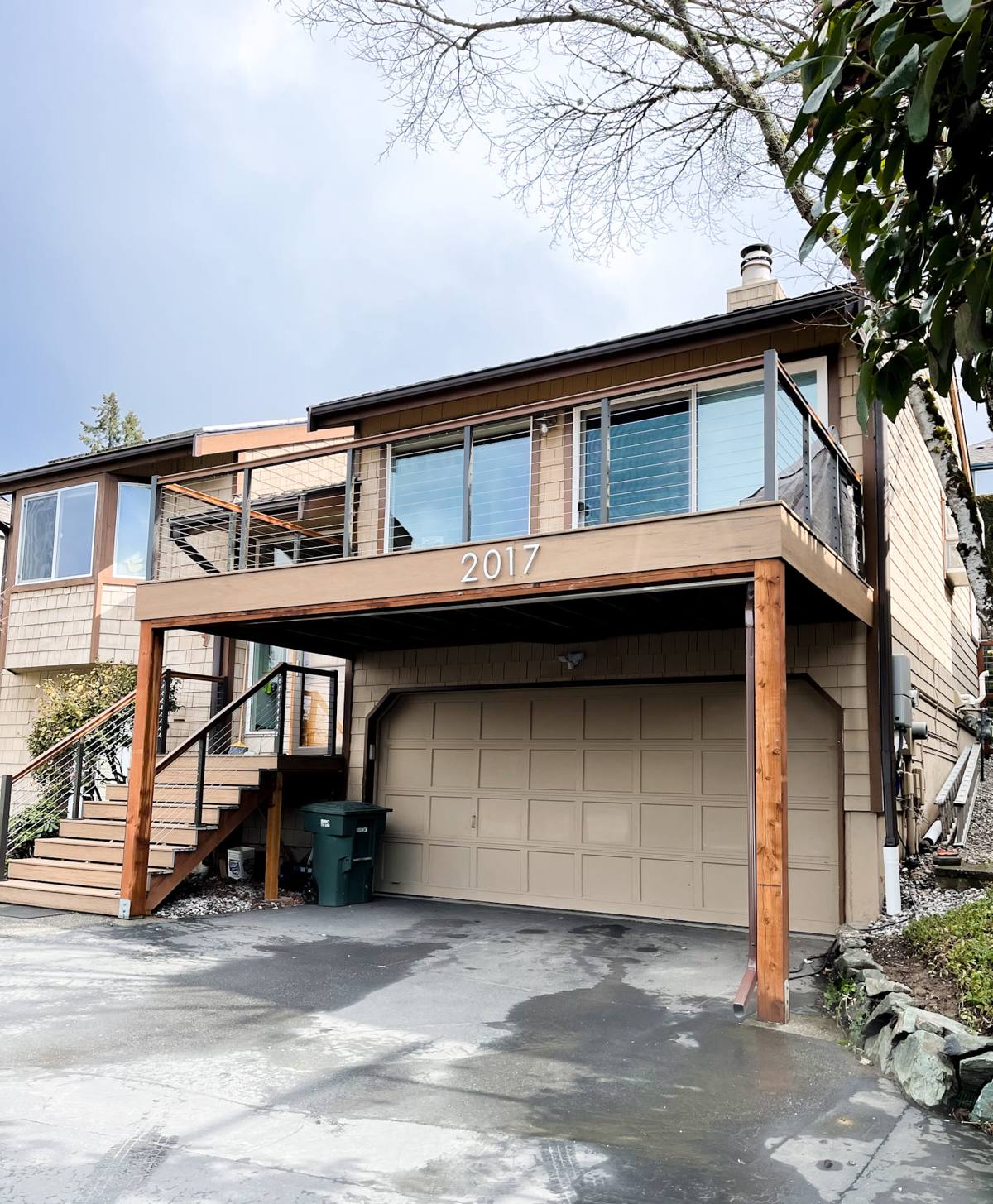
Signs a Deck Needs Replacement, Not Another Repair
Homeowners often ask us to patch a board or two, and sometimes that's genuinely all that's needed. But there's a point where repair stops making financial sense and starts becoming a pattern of throwing money at a structure that's failing underneath. Here's how we tell the difference on a typical Palm Harbor property.
Repair Is Usually Enough When:
- One or two boards are cupped, splintering, or soft, but the framing underneath is solid
- Fasteners have started to pop or stain but the connections themselves are still tight
- The railing is loose in isolated spots rather than throughout the structure
- The deck is under 10-12 years old and has had reasonably consistent maintenance
Replacement Is the Honest Recommendation When:
- Joists or beams show soft spots, rot, or insect damage when probed with a screwdriver
- The ledger board attachment to the house shows separation, moisture staining, or rust bleed
- Multiple footings have shifted, settled, or show cracking
- More than a third of the decking boards are failing at once, which usually means the whole batch weathered out together
- The structure predates current wind-load and fastening code and was never brought up to standard
What a Correct Deck Replacement Actually Involves
A deck replacement is not just pulling up old boards and screwing down new ones. If that's all that happens, you've paid for a cosmetic refresh on top of the same structural weaknesses that caused the last deck to fail. A proper replacement starts from the ground up.
Structure First
We inspect and, where needed, replace footings, posts, beams, and joists before a single new board goes down. In Pinellas County's sandy, moisture-retentive soil, footing depth and bearing matter — undersized or shallow footings are a common weak point we find on older decks. Ledger board attachment to the house gets particular attention, since a poorly flashed or improperly bolted ledger is one of the more serious failure points on any elevated deck, and it's also one of the hardest problems to see from the surface.
Fastening and Hardware
Salt air corrodes standard fasteners faster than most homeowners expect. We use fastener and connector hardware rated for coastal exposure, not the cheapest box on the shelf, because replacing hardware later means tearing into finished decking again.
Wind Resistance
Florida's building code accounts for wind uplift and lateral load for a reason. Joist hangers, hurricane ties, and railing post connections all get installed to hold up under real wind events, not just to pass a casual glance.
Drainage and Ventilation
Standing water and trapped moisture under a deck are what invite rot in the first place. Proper board spacing, grading beneath the structure, and ventilation around framing all reduce how much moisture the wood and hardware are exposed to over time.
Decking Material Options for a Coastal Pinellas Property
There's no single "best" decking material — there's a best material for your budget, your maintenance appetite, and how exposed your deck is to sun, salt, and rain. Here's an honest comparison of the main options we install and maintain in this area.
| Material | Upfront Cost | Maintenance | Coastal Durability | Notes |
|---|---|---|---|---|
| Pressure-treated pine | Lowest | Regular sealing/staining needed | Moderate — needs upkeep to hold up | Most affordable, but the highest long-term labor commitment in this climate |
| Capped composite | Mid-to-high | Low — occasional washing | Strong against UV and moisture | Good balance of appearance and low upkeep for most Palm Harbor homes |
| PVC decking | Highest | Very low | Excellent — doesn't absorb moisture | Best choice for docks, waterfront-adjacent decks, or homeowners who want to walk away from maintenance entirely |
| Tropical hardwood | High | Moderate — periodic oiling | Naturally dense and durable | Beautiful, but sourcing and installation sensitivity make it a smaller share of what we recommend |
We don't push one material on every job. A shaded, inland Palm Harbor lot has different needs than a deck that sits in full sun most of the day or catches direct wind off open water. Part of our estimate conversation is walking through which material actually fits your specific site, not just what's trending.
How Our Replacement Process Works
- On-site assessment — we inspect the existing deck's framing, footings, ledger attachment, and overall condition, not just the surface boards
- Honest scope and material discussion — we walk you through what's actually failing, what materials fit your budget and site, and what the realistic cost range looks like
- Permitting — we handle the permit application and coordinate required inspections so you're not chasing paperwork
- Demolition and disposal — the old structure comes out and off your property, including any hidden framing that's failed
- Structural rebuild — footings, posts, beams, joists, and ledger attachment are corrected or replaced to current code
- Decking, railing, and finish work — new boards, railing systems, and fastening are installed to spec
- Final walkthrough — we go over the finished deck with you before calling the job complete
What Drives the Cost of a Deck Replacement
Every deck replacement is priced around a handful of real variables, not a flat per-square-foot number pulled out of thin air. Broadly, homeowners in this area should expect a range that runs from a modest project for a small pressure-treated deck to a considerably larger investment for a large composite or PVC deck with custom railing.
| Cost Factor | Why It Matters |
|---|---|
| Deck size and footprint | More square footage means more material, framing, and labor hours |
| Material selection | Pressure-treated, composite, and PVC carry different material costs and installation labor |
| Height and structural complexity | Elevated decks, multiple levels, or stairs require more engineering and framing work |
| Existing structural damage | Rotted footings or a compromised ledger add repair scope beyond a simple resurface |
| Railing style | Basic wood railing costs less than cable, glass, or composite railing systems |
| Permitting and inspection requirements | Larger or elevated decks typically require more inspection steps, which affects timeline more than cost directly |
Permits and Code in Pinellas County
Deck replacement in Pinellas County generally requires a permit, particularly for anything structural — new footings, framing changes, or elevated decks. This isn't bureaucratic red tape for its own sake; it's what ensures the structure is inspected for wind load and structural integrity before it's signed off. Skipping permitting on a deck rebuild can create real problems later, from failed home inspections at resale to insurance complications if something goes wrong. We handle the permit process as a standard part of the job so it doesn't fall on you to navigate.
Maintaining a New Deck in This Climate
Whatever material you choose, a little routine attention goes a long way toward getting the lifespan you're paying for. A simple seasonal checklist we give clients:
- Rinse the deck surface periodically to clear salt residue, especially after storms with wind off the water
- Check railing posts and stair connections for movement once or twice a year
- Keep gutters and downspouts directing water away from the deck structure, not onto it
- For wood decks, reseal or restain on the schedule the product calls for — UV exposure here breaks down finishes faster than in milder climates
- Clear debris from between boards and from underneath the deck so moisture doesn't sit trapped
- After any major storm, do a quick visual check of footings and ledger attachment for new movement or staining
Why Hiring a Crew That Already Works in Palm Harbor Matters
A contractor who works Clearwater and the surrounding Pinellas County communities regularly already knows what a deck in this specific environment is up against — the soil conditions footings sit in, the wind exposure typical of the area, the way salt air and UV interact with different materials over years, not just on paper. That local familiarity shows up in the details: footing depth, hardware selection, and material recommendations that are calibrated to what actually holds up here, instead of a generic build pulled from a national spec sheet meant for a drier, milder region.
It also matters for permitting and inspection. A crew that regularly pulls permits in this county knows the process, the typical inspection points, and how to avoid the delays that trip up contractors unfamiliar with local requirements.
Get a Straightforward Estimate
If your deck is showing its age, or you just want an honest opinion on whether it needs repair or full replacement, we're happy to come take a look. The estimate is free, there's no pressure attached to it, and you'll get a straight answer about what your deck actually needs. Use the form below to get started.