 Clearwater Siding
 Why Clearwater Beach Decks Need a Different Approach
A deck on Clearwater Beach lives a harder life than a deck ten miles inland. It sits closer to salt spray, takes more direct sun for more hours of the day, and gets hit first when wind-driven rain rolls off the Gulf. Barrier island homes also tend to have decks that double as the main outdoor living space — pool decks, elevated decks off a second story, walkways to a dock or beach access — which means more square footage exposed to the elements and more structural points that can fail quietly before they fail visibly.
We repair decks throughout Clearwater and Pinellas County, but Clearwater Beach jobs get treated as their own category. The fasteners, the flashing details, the wood treatment, even the order we do things in — all of it accounts for the fact that this structure is going to spend its life a few blocks from saltwater.
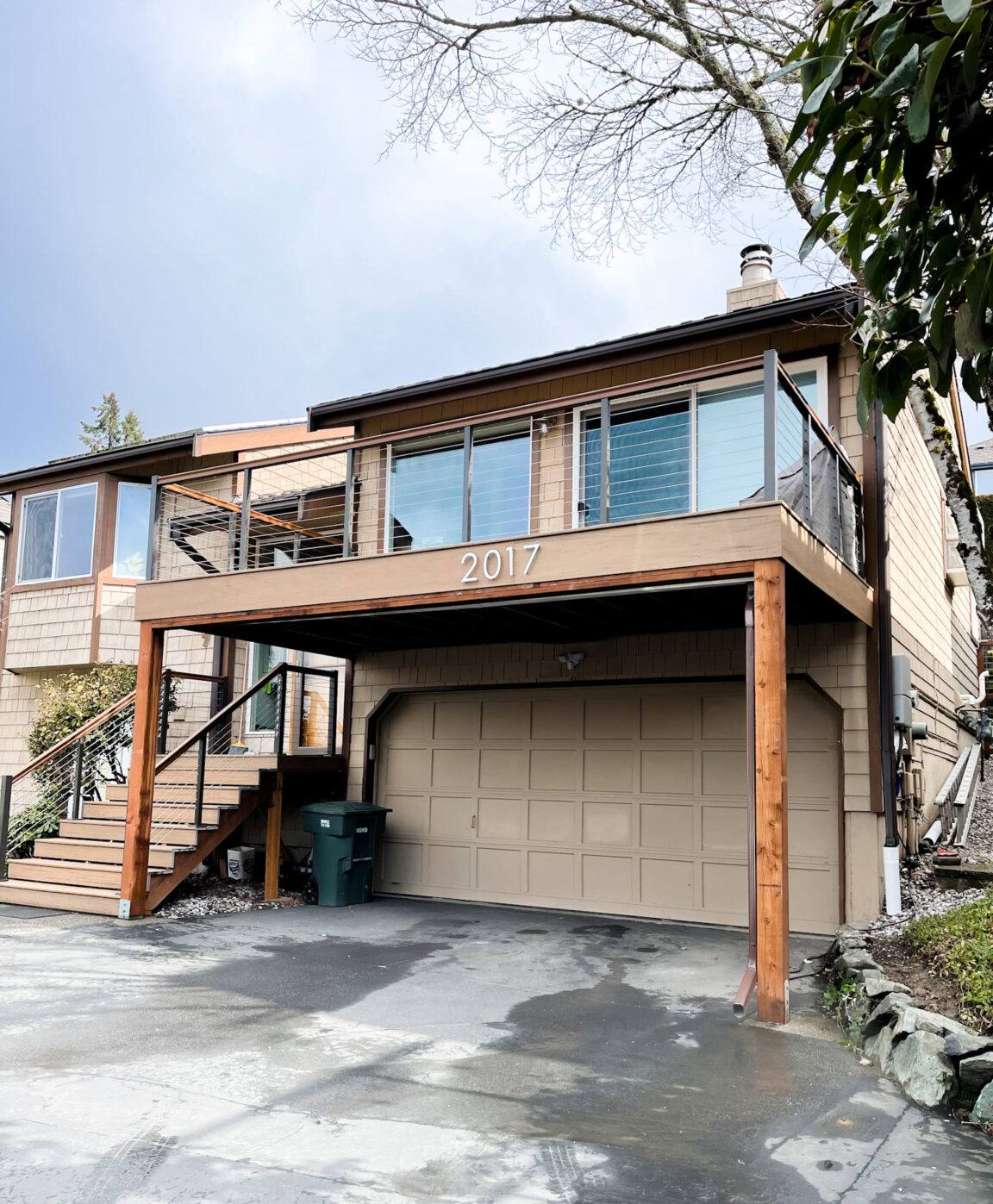
What the Coastal Climate Actually Does to a Deck
Salt air and corrosion
Airborne salt doesn't just sit on the surface — it works its way into fastener heads, joist hanger connections, and any exposed metal. Standard galvanized coating that's fine inland can start breaking down within a few years this close to the Gulf. Once a fastener corrodes, it loses grip strength long before it looks obviously rusted, which is why boards that seem "solidly attached" can still be a hazard.
UV exposure
Florida sun is intense nearly year-round, and a beachside deck gets very little natural shade. UV breaks down the lignin in wood fibers, causing graying, splintering, and surface checking. On composite decking, UV exposure over many years can fade color and, in older or lower-grade products, affect surface texture. Sun exposure is also why finish and sealer schedules matter more here than in a shaded backyard deck elsewhere in the county.
Wind-driven rain
Rain that comes in sideways during a storm finds its way into places vertical rain never would — under flashing, behind ledger boards, into end-grain cuts that weren't sealed. This is one of the most common root causes we find on repair calls: water intrusion at a ledger board or stair stringer that's been quietly rotting the framing underneath for a season or two before anyone notices a soft spot.
Hurricane-force wind and structural load
Pinellas County decks have to be built and repaired to hold up against real wind events, not just everyday weather. Loose railings, undersized post connections, or ledger boards that were never properly through-bolted are the kind of thing that holds up fine on a calm day and becomes a serious problem in a named storm.
Signs Your Deck Needs Repair, Not Just a Cleaning
- Boards that feel spongy, bounce, or flex more than they used to
- Any rust staining bleeding out around fastener heads
- Railings or posts that wiggle when pushed
- Gaps opening up where the deck meets the house (ledger board separation)
- Visible splintering, graying, or cracking across board faces
- Stair stringers that feel uneven or make new creaking sounds
- Standing water that doesn't drain after normal rain
- Discoloration or a musty smell near ground-level framing
Any one of these on its own might be minor. Several together, especially near the ledger board or stairs, usually means the framing underneath needs a real look, not just a surface fix.
Repair or Replace? How We Make That Call
Most decks don't need a full teardown — they need the failed components fixed while the sound structure is left alone. But sometimes a full or partial rebuild is genuinely the more honest answer, especially when the framing itself has been compromised. Here's how we generally think through it:
| Situation | Usually Repair | Usually Replace |
|---|---|---|
| Surface boards graying, splintering, or loose | Yes — board replacement or refinishing | No |
| Rusted or corroded fasteners, framing still solid | Yes — full fastener upgrade | No |
| Ledger board rot from water intrusion | Yes, if caught early | If rot has spread into the house band board |
| Soft or rotted joists in isolated areas | Yes — sister or replace affected joists | No, unless rot is widespread |
| Structure built with no permit or undersized framing | Rarely | Often — repair can't fix an unsafe design |
| Deck over 20 years old with recurring problems | Case by case | Often more cost-effective long term |
We'll always tell you plainly which category your deck falls into and why, including when a repair is the right call even if a replacement would be an easier sell.
What a Correct Repair Actually Involves
Inspection below the surface
We start underneath the deck, not on top of it. That means checking ledger board attachment, joist condition, post bases, and any spots where water has been sitting or draining wrong. A deck that looks fine from a patio chair can still have a compromised ledger connection — that's the detail that actually determines whether the deck is safe.
Fastener and hardware upgrades
This close to the Gulf, we favor stainless steel or heavy hot-dip galvanized fasteners and connectors over standard coated hardware, because standard hardware simply doesn't hold up as long in salt air. It costs more upfront and it's the difference between a repair that lasts and one you're redoing in a few years.
Ledger board and flashing correction
If the ledger board is where the house and deck meet, it also tends to be where water intrusion starts. Proper repair means correcting or adding flashing so water sheds away from the house structure instead of collecting behind the board — a detail that's easy to skip and expensive to ignore.
Framing repair
Rotted or undersized joists get sistered with new lumber or replaced outright, matched to actual structural need rather than just patched over. Post bases get checked for standing water contact, a common cause of rot at ground level on beachside lots.
Decking and railing work
Damaged boards are replaced to match existing material where reasonable, and railings are re-secured to meet the connection strength a coastal, wind-exposed structure needs — not just cosmetically tightened.
Materials: What Holds Up on a Barrier Island
There's no single "best" decking material for every home, but there are real trade-offs worth understanding before a repair or a board replacement:
| Material | Coastal Pros | Coastal Trade-offs |
|---|---|---|
| Pressure-treated wood | Cost-effective, easy to source-match for repairs | Needs regular sealing; UV and salt accelerate wear without upkeep |
| Composite decking | Resists rot and splintering, low maintenance | Higher upfront cost; heat retention in direct sun; quality varies by product line |
| PVC/capped composite | Strong moisture resistance, good for wet, salty environments | Premium cost; some products can show more surface flex in high heat |
| Standard (non-marine-grade) hardware | Lower initial cost | Not our standard for beach-proximity repairs — corrodes faster in salt air |
Our default on Clearwater Beach repairs is corrosion-resistant hardware regardless of decking material, because the hardware is what fails first in this environment, not usually the boards themselves.
How Our Repair Process Works
- Free on-site assessment — we walk the deck, check underneath it, and identify what's actually failing versus what's just cosmetic.
- Honest scope and estimate — a plain explanation of what needs to be done and why, with repair versus replace laid out clearly.
- Permitting where required — structural deck repairs in Pinellas County can require permitting depending on scope; we handle that so you don't have to track it down.
- Repair work — framing, fasteners, flashing, and decking addressed in the right order so later work doesn't undo earlier work.
- Final walkthrough — we check the repaired areas with you before calling the job done.
Permitting and Code Considerations in Pinellas County
Florida's building code accounts for high wind loads, and deck repairs that touch structural elements — ledger attachment, framing, railings — can fall under permitting requirements even when the original deck was built years ago under different rules. This isn't a box-checking exercise: it's the same wind-load logic that determines whether railings and connections actually hold during a real storm. A contractor who treats permitting as optional on structural work is cutting a corner that matters most exactly when you need it not to.
Keeping a Repaired Deck in Good Shape
- Rinse salt residue off decking and railings periodically, especially after storms
- Reseal wood decking on a regular schedule — sun and salt shorten the interval versus inland homes
- Check fastener heads and connections during your own seasonal walkthroughs
- Keep drainage paths clear so water isn't pooling against framing or post bases
- Address small issues — a loose board, a hairline crack — before they become framing problems
Why a Crew That Already Works Clearwater Beach Matters
Deck repair here isn't the same job as deck repair in a shaded inland neighborhood. A crew that already works Clearwater Beach regularly knows which fastener grade actually holds up, where water tends to collect on barrier island lots, and what Pinellas County permitting expects for structural repair work. That familiarity shows up in fewer callbacks and repairs that are built for the environment they're actually in, not a generic specification pulled from an inland job.
If you're seeing loose boards, rust stains, or a deck that just doesn't feel as solid as it used to, we're happy to take a look. Reach out for a free, no-pressure estimate using the form below — we'll tell you honestly what's going on and what it would take to fix it right.