 Clearwater Siding
 Siding That Actually Holds Up in Coachman Ridge
Coachman Ridge is an established residential neighborhood in Clearwater, tucked into Pinellas County's dense mix of mid-century and newer homes. Like most of the county, it sits close enough to the Gulf and Tampa Bay that "coastal exposure" isn't just a marketing phrase — it's a real design constraint. Homes here deal with the same punishing combination every Pinellas County property faces: hurricane-force wind events, sustained wind-driven rain that gets forced sideways into seams and laps, intense UV load nearly twelve months a year, and salt-laden air that doesn't stay confined to the immediate waterfront. Salt drifts inland on sea breezes and settles into paint, caulk, and any exposed fastener, working slowly but constantly.
Siding in this environment isn't cosmetic — it's the building's first line of defense against water intrusion, wood rot, and repeated freeze-thaw-adjacent expansion and contraction (Florida doesn't freeze, but daily heat cycling stresses materials in a similar way). We install James Hardie fiber cement siding exclusively because it's engineered specifically for this kind of climate, and because we've seen firsthand what happens to lesser materials on homes in this part of Clearwater after a decade or two of Gulf weather.
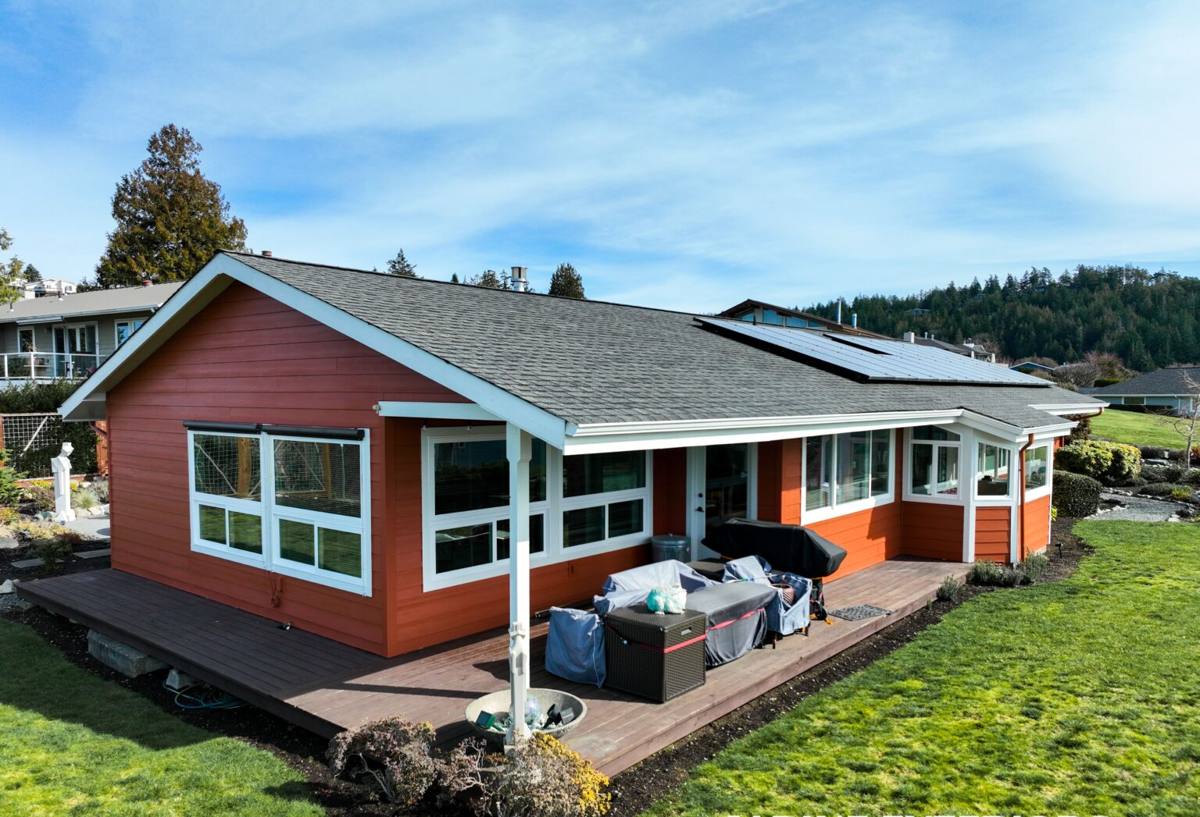
What a Correct James Hardie Installation Involves
James Hardie siding is only as good as the installation behind it. The product itself is non-combustible fiber cement engineered to resist moisture, pests, and UV degradation, but the water management system built around it — flashing, fastening, clearances, and joint treatment — is what actually determines whether a home stays dry and looks good ten or twenty years later.
Climate-Engineered HZ Products
James Hardie makes region-specific formulations under its HZ5 designation for humid, high-moisture climates like ours, as opposed to HZ10 products engineered for freeze-prone northern regions. Using the correct HZ5 product line matters in Clearwater specifically — it's formulated to resist the moisture absorption and swelling that a mismatched product could suffer in our humidity levels.
Flashing and Water Management
Every horizontal lap, window head, door head, and butt joint is a potential entry point for wind-driven rain. Correct installation means head flashing over every window and door, weather-resistant barrier behind the entire assembly, proper kick-out flashing where rooflines meet walls, and rain screen or drainage gap details where the wall assembly calls for it. Skipping any of these steps is the single most common reason siding "fails" years before it should — not because the material was bad, but because water got behind it.
Fastening for Wind Resistance
Pinellas County's wind load requirements exist because this area experiences genuine hurricane-force wind events, not worst-case theoretical scenarios. Fastener type, spacing, and embedment depth all have to match Hardie's published specifications and local code — corrosion-resistant fasteners driven at the correct pattern, not just "close enough." Under-fastened or improperly spaced siding is a common failure point we find when we tear off older installations.
Common Problems We Find on Homes in This Area
Coachman Ridge has a mix of home ages, and we regularly encounter the same set of issues on tear-offs: original wood or older vinyl siding that trapped moisture behind it for years with no visible sign until the substrate was already compromised, caulk-dependent joints that were never properly flashed, and previous siding jobs where corners were cut on fastening or clearance from grade and roofline. None of these problems are visible from the street — they show up as soft spots, stains, or bowing once you pull the old material off, which is exactly why the installation details matter more than the finish coat.
Our Local Process for Coachman Ridge Projects
We run the same disciplined process on every Coachman Ridge home, adjusted for the specific structure and its exposure:
- On-site inspection of the existing siding, sheathing, and any trouble areas (window returns, roof-wall intersections, lower wall sections near grade)
- Moisture and substrate assessment before quoting, so the estimate reflects what's actually behind the old siding, not just a surface guess
- Product and profile selection — HZ5 formulation, plank exposure width, and ColorPlus finish color matched to the home and any HOA guidelines that apply in the neighborhood
- Permitting through the City of Clearwater and any applicable Pinellas County requirements
- Full tear-off and inspection of the sheathing and framing underneath, with repairs made before any new material goes up
- Weather-resistant barrier and flashing installed at every penetration, joint, and transition
- Siding installed to Hardie's fastening and clearance specifications, including proper gap at grade and roofline
- Final walk-through inspection and site cleanup
James Hardie Product Lines: Choosing the Right Fit
Not every Coachman Ridge home calls for the same siding profile. The right choice depends on the home's architectural style, existing trim details, and what the homeowner wants to maintain long-term.
| Product | Best For | Look |
|---|---|---|
| HardiePlank Lap Siding | Most single-family homes; the standard choice | Traditional horizontal lap, multiple exposure widths |
| HardiePanel Vertical Siding | Accent walls, gables, modern facades | Clean vertical lines, often paired with battens |
| HardieShingle Siding | Coastal or cottage-style homes wanting texture | Staggered or straight-edge shingle profile |
| HardieTrim Boards | Corners, window and door trim, fascia | Smooth or woodgrain finish to match siding |
All of these come pre-finished in James Hardie's ColorPlus baked-on finish, which resists the fading and chalking that field-applied paint suffers under this much sustained Florida sun — a real factor when your siding faces near year-round UV exposure.
What Drives Cost on a Coachman Ridge Project
Every home is different, but the same handful of factors determine most of the cost difference between projects in this neighborhood.
| Factor | Why It Matters |
|---|---|
| Home size and stories | More square footage and second-story work both increase material and labor |
| Condition of existing sheathing | Rot or moisture damage found during tear-off requires repair before new siding goes up |
| Siding profile chosen | Lap, panel, and shingle profiles carry different material and labor costs |
| Trim and detail work | Window returns, corner boards, and fascia add labor time |
| Color and finish | Standard ColorPlus colors vs. custom or premium finishes |
| Access and site conditions | Tight lot lines, landscaping, or fencing can add setup time |
We give every homeowner a written estimate broken down by these factors after the on-site inspection, not a rough number pulled from square footage alone.
Why a Crew That Already Works Coachman Ridge Matters
Siding contractors who work regularly in this part of Clearwater already know the permitting process at the City of Clearwater and Pinellas County, understand the wind load and flashing requirements that apply to this exposure, and have seen how homes in this specific area age under Gulf weather. That familiarity shows up in small but important ways — knowing which architectural styles are common in the neighborhood, understanding typical HOA color and material guidelines where they apply, and being able to spot the early signs of moisture damage on homes of a similar age and construction. It also means fewer surprises during permitting and inspection, since we're not learning the local requirements on your project.
Maintaining James Hardie Siding in Clearwater's Climate
James Hardie siding is low-maintenance compared to wood or vinyl, but "low-maintenance" doesn't mean "no maintenance" in a climate this demanding. A simple annual routine keeps it performing as designed:
- Rinse the siding with a garden hose once or twice a year to clear salt residue and airborne grime, especially on sides of the home facing prevailing winds
- Inspect caulking at trim joints, window and door surrounds, and penetrations annually — recaulk any cracked or separated joints before rainy season
- Check for any paint or ColorPlus finish wear at cut edges or field-touched areas and address promptly
- Keep sprinklers and irrigation heads angled away from the siding to avoid constant water contact at the base
- Trim landscaping back from the wall line to maintain airflow and reduce trapped moisture
- After any major storm, walk the exterior and look for loose panels, damaged trim, or fastener pops
None of this is labor-intensive, but staying on top of it is what lets Hardie siding reach its full service life in a coastal-influenced climate like ours.
Get a Free Estimate for Your Coachman Ridge Home
If your siding is showing its age, or you're planning ahead before the next storm season, we're happy to walk your property, look at what's actually happening behind the existing siding, and give you a straightforward, no-pressure estimate for a James Hardie installation built for Clearwater's climate. Fill out the form below to get started.