 Clearwater Siding
 Belleair's Coastal Climate Is Hard on Roofs
Belleair sits close to the water in Pinellas County, and that location shapes what a roof here has to survive. Homes get the full combination: hurricane-force wind gusts during tropical systems, wind-driven rain that gets pushed sideways under shingle edges and flashing, salt-laden air that speeds up corrosion on fasteners and metal components, and strong, nearly year-round UV exposure that dries out and embrittles roofing materials faster than it would in a milder climate.
These forces don't act alone — they stack on each other. A roof that's already brittle from years of UV exposure is far more likely to lose shingles or crack tile in a gust that a well-maintained roof would shrug off. Fasteners weakened by salt-air corrosion give way sooner under wind uplift. That's why storm damage repair here isn't just about patching what one storm broke. A correct repair also accounts for the condition the roof was already in before the storm hit, so the next system doesn't cause a repeat visit.
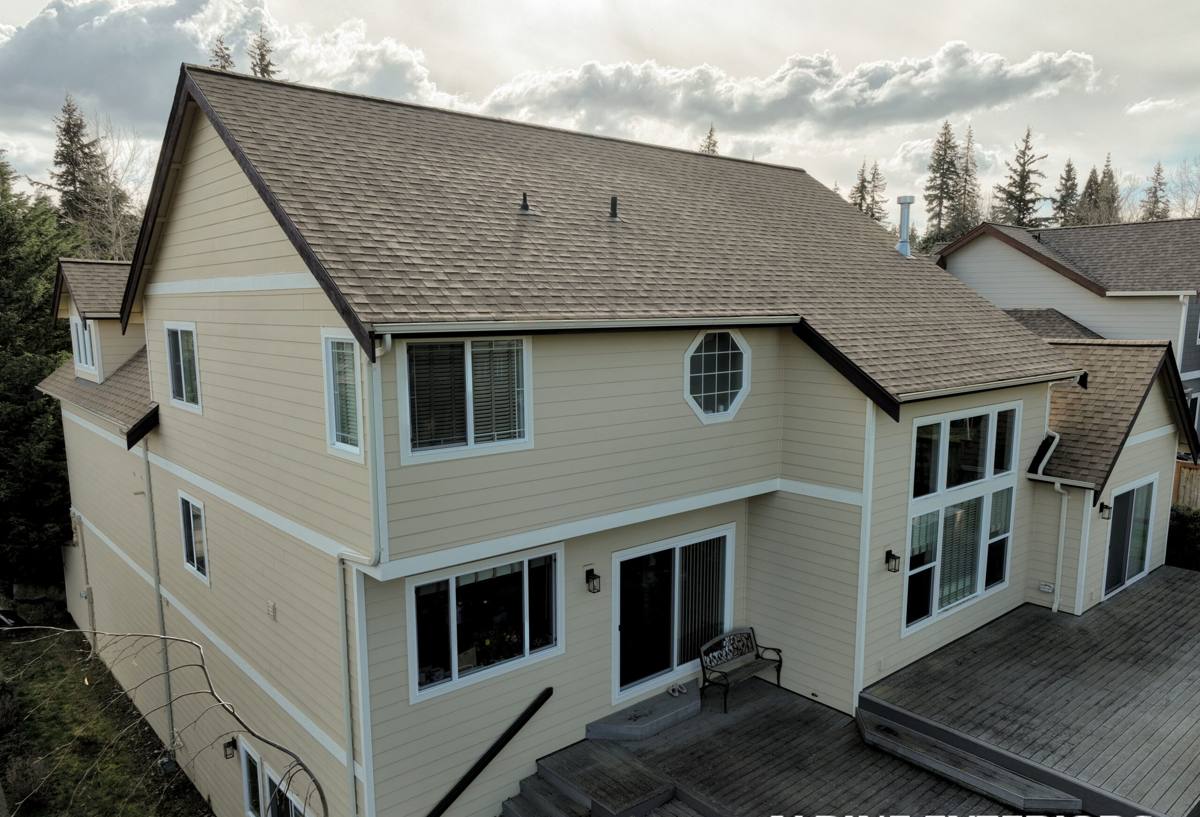
What Storm Damage Actually Looks Like
Some storm damage is obvious. Missing shingles, a tarp-worthy hole, a section of ridge cap sitting in the yard — nobody needs a professional to tell them that roof needs attention. But a lot of storm damage in this climate is quieter and easier to miss from the ground.
- Lifted or creased shingles that look intact from the driveway but have broken their seal and will leak the next time rain comes from the wrong angle.
- Cracked or displaced tiles that shifted just enough to expose the underlayment beneath.
- Granule loss around impact points, which strips away the UV protection a shingle depends on.
- Flashing pulled loose at chimneys, walls, and roof-to-wall transitions — one of the most common sources of hidden leaks after wind events.
- Soft or discolored decking in the attic, which usually means water has already been getting in for a while.
This is why a proper storm damage repair always starts with an inspection, not a guess based on what's visible from the street. A roof that looks fine from below can still have a compromised seal, a torn underlayment, or a slow leak that won't show up as a stain on the ceiling for months.
What a Correct Storm Damage Repair Involves
Checking the Deck and Structure First
Before any new shingles or tiles go down, the roof deck underneath needs to be sound. If wind or water has gotten into the plywood decking, patching over it just traps the problem. Any soft, delaminated, or water-stained decking should be identified and replaced before the surface repair happens — this step gets skipped more often than it should, and it's the one that determines whether a repair actually holds.
Flashing and Water Barriers
Most storm-related leaks trace back to flashing and underlayment, not the shingles themselves. Wind-driven rain doesn't need a hole to get in — it just needs a gap. Correct repair means re-sealing or replacing flashing at every transition point (chimneys, vents, walls, valleys) and making sure the underlayment underneath the repaired section is continuous and properly lapped, not just patched at the surface.
Matching Materials the Right Way
A repair that uses the wrong shingle profile, tile style, or fastening pattern stands out and can create a weak point where old and new material meet. We match the existing roofing material and installation method as closely as possible so the repaired section performs — and looks — like it belongs, not like a patch.
Our Storm Damage Repair Process
- Inspection. We walk the roof (not just look from the ground) and check the attic for water intrusion, moisture, or daylight where there shouldn't be any.
- Documentation. We photograph and note the damage clearly, which matters whether you're paying out of pocket or filing an insurance claim.
- A written repair plan. You get a clear explanation of what's damaged, what needs to be fixed, and why — no vague line items.
- The repair itself. Deck work first if needed, then flashing and underlayment, then matched roofing material, installed to current wind-resistance standards.
- Cleanup and final check. Nails, debris, and old material are cleared from the property, and we verify the repair before calling the job done.
Working With Your Insurance Company
Most storm damage repairs in this area involve an insurance claim at some point, and the process goes more smoothly when the damage is documented clearly and honestly from the start. We provide the kind of photo documentation and written scope adjusters expect to see, and we're straightforward about what's storm damage versus what's pre-existing wear — inflating a claim or blurring that line tends to cause problems for homeowners later, not help them.
We'd also rather you hear this from us than learn it the hard way: after any hurricane or major wind event, be cautious of door-to-door "storm chasers" offering immediate contracts, especially ones asking for large upfront payments or pushing you to sign before an adjuster has even seen the roof. A legitimate local contractor will give you time to make a decision and will still be around next year if a warranty issue comes up.
What Storm Damage Roof Repair Costs
Every roof and every storm is different, so a real number only comes from an on-site inspection. But a few factors consistently drive the cost up or down:
| Cost Factor | Why It Matters |
|---|---|
| Extent of damage | A handful of lifted shingles is a different job than a section with compromised decking underneath. |
| Roof material | Tile repair generally costs more than asphalt shingle repair due to material and labor time. |
| Deck condition | Any plywood replacement adds material and labor beyond the surface repair. |
| Roof pitch and access | Steeper roofs and homes with limited access take longer and require more safety setup. |
| Age of the existing roof | Older roofs are more likely to need broader repair to blend safely with brittle surrounding material. |
| Insurance vs. out-of-pocket | Claims require more documentation time but can significantly offset the homeowner's cost. |
As a general guide, isolated storm repairs on shingle roofs often run in the low thousands of dollars, while repairs involving deck replacement, tile, or larger sections of the roof cost more. We'll always give you a written estimate before any work starts.
Why a Crew That Already Works in Belleair Makes a Difference
Roofing crews that work Belleair and the surrounding Clearwater area regularly know things a contractor from farther away has to learn on the job: how the local wind exposure and salt air tend to age different roofing materials, what Pinellas County's permitting process looks like for repair versus replacement work, and how to schedule around the reality that a lot of homeowners need repairs done quickly, before the next system in the forecast makes a fixable problem into a bigger one.
There's also a simple reliability factor. After a significant storm, response time matters — a tarped roof left too long invites secondary water damage that turns a repair into a much larger job. A crew that's already local, with existing relationships with suppliers and familiarity with the area's homes, can typically respond and mobilize faster than an out-of-town outfit working a storm circuit.
Protecting Your Roof Before the Next Storm
You can't storm-proof a roof completely, but regular attention meaningfully reduces how much damage a given storm can do. Before hurricane season, or any time after a rough stretch of weather, it's worth checking:
- Loose, lifted, or missing shingles or tiles
- Flashing around chimneys, vents, and skylights that looks separated or rusted
- Granules collecting in gutters, a sign of accelerated wear
- Gutters and downspouts clear, so water has somewhere to go during heavy rain
- Overhanging tree limbs that could strike the roof in high wind
- Attic checks for daylight, staining, or musty odor after any major storm
Catching small issues during calm weather is almost always cheaper and less stressful than dealing with them mid-storm-season.
Signs You Should Call for an Inspection Now
You don't need visible damage to justify a roof check. Consider having a roof looked at if it's been through a named storm or a stretch of severe wind and rain, if you notice a new stain on a ceiling or ceiling trim, if shingles have shown up in the yard or gutters, or if it's simply been several years since anyone actually walked the roof rather than just glancing at it from the ground. Catching a small problem before the next round of Gulf Coast weather is almost always less disruptive — and less expensive — than dealing with it after a second storm makes it worse.
If your Belleair home has been through recent storm weather, or you just want a professional set of eyes on your roof before the next system comes through, we're happy to take a look. Reach out for a free, no-pressure estimate using the form below.