 Clearwater Siding
 Custom Decks Built for Belleair Bluffs, Not a Generic Climate
Belleair Bluffs is a small, tightly packed community in Pinellas County, tucked between Clearwater and Largo along Florida's Gulf Coast. Homes here sit close together, yards tend to be modest, and outdoor living space matters — a well-built deck is often the difference between a house that just has a backyard and one that actually gets used. But a deck built to a generic national spec doesn't hold up here. Between hurricane-force wind events, near-constant UV exposure, sudden wind-driven downpours, and salt-laden air drifting in off the Gulf, this stretch of Pinellas County is a genuinely hard environment for exterior wood and metal. A deck that's correctly designed and built for this climate looks and performs differently five years in than one that wasn't.
This page covers what a custom deck actually needs to hold up in Belleair Bluffs, what our process looks like from first call to final walkthrough, and why local experience — not just general carpentry skill — matters for a project like this.
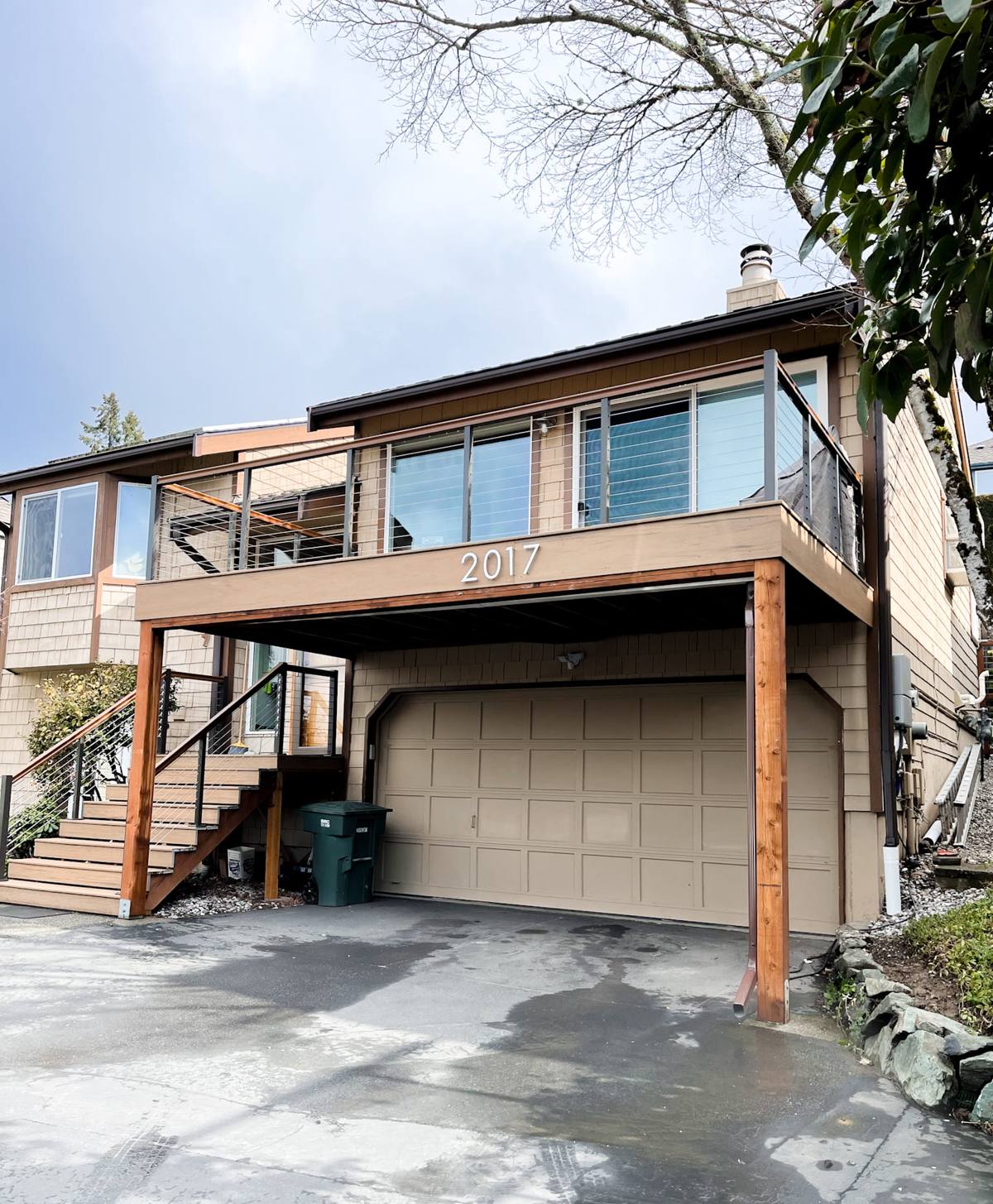
What the Local Climate Actually Does to a Deck
It helps to understand the specific forces working against an outdoor structure here, because they shape almost every material and construction decision we make.
UV and Heat
Florida sun is intense and consistent nearly year-round. UV breaks down the surface fibers of wood decking, causing graying, splintering, and checking. It also degrades the pigments and resins in composite and PVC boards over time, which is why fade resistance and warranty language matter more here than in milder climates.
Wind-Driven Rain
Storms in this area rarely come straight down. Rain gets pushed sideways into railings, fascia boards, and the gaps where decking meets the house. Water that would just run off in a calmer climate gets driven into joints, fastener holes, and ledger connections, which is where rot and hidden rust usually start.
Hurricane-Force Wind Loads
Pinellas County sits in a high-wind design zone. A deck isn't just a platform — it's a structure that has to resist uplift and lateral load during tropical storms and hurricanes. Undersized footings, weak ledger attachments, and light-duty hardware are the most common failure points we see when we're called to repair or rebuild someone else's deck after a storm.
Salt Air
Even a few miles from open water, airborne salt accelerates corrosion on fasteners, brackets, and any unprotected metal. Standard interior-grade or mismatched hardware corrodes faster here than most homeowners expect, sometimes within a couple of storm seasons.
Choosing the Right Decking Material for This Climate
There's no single "best" decking material — the right choice depends on budget, how much upkeep you're willing to do, and how close your property is to open water or heavy salt spray. Here's how the common options actually compare for a Belleair Bluffs backyard.
| Material | UV / Fade Behavior | Moisture & Salt Resistance | Maintenance | Typical Lifespan Here |
|---|---|---|---|---|
| Pressure-treated pine | Grays and roughens without regular sealing | Good if sealed; vulnerable at cut ends and fasteners | Annual cleaning, re-sealing every 1-2 years | 10-15 years with upkeep |
| Composite decking | Fade-resistant with a quality cap layer | Very good; doesn't absorb water or rot | Occasional washing, no sealing or staining | 20-25+ years |
| PVC decking | Excellent fade resistance | Excellent; fully moisture-proof | Lowest of any option | 25+ years |
| Tropical hardwoods (e.g. ipe) | Fades to gray unless oiled regularly | Naturally dense and rot-resistant | Regular oiling to maintain color | 20-30 years with upkeep |
We install pressure-treated wood, composite, and PVC systems, and we'll walk you through the honest trade-offs for your specific yard rather than pushing whatever's easiest to install. Wood costs less up front but demands ongoing attention in this climate. Composite and PVC cost more initially but largely eliminate the sealing-and-staining cycle, which matters if you don't want a recurring maintenance chore on your calendar.
What a Correctly Built Deck Involves
A deck that survives Gulf Coast weather is built differently below the surface than one built for a milder climate. The visible decking boards are the smallest part of the job.
Footings and Framing
Footings need to be sized and set to local frost-free, high-wind requirements, not a generic minimum. Framing lumber should be rated for ground contact where it's close to grade, and joist spacing tightens up when the decking material or expected wind load calls for it.
Ledger Board Attachment and Flashing
Where a deck attaches to the house, that ledger board connection is one of the most common failure points nationally — and one of the most dangerous, since it's structural. It needs proper flashing to keep wind-driven rain from getting behind the siding, and lag bolts or through-bolts rated for the load, not just nails or undersized screws.
Fasteners and Hardware
Standard hardware corrodes faster in salt air. We use stainless steel or coated, corrosion-resistant fasteners and structural connectors rated for coastal exposure — it costs more than mixed hardware-store fasteners, but it's the difference between hardware that's still sound in ten years and hardware that's rusting through in three.
Railings and Guards
Railing posts need to be through-bolted to framing, not just screwed to the rim joist, to hold up under wind load and normal use. Baluster spacing and railing height also need to meet current code, which matters both for safety and for resale.
Our Process, Start to Finish
We keep the process straightforward because most homeowners are doing this once and want to know what to expect.
- On-site consultation: We look at your yard, discuss how you'll actually use the deck, and talk through material options honestly, including cost trade-offs.
- Design and layout: We plan footprint, framing, and attachment points based on your home's structure and the site conditions, not a one-size template.
- Permitting: We handle the Pinellas County/local permit application and engineering documentation where required, so you're not navigating that alone.
- Construction: Footings, framing, ledger attachment and flashing, decking, and railings, built in that order with inspections at the required stages.
- Final walkthrough: We go over the finished deck with you, including basic care guidance for whatever material you chose.
Permits, Codes, and Wind Load in Pinellas County
Most custom decks in Pinellas County require a building permit, and elevated decks typically need engineered footings and connection details sized for the local wind zone. This isn't paperwork for its own sake — it's what keeps a deck attached to your house during a tropical storm instead of becoming a hazard in your yard or a neighbor's. We pull the required permits and build to the load requirements for this area as a matter of course, not as an upcharge. If a previous deck on your property was built without a permit or to an older, lighter standard, we'll flag that during the consultation so you know what you're working with.
Deck Maintenance Checklist for Belleair Bluffs Homeowners
Whatever material you choose, a few habits go a long way toward getting the full lifespan out of your deck in this climate.
- Rinse off salt residue, pollen, and debris every few weeks, more often if you're close to open water
- Inspect fastener heads and railing connections for rust or looseness at the start of hurricane season
- Check the ledger board area where the deck meets the house for any signs of moisture staining or soft wood
- Re-seal or re-oil wood decking on the schedule appropriate to that product, don't wait until it looks gray and rough
- Keep gutters and downspouts near the deck clear so runoff doesn't pool against posts or framing
- Trim back vegetation that traps moisture against the structure
- After any major storm, do a quick visual check of railings, stairs, and footings before heavy use
What Affects the Cost of a Custom Deck
Every yard and every project is different, but these are the main factors that move the price up or down.
| Factor | How It Affects Cost |
|---|---|
| Decking material | Pressure-treated wood costs less upfront; composite and PVC cost more but need far less upkeep |
| Deck height and footing depth | Elevated decks require deeper footings and more structural framing than ground-level ones |
| Size and footprint | Straightforward driver of material and labor quantity |
| Railing style | Cable, glass, and custom-milled railings cost more than standard baluster railings |
| Site access | Tight side yards or limited equipment access can add labor time |
| Permitting and engineering | Elevated or larger decks often require stamped engineering, which adds to the design cost but is required by code |
We give straightforward, itemized estimates so you can see exactly what's driving the number, not a single lump figure.
Why Hire a Crew That Already Works in Belleair Bluffs
A contractor who works this specific area regularly already knows the local permitting process, the wind-load requirements that apply here, and how quickly generic materials and hardware fail in this exact combination of sun, salt, and storm exposure. That's not something you get from a crew that mostly works inland or out of state. We also know how tight some Belleair Bluffs lots run, which affects staging, access, and how a deck footprint gets planned around existing structures and setbacks. Hiring locally means fewer surprises during permitting, a design that accounts for real conditions instead of a generic climate, and a crew that's still reachable if a question comes up after a storm rolls through.
If you're weighing a new deck, a full replacement, or repairs to storm or age damage, we're happy to take a look and give you a straightforward, no-pressure estimate — just fill out the form below to get started.